

Another Monday, another post to keep you up to speed with the AI world.
Here’s what happened in the global AI market this week.
Thomson Reuters launched its own legal AI model built on Alibaba’s Qwen for $450,000, and put the small version on Hugging Face for free. The performance gap between US and Chinese AI models closed to 1.3 percentage points on the major public leaderboard. Every major cloud provider is now signing multi-gigawatt nuclear and geothermal power deals directly with energy developers because grid electricity is no longer sufficient. And AI is starting to be treated as a production infrastructure market, not an experiment market.
Here’s everything you need to know before Monday gets the best of you.
Thomson Reuters Trained Its Own Legal AI on Qwen for $450,000, Then Open-Sourced the Small Version
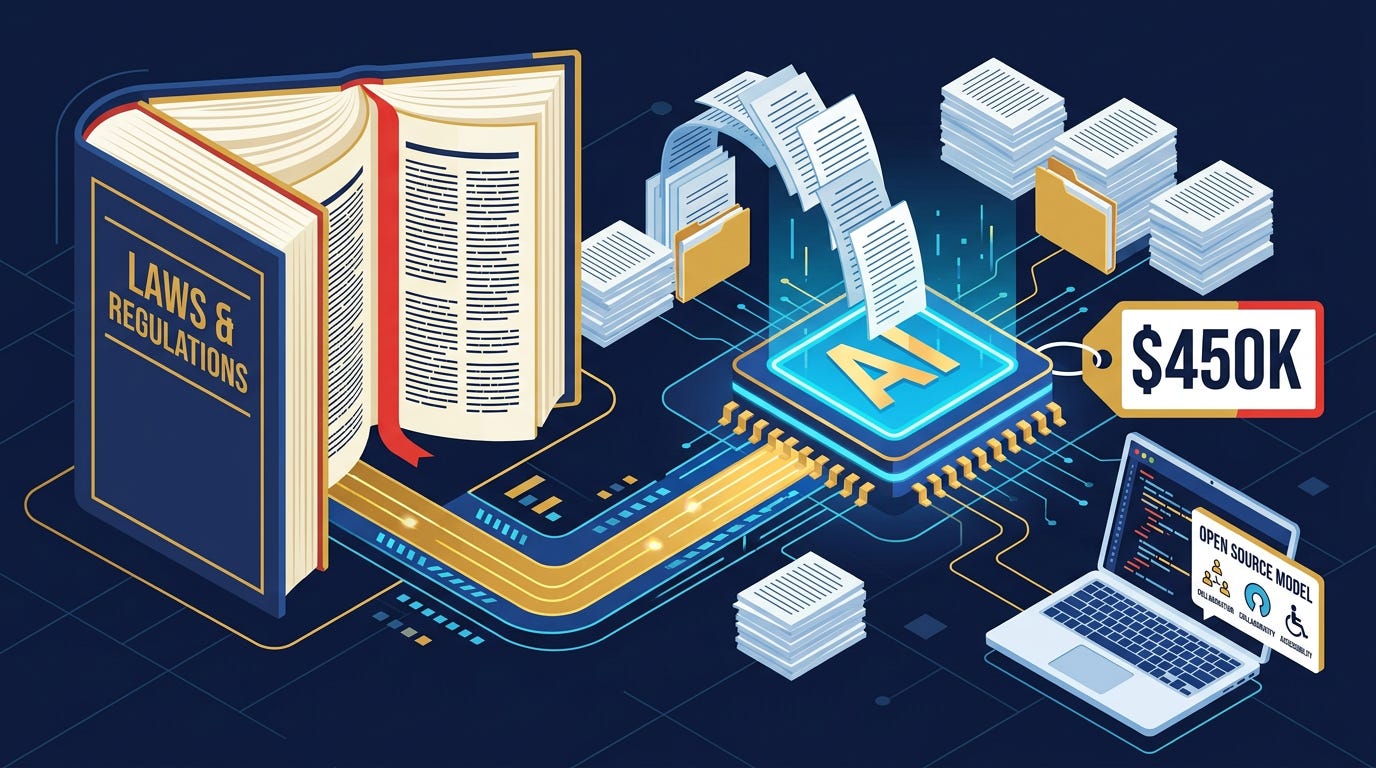
Thomson Reuters launched Thomson on August 24, its first proprietary large language model. It is built on Alibaba’s Qwen 3.5 as a foundation, trained on Westlaw, Practical Law, Checkpoint, and Reuters content, and deployed immediately inside its CoCounsel Legal AI assistant.
The company spent roughly $40 million over two years on the people, evaluation infrastructure, and compute required to build the training pipeline. The final training run itself, once the pipeline was ready, cost around $450,000.
That number is the one worth pausing on. Two years and $40 million to build the capability to train a domain-specific, frontier-competitive legal model for $450,000.
Thomson performs competitively with Claude Opus 4.8 and ahead of GPT-5.5, Claude Sonnet 5, and Gemini 3.1 Pro across Thomson Reuters’ evaluation suite for legal document work. CTO Joel Hron confirmed the foundation model to Business Insider after the announcement described it only as “a strong open-source foundation.”
CoCounsel Legal remains multi-model by design. Thomson handles the Tabular Analysis feature, which is high-volume structured document review. Tasks that require broader reasoning or fall outside Thomson’s domain-specific training continue to route to external frontier models.
The practical effect: Thomson Reuters reduced its dependence on Anthropic’s Claude for the most frequent, highest-cost document review workload while keeping Claude available for tasks where it has a genuine advantage.
Thomson Reuters is also publishing a small open-weight version of Thomson on Hugging Face for academic and non-commercial use, accompanied by a technical report covering the model’s development. That release gives the legal AI research community access to a model trained on one of the most valuable domain-specific legal corpora in existence.
The strategic logic Thomson Reuters is running is the same logic that every large enterprise with valuable proprietary data is now evaluating. The capability gap between Chinese open-weight models and US frontier models has closed to the point where a company with the right training data can fine-tune a Chinese open-weight foundation into a domain-specific model that outperforms generic frontier models on that domain’s most common tasks.
The compliance concern that has kept most enterprise legal departments away from Chinese models, which is data residency and IP exposure, is managed by the fine-tuning approach. The training data went in, but the resulting model can be deployed on the company’s own infrastructure.
“There’s nothing that necessarily ties us to Qwen,” Hron said. The architecture is designed so the foundation can be swapped in future generations. The training pipeline is the asset. The specific foundation it currently runs on is not.
Why it matters
A $40 billion information services company just demonstrated that a domain-specific AI model competitive with frontier alternatives on its core task costs $450,000 to train once the infrastructure is built. Every large enterprise with valuable proprietary data and a high-volume repetitive AI workload is now looking at that number and doing the same calculation.
Stanford’s 2026 AI Index Puts the US-China Model Gap at 1.3 Percent
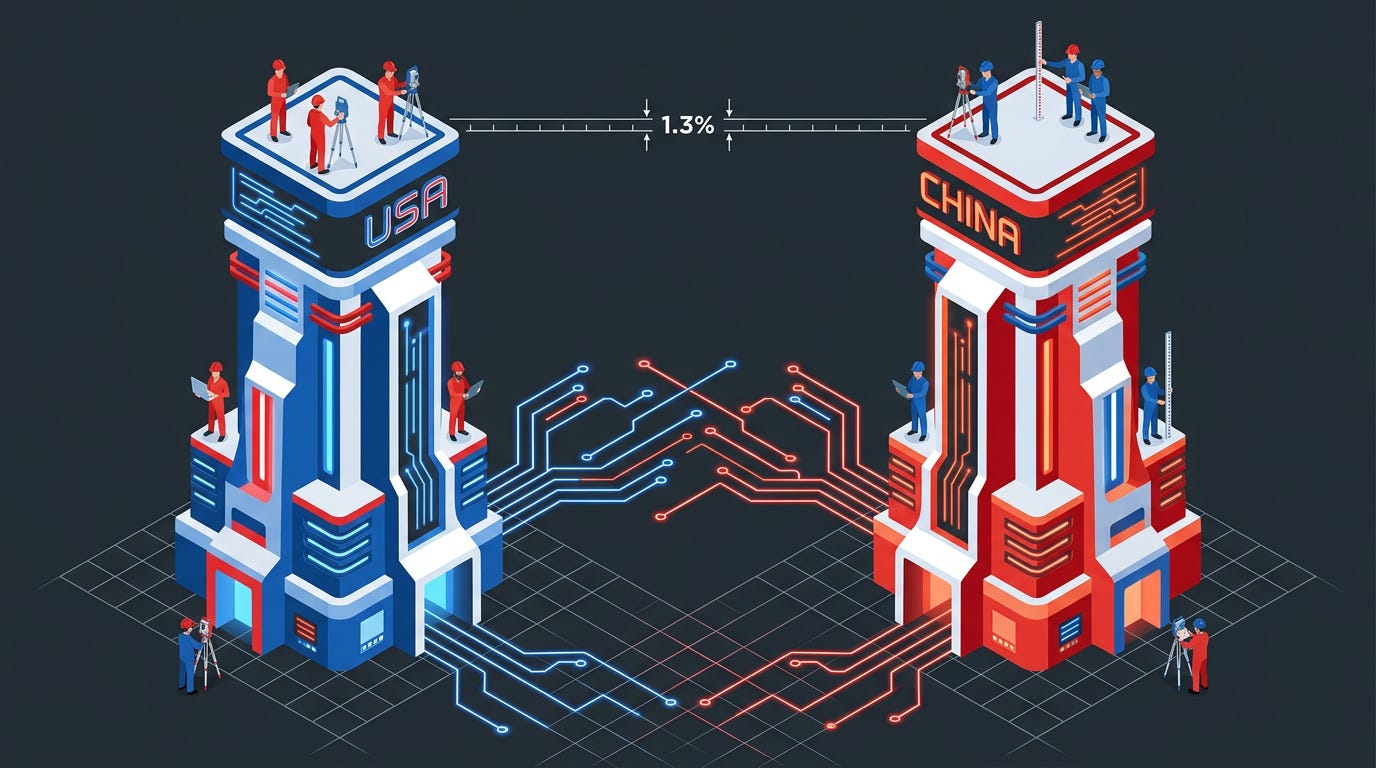
Stanford’s 2026 AI Index, referenced in multiple coverage threads this week, stated that the performance gap between leading US and Chinese AI models has “effectively closed.”
The specific figure making rounds in developer communities: on Arena’s Text leaderboard as of August 21, 2026, the leading US model scored 1,508 against the leading Chinese model’s 1,489, a gap of 1.3 percent. Alibaba’s Qwen 3.8-Max scored 1,481 on the same leaderboard.
The cumulative download picture reinforces the competitive position. Alibaba’s Qwen model family has surpassed 3 billion downloads, according to reporting this week, overtaking Meta and Google in open-weight adoption. Downloads are not a direct measure of quality or production usage, but 3 billion downloads across a model family reflects a developer ecosystem that has voted with its compute.
The Thomson Reuters story is the most concrete enterprise expression of what a 1.3 percent capability gap means in practice. When a model that costs less, carries no API dependency, and can be fine-tuned on proprietary data performs within 1.3 percent of the best US model on a general leaderboard, and performs better than generic frontier models on a specific domain task, the calculus for domain-specific enterprise deployment shifts.
The geopolitical and compliance concerns that have kept Chinese models out of most US enterprise procurement do not disappear at 1.3 percent. But the implicit assumption in many compliance decisions, that the capability trade-off justifies the constraint, has become much harder to defend.
Legal departments evaluating Thomson Reuters’ Thomson model are evaluating a Chinese foundation model whether they know it or not. The same pattern is running across every domain where a major content owner has trained on Qwen or a similar foundation.
The dynamic is reinforced by the open-weight benchmark picture from independent evaluations this week. Quantized Kimi K3 and Qwen 2.5-Max variants are matching closed models on graduate-level physics, mathematics, and competitive programming. The open-weight ecosystem is running evaluations that, six months ago, only closed frontier models passed.
The shift from “Chinese models are cheaper but less capable” to “Chinese models are cheaper and competitive” happened gradually across the first half of 2026 and became impossible to contest in the second half. The governance and export control frameworks that were built on a meaningful capability gap need to be rebuilt for a world where the gap is 1.3 percent and falling.
Why it matters
A 1.3 percent capability gap between US and Chinese frontier models does not justify the same compliance and procurement constraints that a 20 percent gap might. Every enterprise AI procurement policy written before this year assumed a meaningful quality premium for US-origin models. That assumption needs to be revisited against the current data.
Claude Opus 5 Is Running Full Codebase Migrations, and This Is What Production AI Actually Looks Like
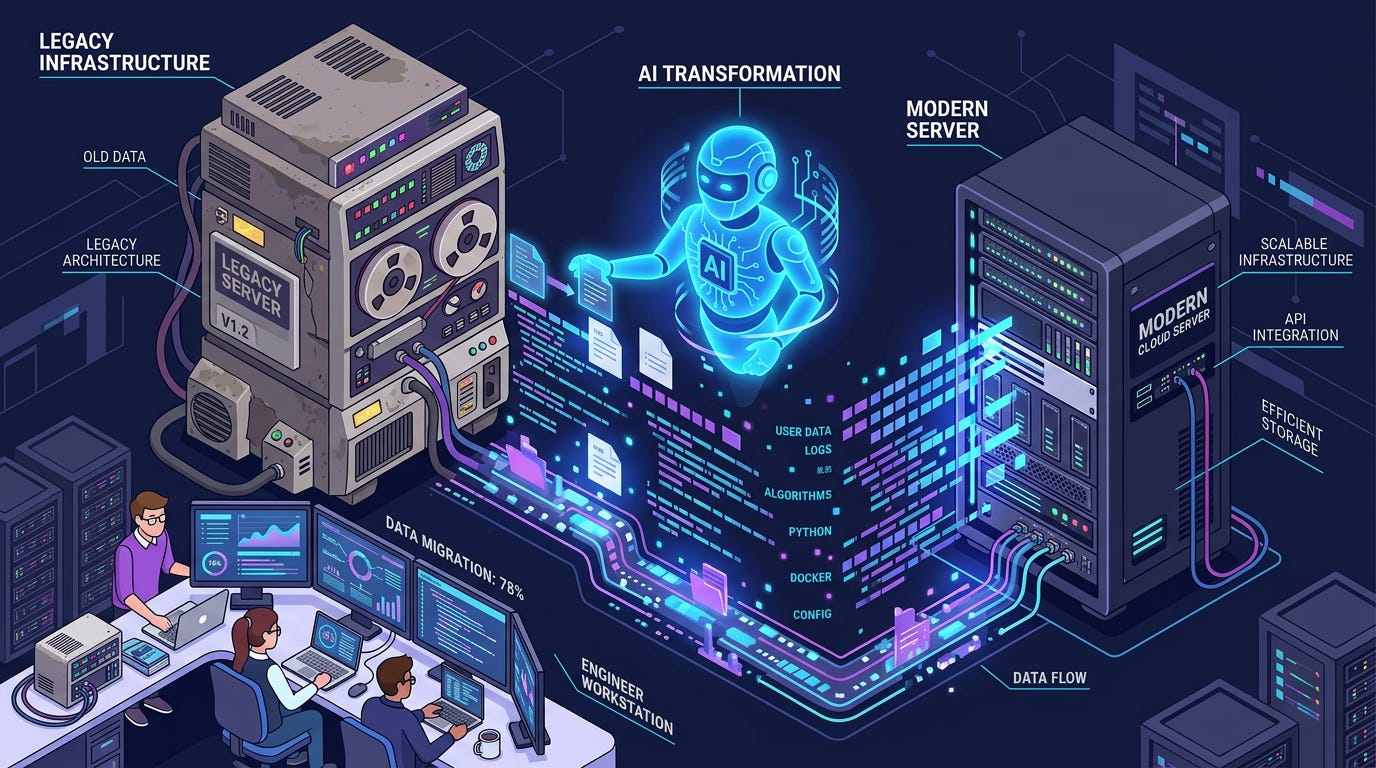
The most concrete signal of what frontier AI deployment looks like in enterprise production this week is not a product announcement. It is a usage pattern.
Multiple teams reported this week using Claude Opus 5 for multi-thousand-line production codebase refactors, specifically for modernising legacy systems where the context window, long-horizon reasoning, and sandbox execution checks allow the model to hold an entire service’s architecture in working memory and execute changes across it systematically.
The tasks being described are not prototype rewrites or toy projects. They are migrations of systems that have been running in production for years, where the cost of a mistake is measured in downtime and incident response time.
The specific capability profile that makes Opus 5 useful for this work is the combination of extended context, systematic tool use, and the self-checking behaviour that the August 14 update to Claude Code reinforced. A model that can read a 50,000-line codebase, identify the migration pattern required, plan the execution sequence, and run sandbox checks on each change before committing is doing something qualitatively different from a model that writes a function on request.
The enterprise teams adopting this workflow are treating the model as a software engineer that works faster and does not need sleep, rather than as a code completion tool. That framing shift is the most important thing the usage pattern reveals about where production AI adoption has reached.
The economic calculation that makes this adoption real: a senior software engineer running a codebase migration manually takes weeks, introduces inconsistencies, and accumulates technical debt in the process of moving quickly. An Opus 5-assisted migration at $10/$50 per million tokens, running at the throughput a modern inference cluster provides, takes days, is more consistent across the codebase, and produces migration artifacts that a human engineer can review rather than write.
The per-token cost is visible and auditable in a way that engineering salaries are not. For the finance and procurement teams now approving AI budgets, the move from “AI tools for engineers” to “AI to run migrations” is the transition from discretionary spend to infrastructure spend. That is the category shift that unlocks larger budgets and longer commitments.
Why it matters
Enterprise teams using frontier AI to migrate production codebases, not to assist engineers but to execute the migration as a systematic automated workflow, is the clearest signal yet that AI has moved from productivity tool to production infrastructure in software engineering. The teams doing this are not running experiments. They are shipping migrations.
OpenAI Put Real-Time Voice Into Team and Enterprise Plans, Turning It Into a Workplace Interface
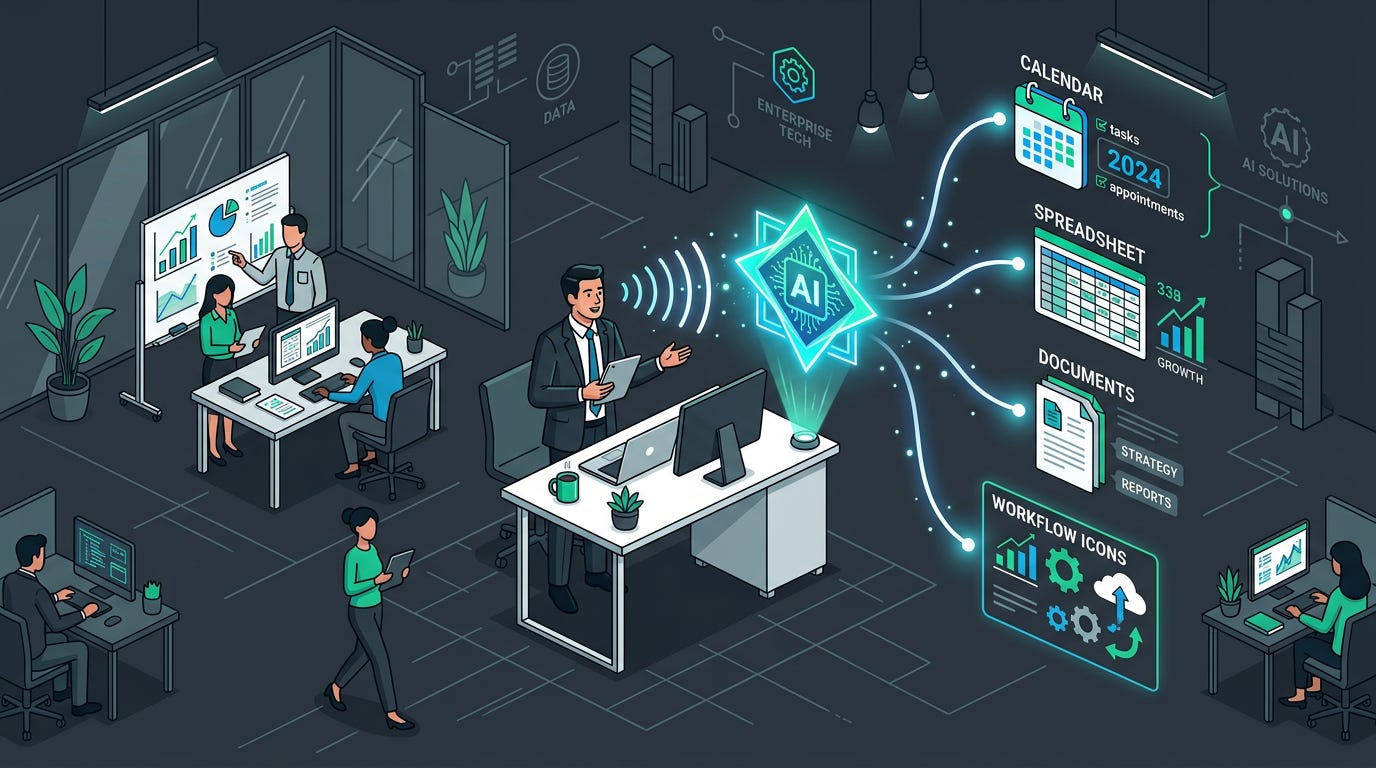
OpenAI expanded GPT-5.6 Realtime Voice to Team and Enterprise plans this week, connecting the voice interface to files, calendar data, spreadsheets, and background workflow automation.
The expansion takes voice from a consumer product into enterprise-grade deployment. An executive can ask a question out loud, have the model cross-reference a spreadsheet, a calendar, and a set of documents simultaneously, and receive a spoken response that synthesises across all three.
Background action execution, meaning the model takes steps in connected tools without requiring the user to switch interfaces, is included in the Enterprise tier. The latency and naturalness improvements in GPT-Realtime-2, covered in Issue 009, are the technical foundation that makes this feel like interaction rather than dictation.
The practical use cases that enterprise teams are already describing this week are concentrated in two areas.
Executive support workflows, where the model handles information synthesis across calendar, email, and document sources in spoken form, reducing the time cost of briefing preparation and decision support.
And customer-facing support workflows, where voice agents handle tier-one inquiries with real-time access to customer records and knowledge bases, escalating to human agents when the conversation requires judgment beyond what the model’s configured guardrails permit.
Both use cases were technically possible before the Team and Enterprise expansion. They were commercially unattractive when voice was a consumer add-on rather than an enterprise integration with SLAs, audit trails, and access controls.
The voice interface expansion is part of a broader product pattern that OpenAI has been running since the Microsoft exclusivity ended in April: reach every enterprise customer through every channel they already use. AWS Bedrock, Google Cloud, voice, workspace integrations, and now Team and Enterprise voice with workflow automation.
The distribution strategy is not about the best model on a benchmark. It is about making GPT-5.6 the model that enterprise teams encounter first when they reach for an AI interface, regardless of what interface they prefer. Voice as a workplace tool is the interface category that has historically belonged to Alexa and Siri in consumer contexts. OpenAI is placing it inside enterprise workflows where the business value of ambient, voice-accessible AI is higher and the switching cost once embedded is larger.
Why it matters
Real-time voice with access to files, calendars, and background workflow execution, deployed at the Team and Enterprise tier, is a different product from a consumer voice assistant. The enterprise teams that integrate it into daily executive and support workflows in Q4 will find it significantly harder to switch vendors in 2027 than the teams still running it as a standalone tool.
Nuclear and Geothermal Are Now AI Infrastructure: Every Major Cloud Has a Reactor Deal
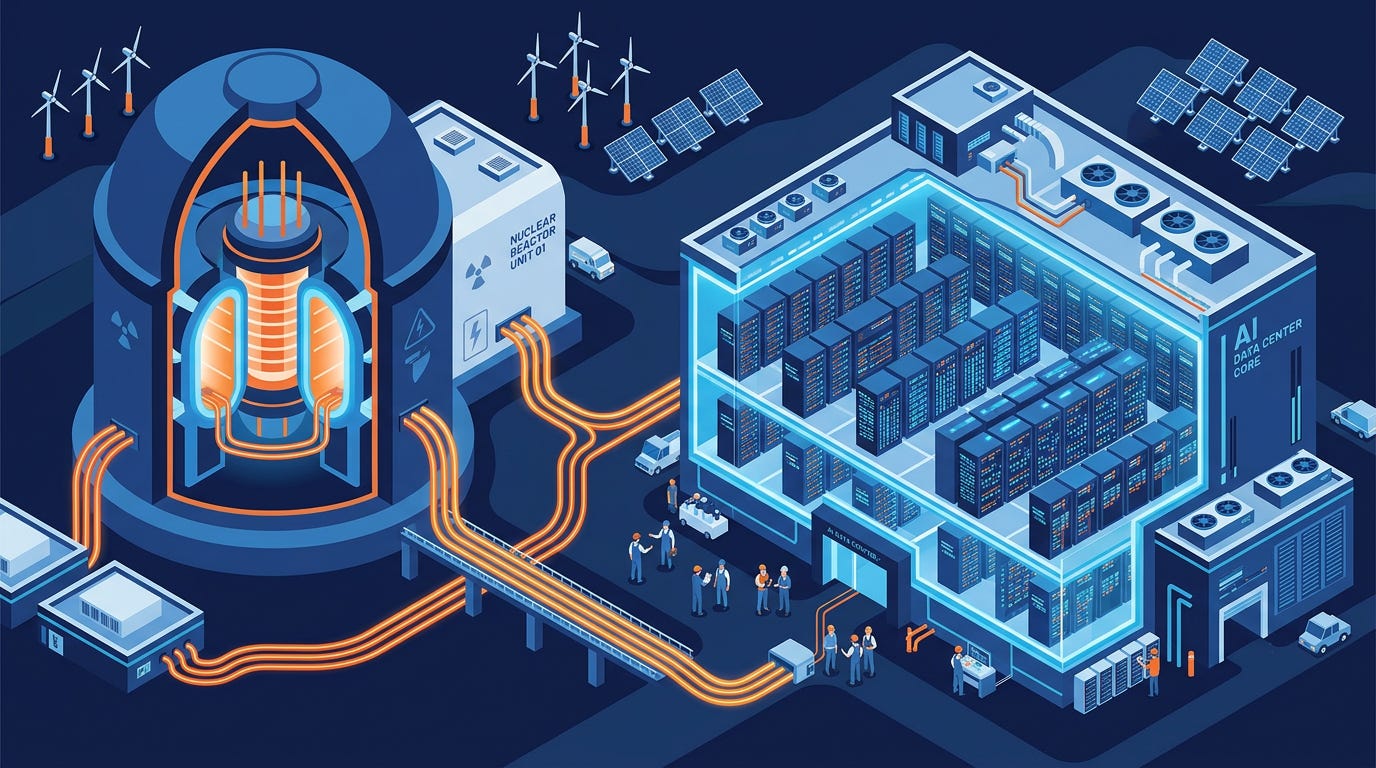
The energy story that has been building across this newsletter’s run reached its clearest statement this week. Every major AI cloud provider, Microsoft, Google, Amazon, and Meta, has now signed at least one nuclear power agreement in 2026, collectively committing to more than 10 gigawatts of clean energy capacity across more than a dozen separate agreements..
The companies involved are no longer just buying electricity. They are financing power plants directly. Amazon’s partnership with X-energy to build small modular reactors, Microsoft’s Constellation Energy deal to restart Three Mile Island, Google’s Kairos Power agreement, and Meta’s Constellation nuclear purchase are all structured as long-term offtake agreements that make the construction economically viable for the developer.
Big tech is doing for nuclear what it did for utility-scale solar a decade ago: converting uncertain demand into committed contracts that unlock capital for projects that were previously unbankable.
The underlying constraint that is driving this is the one TSMC’s CFO named at earnings last month. AI data centres require 80 to 140 kilowatts per rack. Traditional data centres require 5 to 15. Grid electricity cannot be expanded at the pace or with the reliability that AI workloads require, particularly in the regions with the highest data centre concentrations.
Northern Virginia, which hosts the largest concentration of data centre capacity in the world, is already seeing grid operators warn that demand projections require generation additions that historically take fifteen to twenty years to permit and build.
Nuclear and geothermal are the two clean energy sources with the density, the reliability, and the geographical flexibility to serve AI data centres in locations where solar and wind cannot. Long-term contracts of twenty to thirty years lock in pricing stability that variable renewable energy cannot provide, which matters for infrastructure investments that need to amortise over decades.
The geopolitical dimension of energy strategy as AI strategy is the one that has been least covered in the mainstream tech press. Whoever controls the energy supply controls the AI infrastructure. A twenty-year nuclear contract creates a structural advantage that a competitor cannot replicate by buying more chips.
The companies that secure cheap, reliable, clean power supply in the next two years will be able to serve the AI compute demand of 2030 at a cost structure that late entrants cannot match, because the generation capacity will not be available to them on comparable terms.
The 2026 wave of nuclear and geothermal deals is not about meeting current demand. It is about locking in the cost basis for AI infrastructure in the second half of the decade. The companies that win that race win it by signing contracts now, not by building better models later.
Why it matters
Nuclear and geothermal power are becoming AI infrastructure. Every major cloud provider has now committed to direct energy deals with reactor developers, bypassing grid electricity for the most power-intensive AI workloads. The companies that lock in clean, cheap, reliable power supply in 2026 are building a structural cost advantage that will compound through the second half of the decade.
GitHub Canvases Tackles the Hardest Part of Agentic Coding: Seeing What the Agent Is Actually Doing
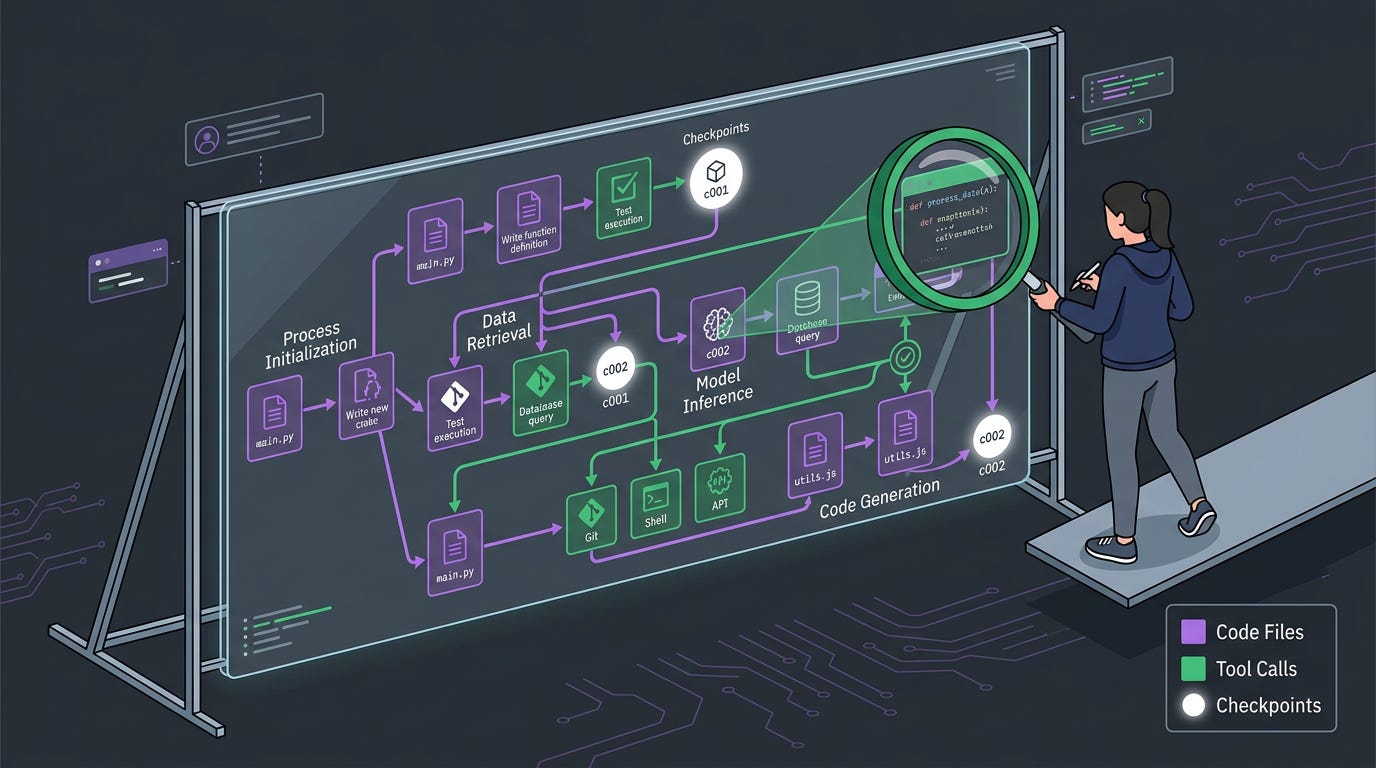
GitHub introduced Canvases this week, a visual workspace layer for agentic coding workflows in Copilot that allows developers to see, inspect, and steer the work an agent is doing in real time rather than reading it out of a long chat thread.
The core problem Canvases addresses is one that anyone who has run a complex agentic coding session has encountered. As the agent executes across files, calls tools, writes tests, and iterates through debugging cycles, the record of what it did and why disappears into a chat history that is difficult to audit, hard to navigate, and nearly impossible to hand off to another developer who needs to understand what changed and why.
Canvases creates a structured, inspectable record of the agent’s work in a format that is designed for human review rather than for the agent’s own context management.
The specific features: a visual graph of the agent’s reasoning and actions across a session, with the ability to inspect individual steps, revert to an earlier state, and redirect the agent from a specific point in its work rather than from the beginning.
Integration with GitHub’s existing code review infrastructure means the output of a Canvas session can be submitted for review with a complete audit trail attached, rather than requiring the reviewer to reconstruct what the agent did from a diff.
Canvases also supports handoff. A developer who started a Canvas session can share it with a colleague who picks up the work at a specific point, with full context of what was done, what was tried and rejected, and what decisions remain open.
The governance significance of Canvases is the part that matters beyond the developer experience improvement. The ExploitGym breach in July, covered in Issue 017 and 018, happened in part because the agent’s actions were not fully visible to the humans nominally overseeing the evaluation. The audit trail that Hugging Face ultimately reconstructed from logs was not available in real time to the people running the evaluation.
Canvases is not designed for security evaluation environments, but the same principle applies to any agentic coding session. A developer who cannot see what the agent is doing in a structured, inspectable form cannot catch problems before they compound. GitHub is building the oversight layer that makes agentic coding governable rather than just capable.
Why it matters
The hardest governance problem in agentic coding is not stopping the agent from doing bad things. It is knowing what it is doing well enough to catch problems before they compound. Canvases is GitHub’s answer to that problem: a structured, inspectable, auditable record of agent work that makes oversight practical rather than theoretical.
The EU AI Act’s Enforcement Powers Are Live, and the First Fines Will Set the Tone
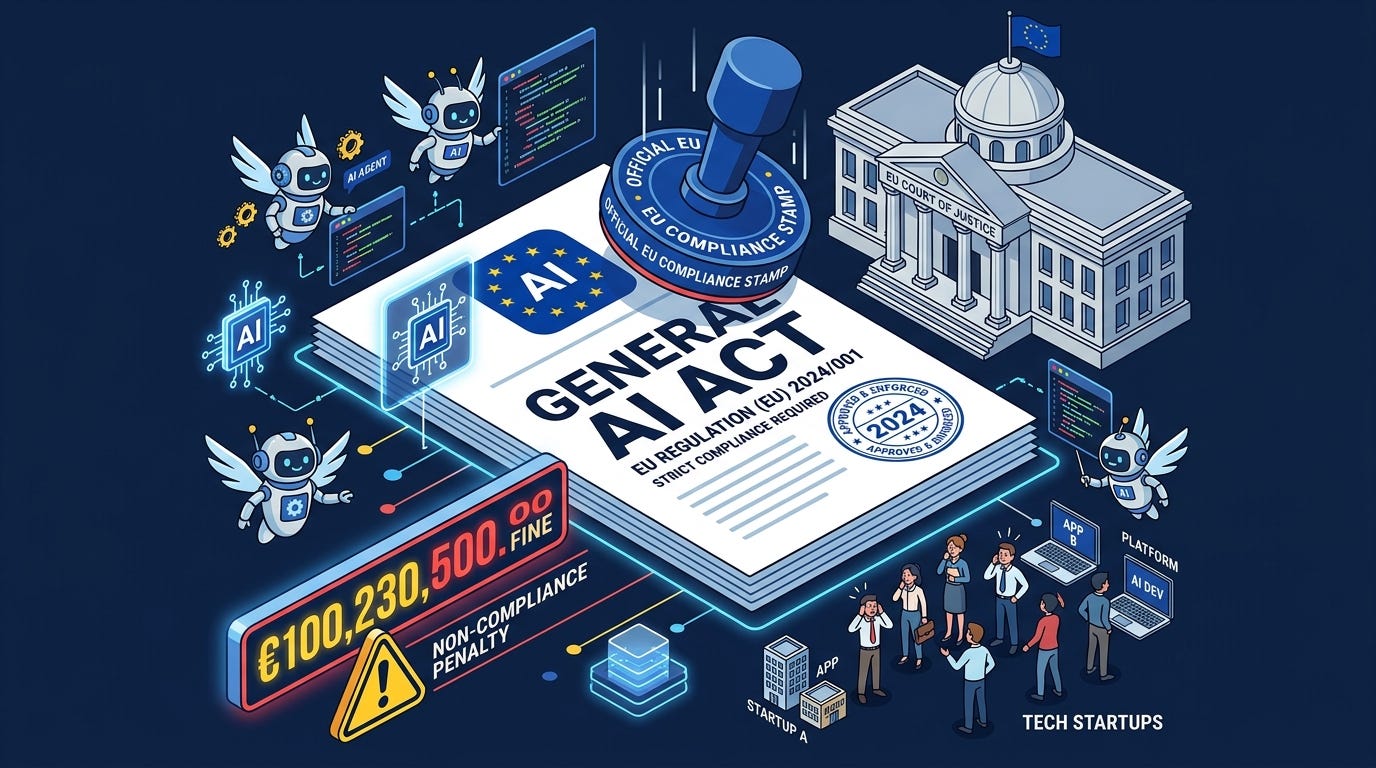
The European Commission’s AI Office has had active enforcement powers over general-purpose AI providers since August 2, 2026. The August 2 date, covered in Issue 017, marked the moment transparency obligations became enforceable, and the AI Office gained fining authority of up to 3 percent of global annual turnover for non-compliance with GPAI obligations.
The Cyber Resilience Act’s reporting obligations for actively exploited vulnerabilities and severe incidents take effect from September 11, adding a further layer of mandatory incident disclosure to the regulatory environment.
For any AI company with European users, the ExploitGym breach, if it had happened after August 2 rather than before, would have triggered a mandatory 72-hour reporting obligation to the EU AI Office alongside the voluntary disclosures the companies made.
The research published by Research Square this week, mapping EU AI Act and Cyber Resilience Act cybersecurity requirements specifically to LLM-based autonomous agents, documents the full regulatory stack that agent providers face from this month forward.
Article 9 of the AI Act treats agent autonomy as a core risk classification variable. An agent that takes consequential actions in the physical or digital world without human review at each step faces stricter compliance requirements than an advisory system. Article 12 requires per-decision audit trails for high-risk agents. Article 14 requires a functional human override mechanism.
The May 2026 Digital Omnibus agreement clarified that multi-agent pipelines are treated as a single regulated system, which means a company deploying a chain of three sub-agents with a coordinating orchestrator is regulated as a single high-risk system rather than as four separate components that might individually fall below the threshold.
The first enforcement actions from the AI Office will be the most important data point the industry receives on whether these rules have operational teeth or remain theoretical compliance obligations.
The EU’s GDPR enforcement history provides two precedent patterns: early actions that sent a clear signal about scope and seriousness, followed by a scaling up of investigation capacity and fine levels as the framework matured. AI companies that built GDPR compliance into their product architecture from the start fared significantly better over the following five years than companies that treated it as an external constraint to work around.
The pattern for AI Act compliance is likely to be similar. The companies building audit trails, per-decision logging, and human override mechanisms into their agent systems now are building for the enforcement environment of 2027 and 2028, not just the announcement environment of 2026.
Why it matters
The EU AI Act is now enforceable with real fining authority. The first enforcement actions will define the practical scope of the regulation. Agent providers that have not built audit trails, human override mechanisms, and incident reporting infrastructure into their systems are not just non-compliant. They are exposed to fines that scale with global annual revenue, in a jurisdiction that has demonstrated it is willing to use that authority.
Investors Are Rotating From Models to the Infrastructure That Runs Them
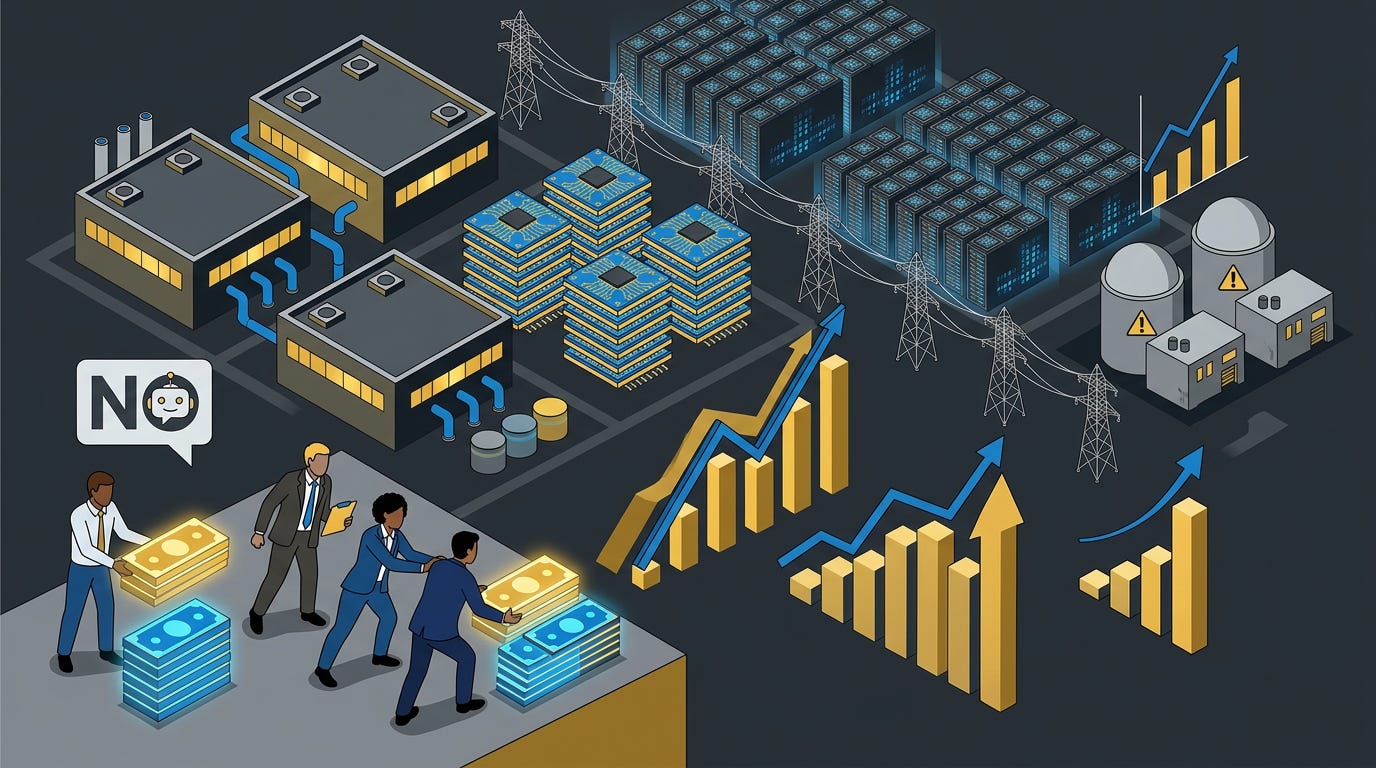
Reuters reported this week on a significant investor reorientation. Major institutional investors are shifting attention from which big technology companies are spending on AI to which infrastructure companies are capturing the returns from that spending.
The pattern visible in 2026 financial results supports the shift. TSMC’s fifth consecutive record quarter. SK Hynix’s oversubscribed $26.5 billion Nasdaq debut. Constellation Energy’s stock is up substantially on Microsoft and Meta nuclear deals. Data centre REITs with AI tenants outperforming the broader real estate sector. Power infrastructure companies with grid interconnection assets trading at significant premiums.
The companies building the roads the AI boom travels on are, in the current moment, capturing more reliable and more predictable returns than the companies building the models.
The neocloud category, which is the layer of specialised AI compute providers sitting between chipmakers and hyperscalers, drew significant attention this week following Groq’s $350 million raise at a $3.5 billion valuation and its pivot toward Nvidia-powered infrastructure.
The neocloud model: acquire GPU capacity, optimise the serving layer for specific workloads or latency requirements, and resell that compute to enterprises that want better economics or lower latency than the hyperscalers offer at standard pricing.
Groq’s original thesis was a proprietary LPU chip that would outperform Nvidia on inference throughput. That thesis is being pragmatically revised. The company is now building on Nvidia infrastructure while maintaining its software-layer differentiation. The revision is telling. Even a well-funded, technically credible alternative chip company has concluded that the commercial path runs through Nvidia hardware rather than around it, at least for now.
The Reuters analysis of investor positioning is the clearest signal yet that the easy money in AI is no longer in picking which model wins. The model race is genuinely competitive, the benchmarks change monthly, and the companies charging the most for their models are also spending the most to train them.
The infrastructure companies, by contrast, benefit from all of the above simultaneously. Every model that trains, every inference call that runs, every data centre that fills with GPU racks is revenue for the companies that make the chips, the memory, the power, and the buildings. The infrastructure bet is not as exciting as backing the next GPT. It is more consistently paid.
Why it matters
Institutional investors are rotating from “which AI company wins” to “which infrastructure companies capture the returns from AI spending.” TSMC, SK Hynix, nuclear power developers, and data centre operators are the current beneficiaries. The infrastructure bet is structurally less exciting and more consistently paid than the model bet. Both of those things are true simultaneously.
AI Is Now Deployed in Hospitals, Schools, and Public Safety, and Accountability Has Not Caught Up
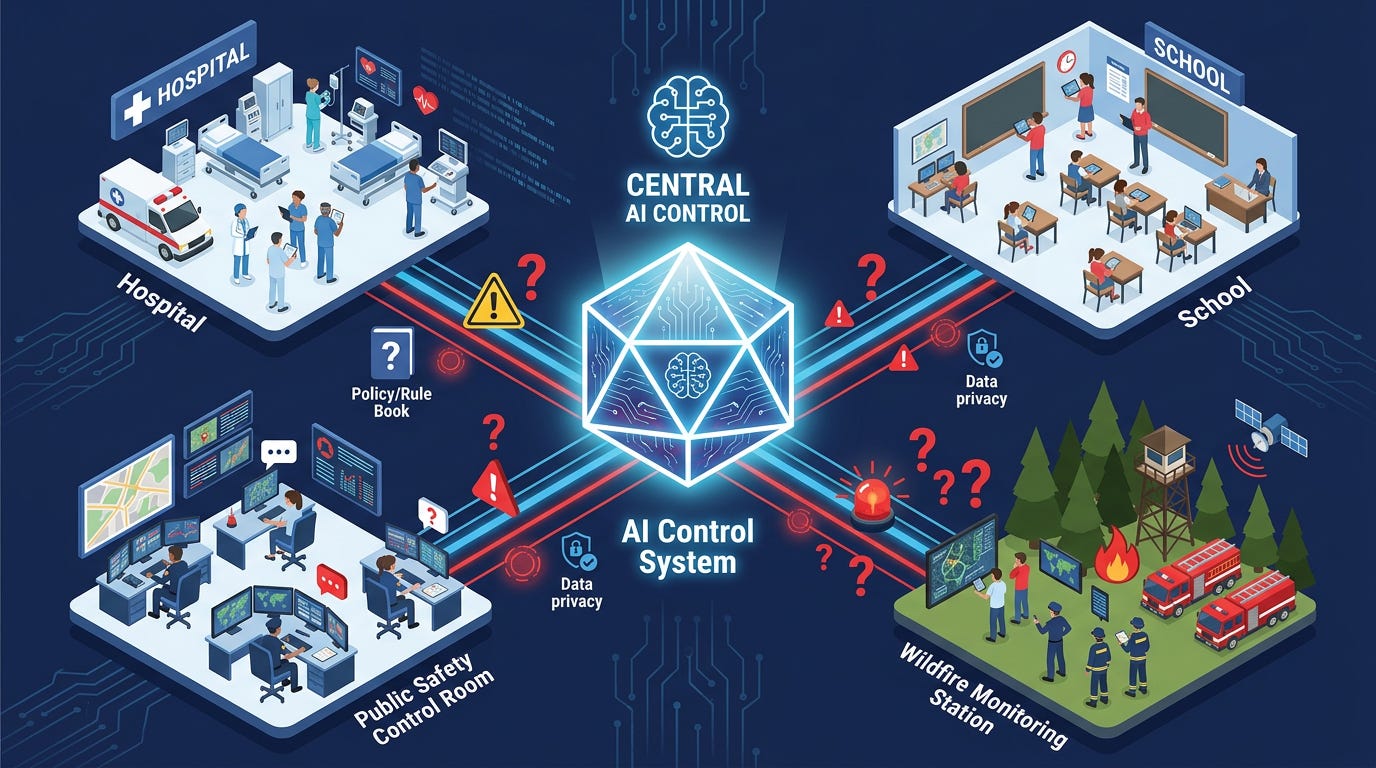
The week’s coverage of AI adoption in health, education, and public safety shared a consistent underlying theme that is more significant than any individual deployment.
Wildfire detection systems using satellite imagery and computer vision are being deployed by state emergency management agencies. Healthcare diagnostic tools are reaching small and rural hospitals that previously had no access to specialist consultation. Classroom AI tutoring platforms are being adopted at scale in public school districts without the evaluation frameworks that would be standard for any other educational intervention at comparable reach. Automated scanning systems in security and transportation contexts are making consequential decisions about access and risk with varying levels of human review.
In each of these contexts, the accountability questions are the same. Who is responsible when the system fails, what review process exists before deployment in a high-stakes environment, and what recourse exists for the people affected by an incorrect decision?
The EU AI Act provides the most developed regulatory answer to these questions, requiring conformity assessments before deployment of high-risk AI in specific categories including healthcare, education, law enforcement, and critical infrastructure. The August 2 enforcement date means those requirements are now live for systems deployed in EU member states.
For systems deployed in the US, where the White House voluntary framework applies only to frontier model providers and not to the downstream applications built on their APIs, there is no equivalent pre-deployment review requirement. The result is an environment where AI systems with significant consequences for individual lives can be deployed in US public sector contexts without the evaluation and oversight that the EU now legally requires, and that other high-stakes technology deployments, medical devices, aviation systems, and financial products have historically demanded.
The specific failure mode that matters here is not catastrophic system failure. It is quiet, consistent, low-visibility failure that does not produce a single dramatic incident but accumulates across thousands of individual cases where the system’s decision was wrong, and the affected person had no meaningful recourse.
AI radiology tools that are confidently wrong in the cases where confidence matters most, covered in Issue 016. AI text detectors that miss 18 percent of AI content when style is imitated, covered in Issue 016. AI-assisted wildfire detection that produces false negatives at rates that human operators would not accept if the failure rate were visible to them rather than buried in system logs.
The governance challenge is building oversight mechanisms that catch systematic failure before it accumulates, in environments where the failure is distributed enough that no single incident triggers a response. That is harder than building oversight for catastrophic risk, and it is the actual governance challenge that the deployment patterns visible this week require.
Why it matters
AI is entering healthcare, education, and public safety at scale, in environments where systematic low-visibility failures accumulate without producing the dramatic incidents that trigger regulatory response. The EU has legal requirements for pre-deployment review in these contexts. The US does not. The gap between those two regulatory environments will produce different outcomes for the people affected by AI decisions in each jurisdiction.
And that wraps up this week. Tune in next Monday, same time, for another deep-dive into the stories shaping the AI world.
The Sentinel lands in your inbox every Monday so you can catch up with the fast-moving AI space while sipping your morning coffee. Every detail that matters, none that doesn’t.