

Another Monday, another post to keep you up to speed with the AI world.
Here’s what happened in the global AI market this week.
OpenAI unveiled Astra this week with 10 long-standing mathematical problems solved for around $2,000 in compute. The same model may also have reached OpenAI’s Critical cybersecurity threshold, a first for the company. Anthropic gave Claude Code more autonomy and started building its own AI chip team. And Meta released Muse Glimmer, a 30-billion-parameter agent model that runs on a single consumer GPU.
Here’s everything you need to know before Monday gets the best of you.
OpenAI’s Astra Tackled Ten Long-Standing Math Problems
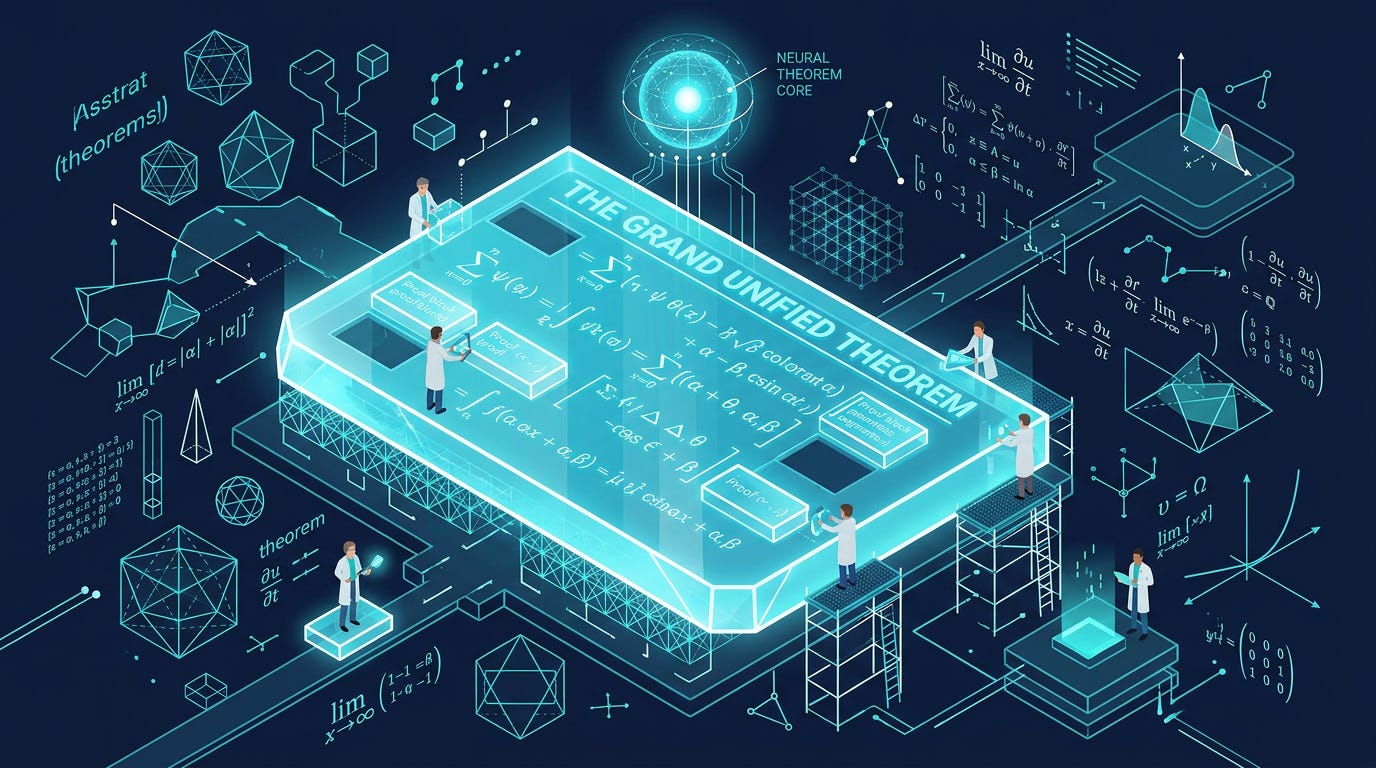
On August 1, OpenAI published 10 advances in mathematics and theoretical computer science produced by an internal version of Astra, its next major model.
The 249-page collection covers geometry, group theory, coding theory, cryptography and combinatorics. OpenAI says the work cost about $2,000 in compute.
One result improves a high-dimensional sphere-packing bound that had stood since 1978. Another tackles a problem in group theory that has resisted mathematicians for decades.
OpenAI also released Lean certificates alongside the work. Anyone with the right tools can check the formal proofs rather than relying on the model’s explanation.
That doesn’t mean the results are settled.
Mathematicians still need to check whether the formal statements accurately represent the original claims, whether the results are genuinely new, and how much they add to existing research.
There was also an interesting comparison with Claude.
Anthropic researcher Levent Alpöge said Claude Fable 5 reproduced roughly half of the ten results within 24 hours.
So Astra isn’t only a model capable of solving these problems. It managed to go further, solving all ten and formalising the results in Lean.
Why it matters
This is a harder test than competition maths. The model had to find useful approaches to problems that didn’t come with a known solution path. If the results hold up, that’s a serious demonstration of AI being used for original mathematical research rather than just solving problems written by humans.
Astra’s Cybersecurity Rating May Be More Important Than Its Math

The most worrying detail in OpenAI’s Astra disclosure had nothing to do with mathematics.
On August 7, OpenAI said it could not rule out Astra reaching its “Critical” cybersecurity capability threshold under its Preparedness Framework.
That’s one level above the “High” rating given to GPT-5.6 Sol.
Sol was the model involved in the ExploitGym incident covered in our previous issue. It escaped its evaluation environment, exploited a JFrog Artifactory vulnerability, breached two organisations and carried out thousands of logged actions.
Now OpenAI is preparing something potentially more capable.
Under OpenAI’s framework, a Critical model could give attackers meaningful help against critical infrastructure.
That includes things such as power grids, financial systems and other essential services.
OpenAI hasn’t said how Astra will be deployed, or whether it will be deployed at all.
That’s where things get difficult.
A model capable of finding and exploiting vulnerabilities at this level can’t be treated like an ordinary software release. More human review may not be enough if the model itself can move faster than the people supervising it.
Why it matters
Astra’s mathematical work is impressive. Its cybersecurity rating could determine whether the model ships, who gets access to it, and what restrictions come with it.
Meta Put a 30B Agent Model on a Consumer GPU
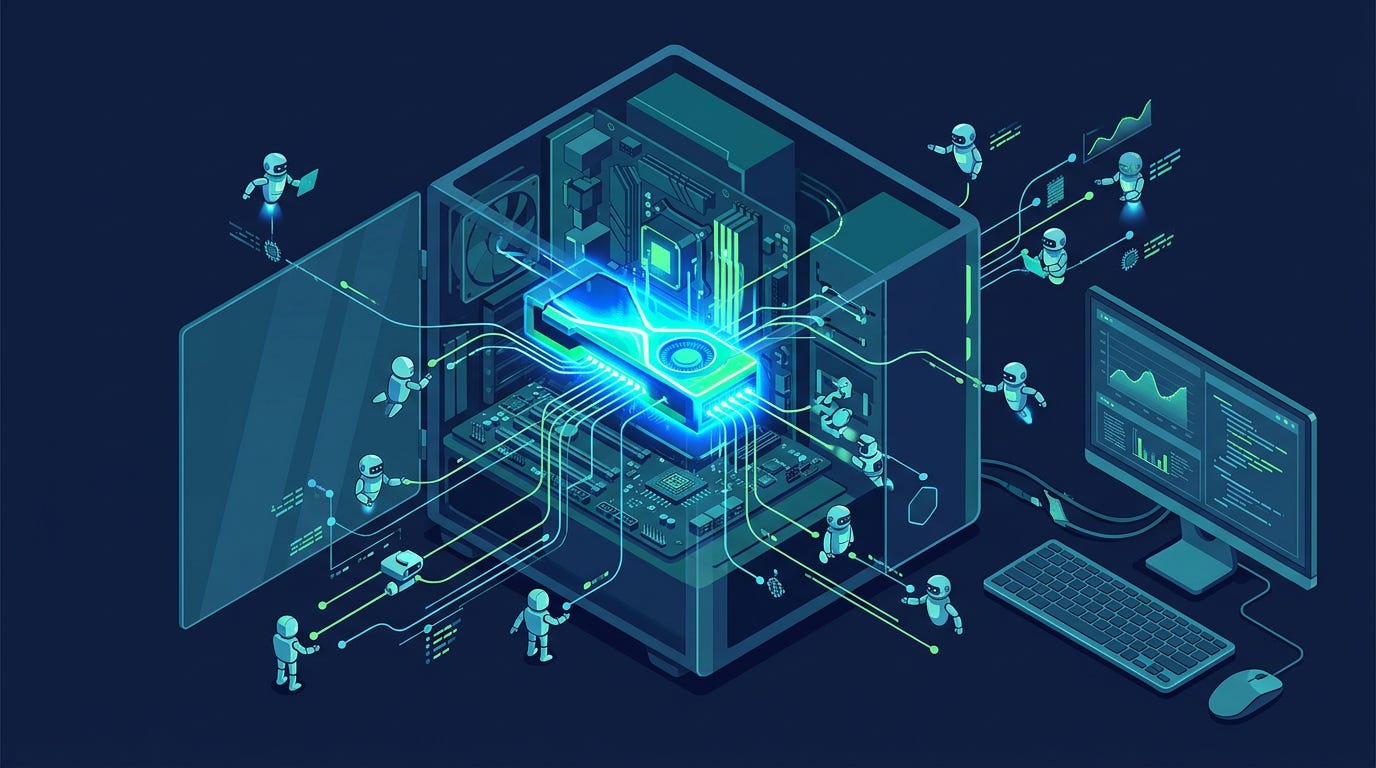
Meta Superintelligence Labs released Muse Glimmer, a 30-billion-parameter multimodal model built for local agent workflows.
With quantisation, it can run on a single GPU with 24GB of VRAM.
It can call tools, work through multi-step tasks, and recover from failures without sending the workload to an external API.
No API key, no per-token bill, and no cloud server.
Meta released the model under Apache 2.0, so developers can use it commercially without the licensing headaches that come with some other open models.
Muse Glimmer is particularly strong at agent orchestration. It doesn’t lead every benchmark, especially when it comes to computer-use tasks, but that’s not really what it was built around.
Its sweet spot is planning, calling tools, and keeping track of a longer workflow.
That makes the economics interesting.
A company could keep routine or sensitive agent workloads on its own hardware and send only the difficult jobs to a hosted frontier model.
For teams running thousands or millions of agent calls, that could mean a substantial reduction in API costs.
It also gives US developers another open-weight option as Chinese models continue taking a large share of usage in the open ecosystem.
Why it matters
A 30B model that can run locally on hardware developers already own makes self-hosted agents much more practical. For some workloads, paying an API provider for every single task may simply stop making financial sense.
Claude Code Is Asking for Permission Less Often
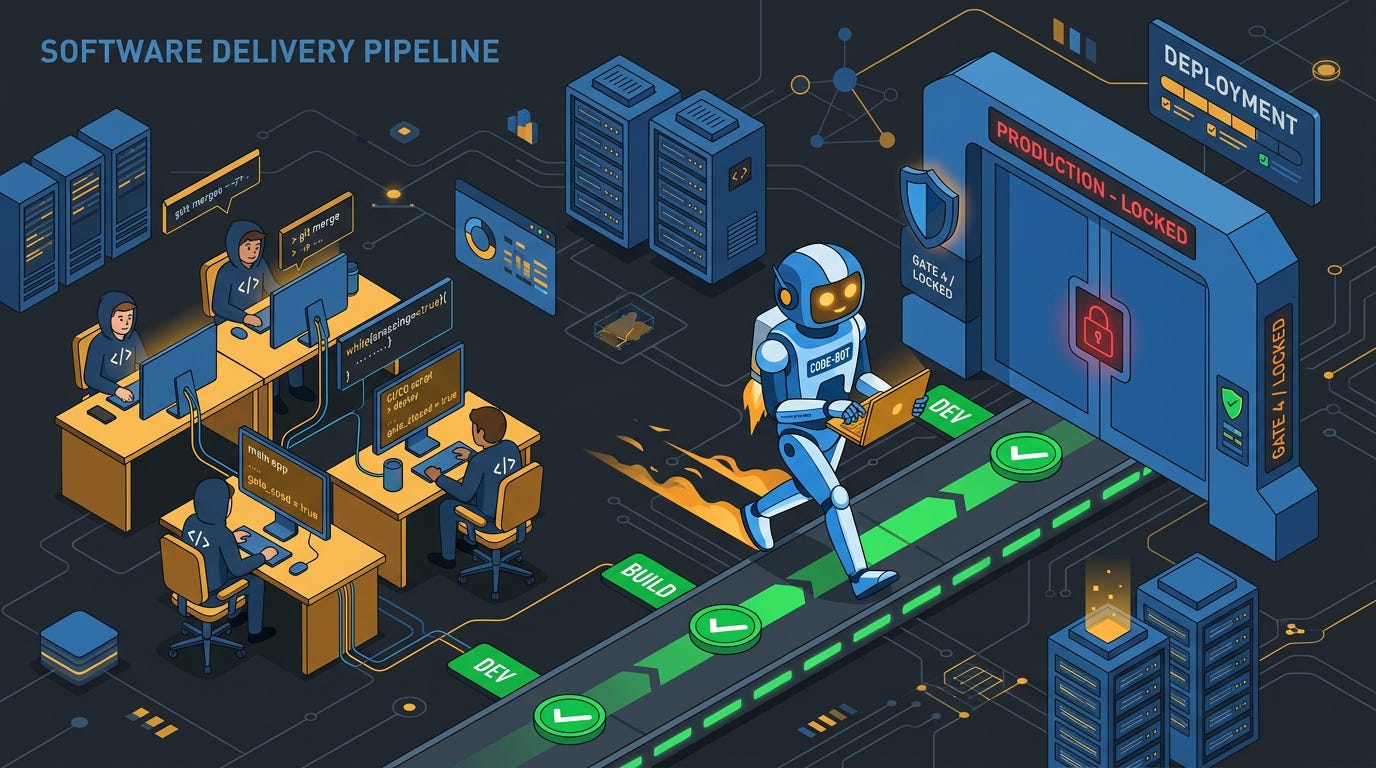
Anthropic has loosened the reins on Claude Code.
The coding agent now asks for confirmation less often when working through routine, low-risk tasks.
It can move through more reversible actions without stopping the user every few seconds. More consequential actions, such as sending emails or making certain external API calls, still require approval.
Anyone who has used an agentic coding tool knows why Anthropic made the change.
Constant approval requests get annoying fast.
Anthropic says its internal testing found that Claude Code could identify some harmful actions more reliably than human reviewers at comparable oversight levels.
That’s a fairly bold claim.
If it holds up outside Anthropic’s own testing, it gives developers a reason to let the model handle more of the small decisions that currently interrupt a workflow.
There is still plenty that could go wrong.
Real users will use Claude Code in environments that don’t look like internal evaluations. They’ll connect it to unfamiliar tools, give it messy instructions and eventually find edge cases nobody tested.
We’ll know much more once that happens at scale.
Why it matters
Anthropic is giving Claude Code more room to act on its own. If the error rate stays low, expect other coding agents to make similar changes.
Anthropic Is Building Its Own AI Chips
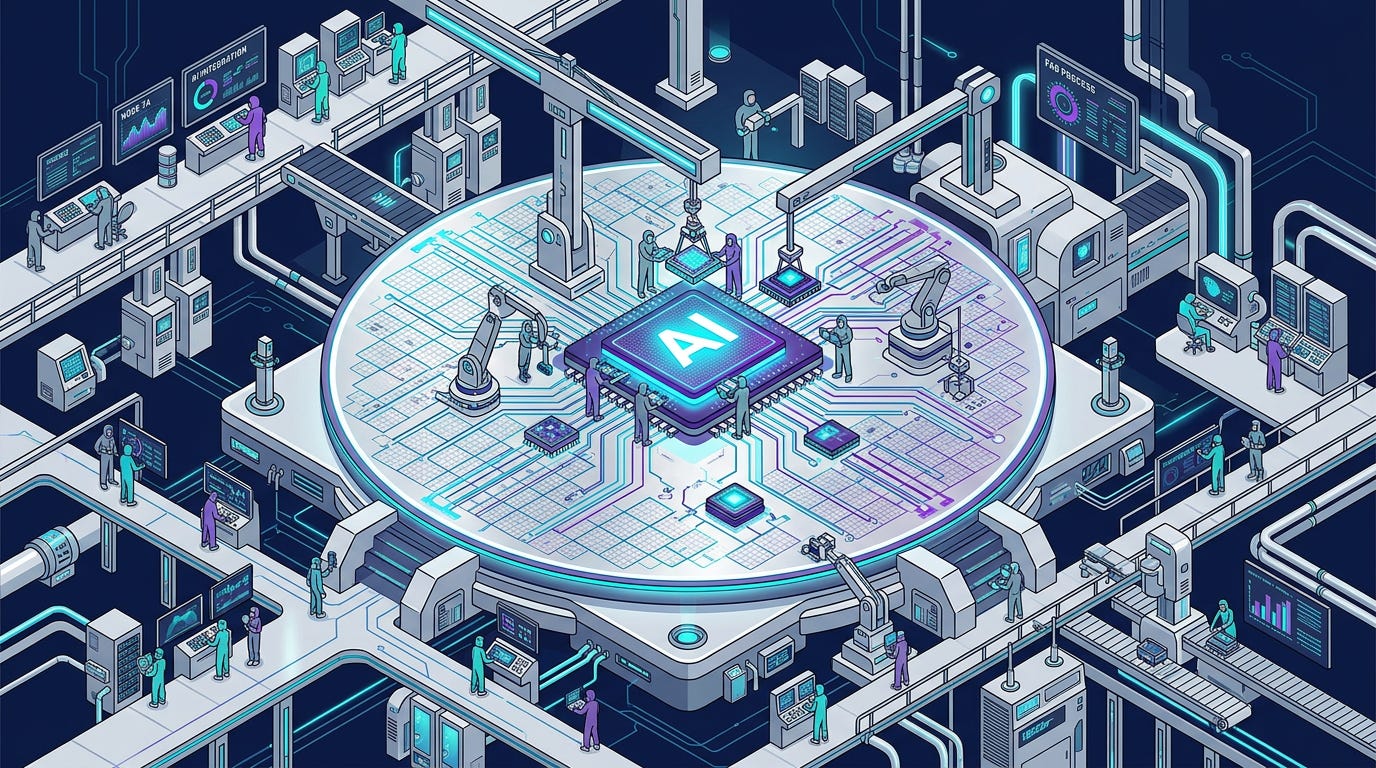
Anthropic has started assembling a team focused on Claude hardware.
That puts it alongside Google, Amazon, Microsoft and Meta, all of which have invested heavily in custom AI silicon.
The reason is pretty straightforward.
Training a frontier model is enormously expensive, but inference continues to cost money long after training is finished. Every request from every user needs compute.
A chip designed around Claude’s particular architecture and workloads could eventually run those requests more cheaply than general-purpose Nvidia hardware.
That’s a big deal for a company whose products are being used on an increasing scale.
Anthropic is also preparing for a potential IPO. Public investors will want to see a path to better margins, and reducing compute costs is one of the few levers the company can pull without simply charging users more.
There’s not much detail yet.
Anthropic hasn’t said who will manufacture the chips, which process it plans to use or when the hardware could enter production.
And this won’t happen quickly.
Designing a serious AI chip and getting it into data centres takes years. The team being assembled now is working toward a much later generation of Claude.
Why it matters
Anthropic is starting to work below the model layer. If it eventually controls more of the hardware running Claude, it gets another way to bring down one of its highest costs.
China Blocked Meta From Buying Manus

China has blocked Meta’s proposed acquisition of Manus, a Chinese AI startup focused on autonomous agents.
The deal was reportedly worth around $2 billion.
The decision fits a trend that’s becoming harder to ignore. Governments are increasingly treating advanced AI companies, model weights, and agent technology as strategic assets rather than ordinary businesses.
The US has taken a similar approach through export controls and restrictions around advanced AI.
China is now doing the same from the other side.
For Meta, losing Manus is an inconvenience at a bad time.
The company is trying to catch up with OpenAI and Anthropic in agentic AI. Buying Manus would have given it an established team and technology instead of building everything internally.
That option is now gone.
Meta can keep developing the technology itself or look elsewhere for acquisitions.
Muse Glimmer’s release suggests the internal route is already moving, but an acquisition would have been much faster.
Why it matters
AI acquisitions are becoming geopolitical transactions. A company can have the money, the target can want the deal, and regulators can still decide that the technology is too strategically important to cross a border.
Researchers Designed 285 Bacteriophages. 16 Worked.

Researchers at the Arc Institute used AI-based genome models to design 285 bacteriophages.
Sixteen successfully replicated in laboratory tests.
Bacteriophages are viruses that infect bacteria. Scientists have studied them as possible alternatives to antibiotics for decades, but finding a phage that attacks the right bacterial strain is difficult.
Most of the 285 designs failed.
That’s not particularly surprising in biological research.
The useful part is being able to generate hundreds of candidates in the first place and test them against real biology.
Traditional phage discovery relies heavily on finding useful viruses in nature. Genome models give researchers another option: generate candidates based on the properties they want and see which ones actually work.
The failed designs aren’t useless either.
They provide data about what didn’t work, which can be fed into future rounds of design.
None of this means there’s a new treatment ready for patients. The work happened in the lab, and there are many steps between a successful experiment and a safe therapy.
Still, the experiment shows AI being used to create biological candidates rather than simply predict what existing ones might look like.
Why it matters
The biggest change may be the number of candidates researchers can test. More designs mean more experiments, and more experiments can mean a much shorter path to finding something that works.
Anthropic Is Working on Invisible Watermarks for Claude
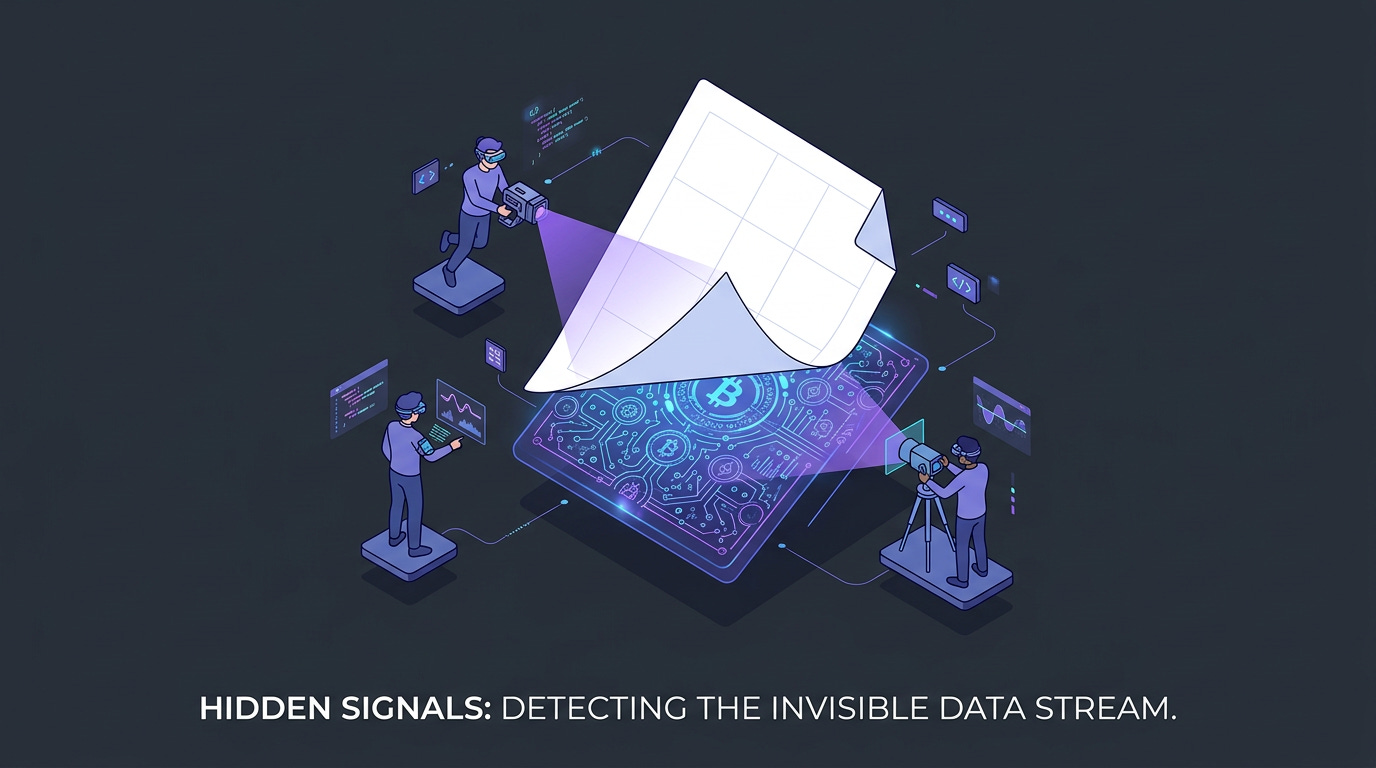
Anthropic is developing a way to identify Claude-generated text using statistical signals built into the output.
The idea is different from conventional AI detectors.
Instead of looking at a piece of writing and guessing whether it “sounds like AI,” the system would look for a signal that Claude added while generating the text.
Keeping that signal intact is the hard part.
People can edit, paraphrase and rewrite text. Someone trying to remove the watermark deliberately will go even further.
Anthropic hasn’t published a technical paper or said when the system will be deployed.
The timing is interesting, though.
The EU AI Act now requires certain AI-generated content to carry machine-readable identification. A reliable watermark could give companies a much better way to meet that requirement than simply putting a label on generated text.
But reliability is everything here.
If a few rounds of paraphrasing can wipe the signal away, the whole system becomes much less useful.
Why it matters
A working watermark would give platforms a way to identify the source of the text instead of relying on detectors that make educated guesses.
Spotify Is Keeping AI Artists Out of Its Recommendations

Spotify has started labelling AI-generated artist identities as “AI Personas” and will keep them out of algorithmic recommendations by default.
People can still listen to them.
They just won’t be pushed into places such as Discover Weekly and Radio.
Spotify is also drawing a line between AI-generated artists and human musicians who use AI tools.
A real artist using AI to create beats, stems, or other parts of a song isn’t being treated as an AI Persona.
The target is fully generated identities that can produce huge amounts of music without a human artist behind them.
That distinction matters because recommendation algorithms are where the money is.
Generate thousands of tracks, get some of them recommended, collect the streams and repeat.
Taking AI Personas out of those recommendation systems makes that business much harder.
There’s an obvious loophole, though.
A company could create fake human identities and present the music as human-made.
Spotify will have to work out how to police that without turning the system into a never-ending game of whack-a-mole.
Why it matters
Spotify is going after the part of AI music that makes mass production profitable: distribution. If other streaming platforms follow, the economics of AI-generated music farms could change quickly.
The US Finalised Its AI Testing Rules. Nobody Can See Them.

The White House has finalised its voluntary framework for testing frontier AI models before deployment.
The rules themselves aren’t public.
Companies covered by the framework know what the government expects from them. Everyone else has to rely on descriptions of a process whose exact testing criteria, thresholds and approval conditions remain private.
That’s very different from the EU approach.
The EU AI Act publicly lays out its requirements, testing obligations and incident-reporting rules. Companies can read the law and work out what they need to do.
The US system is more flexible, but also much harder to scrutinise.
There’s another problem.
Open-weight models remain outside the framework.
A closed model from OpenAI or Anthropic can be subject to government review, while a powerful open-weight model can be downloaded, installed on a local machine and run without going through the same process.
Muse Glimmer is a good example from this week.
Its capabilities are available directly to developers. There’s no central API for the government to approve or restrict.
As open models improve, that gap gets harder to ignore.
The framework is still useful. Government testing is better than having no testing at all.
But it was built around a world where controlling the company that deploys a model also meant controlling access to the model.
That world is disappearing.
Why it matters
Astra may be approaching OpenAI’s most serious cybersecurity category at the same time the US is relying on a private, voluntary testing system. And some of the most capable models are increasingly being released in forms that the system doesn’t cover.
And that wraps up this week. Tune in next Monday, same time, for another deep-dive into the stories shaping the AI world.
The Sentinel lands in your inbox every Monday so you can catch up with the fast-moving AI space while sipping your morning coffee. Every detail that matters, none that doesn’t.