

Another Monday, another post to keep you up to speed with the AI world. Here’s what happened in the global AI market this week.
Fable 5 returned to users worldwide after 19 days offline, bringing Claude Sonnet 5 with it. Alphabet raised $84.75 billion in the largest corporate equity raise in history. Gemini 2.5 Pro with Deep Think posted the strongest science benchmarks any public model has ever produced. And Grok 4.5 entered private beta at SpaceX and Tesla, trained on Cursor’s data within weeks of the acquisition closing.
Here’s everything you need to know before Monday gets the best of you.
Fable 5 Returns After 19 Days Offline Following Lifted Export Controls
Claude Fable 5 returned to all users worldwide on July 1, 2026, at 3:31 PM ET. This followed the US Department of Commerce’s June 30 decision to lift the export controls it had imposed on June 12.
The model is now available across Claude.ai, the Claude Platform API, Claude Code, and Claude Cowork for users in every country. Anthropic is also re-enabling Fable 5 on Amazon Web Services, Google Cloud, and Microsoft Foundry as quickly as possible.
The 19-day shutdown was the most disruptive government-ordered AI model restriction in the industry’s history. It took a flagship commercial model offline for every customer globally, including Anthropic’s own non-US employees. The restriction was based on a jailbreak that the company had publicly disputed as narrow and manageable.
Two structural changes accompanied the restoration. First, a new safety classifier was trained specifically to block the jailbreak technique that Amazon researchers discovered, and that triggered the export control order.
The classifier stops the specific technique in more than 99 percent of attempts. The trade-off is increased false positives: some legitimate coding and debugging queries that pattern-match against the jailbreak are being blocked and rerouted to Opus 4.8, with the user notified. Anthropic describes this as a temporary calibration; it expects to improve over the following weeks.
Second, the billing structure changed. For Pro, Max, Team, and select Enterprise subscribers, Fable 5 is included at up to 50 percent of weekly usage limits through July 7, after which Fable 5 requires usage credits. The July 7 billing cliff is the deadline developers need to prepare for before switching production workloads back to Fable.
The governance outcome is as significant as the product outcome. Anthropic published a detailed timeline of the 19 days and a set of proposals for how the incident should shape future frontier model governance.
The company is calling for a formal statutory framework to replace the ad hoc export control letter process. It also proposed pre-release government testing with defined criteria and timelines, a shared technical standard for what constitutes a jailbreak that triggers national security concerns, and an industry-wide jailbreak disclosure program so that companies are not acting on government-held information they cannot independently verify.
Whether any of those proposals become policy is unknown. Anthropic went through an experience that no AI company should want to repeat, and the proposals it is making are designed around not repeating it.
Why it matters
Fable 5 is back. The jailbreak has a classifier fix. The billing has changed. And Anthropic has published its proposals for how frontier model governance should work. The question is whether anyone with the authority to act on those proposals does so before the next Mythos-class model ships.
Anthropic Launches Claude Sonnet 5 Alongside Fable’s Return
On July 1, the same day Fable 5 was restored, Anthropic released Claude Sonnet 5, its new mid-range flagship sitting between Fable 5 and Opus 4.8 in the lineup.
The launch was clearly held back during the shutdown period and released the moment the situation was resolved. Sonnet 5 is positioned as the model for the vast majority of enterprise use cases: complex reasoning, multi-step agentic tasks, and extended coding workflows that need more capability than Opus but do not require the full weight of Fable.
Pricing has not been publicly confirmed at the time of writing, but follows the established Sonnet tier structure. The model is available immediately across Claude.ai, the API, and all partner platforms.
Sonnet 5 ships with adaptive thinking enabled by default on the API, which changes response format and latency for workflows that expect direct non-thinking responses.
Anthropic acknowledged an error in the BrowseComp evaluation data included in the original launch post and issued a correction. The original chart used a simpler methodology that underestimated Sonnet 5’s performance.
The corrected chart uses a 10-million-token budget with context compaction and programmatic tool calling, consistent with the System Card methodology. This update improved Sonnet 5’s published BrowseComp score.
Teams migrating to Sonnet 5 from earlier models need to pin to claude-sonnet-5, audit and remove sampling parameters that conflict with adaptive thinking, recalibrate token budget enforcement, and test agent loops end-to-end before switching production traffic.
The California state government signed a procurement agreement with Anthropic this week to deploy Claude across state agencies, marking one of the largest government AI contracts in US state history.
The deal came the same week as the federal government lifted the export controls that had put Anthropic’s products offline.
This sequence is the clearest illustration of where AI governance friction currently sits: at the federal level, where export control authority lives, rather than at the state or local level, where procurement decisions are being made faster and with less friction than anywhere in the national security apparatus.
Why it matters
Anthropic held its mid-range flagship launch until the shutdown was resolved, then shipped it the same afternoon. Sonnet 5 and the California government deal on the same day as Fable’s return is Anthropic, making the point that its commercial business is intact and its government relationships are being rebuilt simultaneously.
Alphabet Secures $84.75 Billion in Record-Breaking Corporate Equity Raise
On June 30, Alphabet closed an $84.75 billion equity raise, the largest corporate equity raise in history, structured across three components.
First, a $30 billion underwritten public offering of Class A and Class C common stock plus mandatory convertible preferred depositary shares, upsized from $80 billion after the offering was oversubscribed at pricing.
Second, a $40 billion at-the-market offering program beginning in Q3 2026, managed by Goldman Sachs, JPMorgan, and Morgan Stanley.
Third, a $10 billion private placement to Berkshire Hathaway, split between $5 billion in Class A shares at $351.81 and $5 billion in Class C shares at $348.20.
Berkshire’s participation at those prices was the signal that moved the market. Warren Buffett’s firm has historically avoided technology investments. A $10 billion private placement in Google’s parent company is one of the largest single technology investments Berkshire has ever made.
The context: Alphabet has been losing senior AI researchers to Anthropic and OpenAI all year.
The week of June 21-27 saw four additional senior Gemini researchers announce they were joining Anthropic, just as the June GA deadline for Gemini 3.5 Pro slipped into July.
The stock had also absorbed a $269 billion drop in market cap on June 27, reported as a reaction to the talent exodus news and the model delay announcement.
The $84.75 billion raise, announced and priced on June 29-30, restored that market cap and then some. It sends a message about Alphabet’s ability to mobilize capital that no amount of research retention spending could match.
The raise is not funding a specific product or project. It is structural capital to support AI infrastructure investment, compute procurement, and the talent acquisition needed to rebuild the Gemini research team to a competitive level.
Gemini 3.5 Pro, which Google CEO Sundar Pichai committed to a June general availability date at Google I/O in May, is now confirmed as a July story.
Google has acknowledged the delay, citing quality refinements based on feedback from early enterprise testers on token efficiency and long-horizon agentic performance. The model is in limited Vertex AI enterprise preview.
Expected specifications remain unchanged: 2 million token context window, Deep Think reasoning mode gated to the $250 per month Ultra tier, and frontier multimodal capability.
Developers building on Google’s AI stack have been waiting since May for a firm date. The $84.75 billion raise gives Alphabet the runway to get this right. It does not give developers the firm date they need.
Why it matters
Alphabet absorbed a $269 billion market cap drop and responded with the largest corporate equity raise in history in the same week. The capital is real, the Berkshire participation is significant, and the message is clear: Google is not stepping back from the AI race. Gemini 3.5 Pro still needs a firm date.
Gemini 2.5 Pro with Deep Think Sets New Record on Science Benchmarks
Google launched Gemini 2.5 Pro with Deep Think on June 22, and its benchmark numbers have been independently verified this week.
On GPQA Diamond, the PhD-level science questions benchmark considered one of the hardest broad-domain evaluations in existence, Gemini 2.5 Pro Deep Think scored 82.4 percent.
On HumanEval Plus, the extended coding evaluation, it scored 94.1 percent. Both are the highest scores any publicly available model has posted on those benchmarks.
The model’s reasoning capability on extended multi-step problems, in particular in physics, chemistry, and biology, has been independently validated by researchers in those fields who tested it against questions from their own domains of expertise.
Deep Think is a reasoning mode that engages extended chain-of-thought processing before generating a response, similar in architecture to OpenAI’s o-series thinking models and Anthropic’s extended thinking mode in Fable.
The key distinction in Gemini 2.5 Pro’s implementation is that Deep Think is gated to the Google AI Ultra $100 per month tier, not available as a standard API option at the base model pricing.
For enterprise teams building on Google Cloud’s Vertex AI, Deep Think is available through the Gemini API with usage-based pricing.
The per-query cost for extended thinking is higher than standard inference, which means workload selection matters. Deep Think performs best on problems where extended reasoning produces a meaningfully different output from the standard model, and adds latency and cost for routine tasks where it does not.
The benchmark context is important for reading this result honestly. GPQA Diamond was designed to be hard enough that domain experts could reliably answer only 65 percent of questions, and that AI systems, as recently as 2024, could not match human PhD-level performance.
An 82.4 percent score positions the model above the PhD expert baseline.
The caveat researchers consistently apply to this kind of result: benchmark performance on curated question sets does not necessarily transfer to novel, open-ended research problems of the kind actually faced by working scientists.
The AlphaProof Nexus results from Issue 008, where an AI solved nine open Erdős problems with machine-verifiable proofs, representing original mathematical work. GPQA Diamond represents impressive recall and reasoning on well-formed questions. Both are significant, but they are different things.
Why it matters
The highest science benchmark score any public model has posted comes from a lab that just lost four senior researchers and delayed its flagship model into July. Gemini 2.5 Pro Deep Think is a genuine capability result. It is also Google’s best argument that the talent departures have not yet destroyed its competitive position. Whether that argument holds through Q3 depends on whether Gemini 3.5 Pro ships and performs.
Grok 4.5 Enters Private Beta at SpaceX and Tesla with Cursor Data Integration
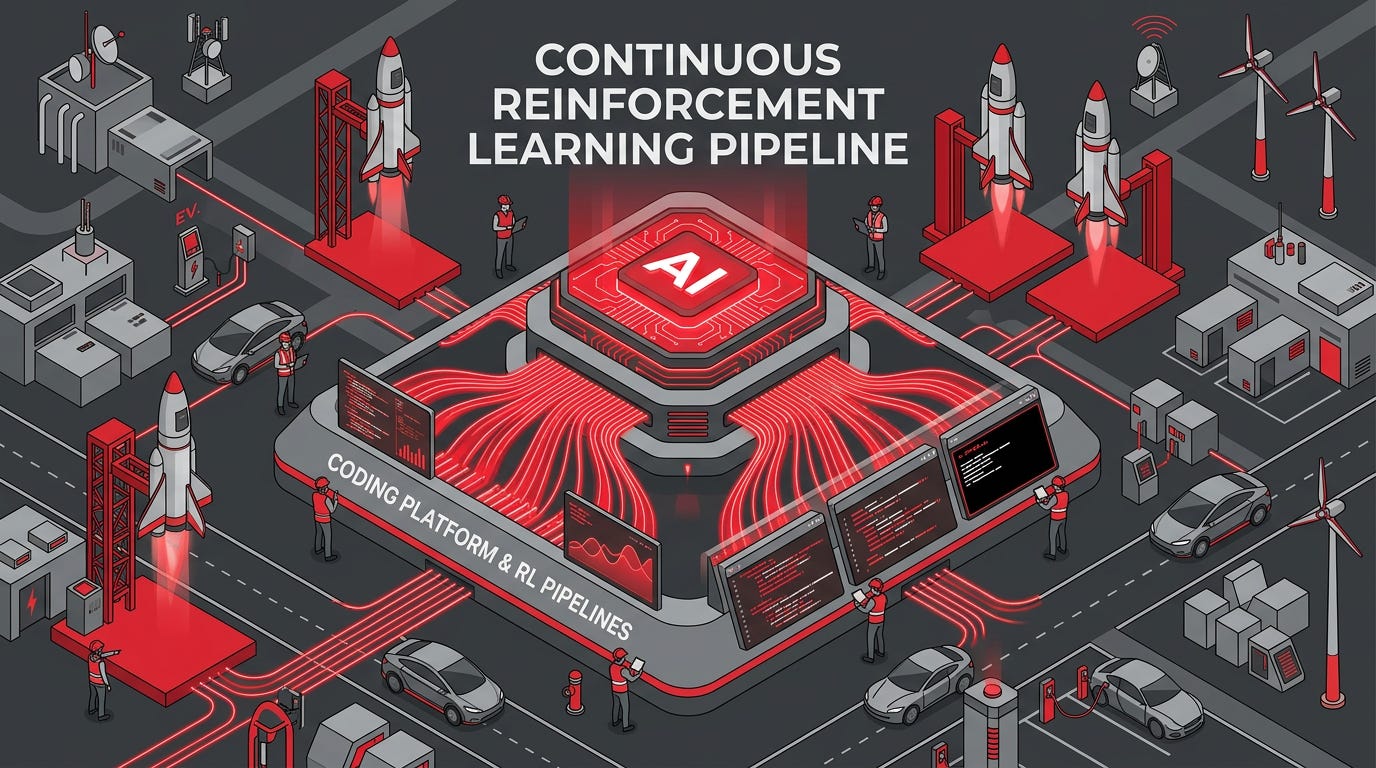
On June 28, Elon Musk announced on X that Grok 4.5, based on the 1.5 trillion parameter V9 foundation model, has entered private beta at SpaceX and Tesla.
“Early evals show performance close to, perhaps exceeding Opus,” Musk wrote, adding that reinforcement learning is “continuing to significantly improve the model” and that the Grok Build evaluation harness is “showing daily advancements.”
Four details matter for reading this announcement. First, the 1.5 trillion parameter scale is a 50 percent increase from Grok 4.4 at approximately 1 trillion parameters, shipped in late May, in roughly one month. That is an unusually fast scale-up by any lab’s standards.
Second, the Cursor training data, which SpaceX acquired for $60 billion in June, has already been incorporated into supplemental training within weeks of the deal closing. This is faster integration than most acquisition playbooks allow for.
Third, Grok 4.5 is in beta at SpaceX and Tesla specifically, not as a public product. This makes Musk’s own companies the evaluation infrastructure for xAI’s model development, which is a genuinely unusual arrangement.
Most AI labs test on curated benchmarks, red team with external researchers, and run limited internal pilots before broad deployment. xAI is running daily improvement cycles using production engineering environments at a rocket company and an electric vehicle manufacturer as its continuous evaluation ground.
Whether that produces better-calibrated real-world performance than standard benchmark testing is an empirical question the second half of 2026 will answer.
Fourth, the Grok Build coding harness, xAI’s internal tool for running AI against real engineering tasks, is running daily improvement cycles on Grok 4.5, which means the model’s capability profile is changing faster than any external benchmark can track.
The competitive implication is significant. At the time of the SpaceX acquisition announcement, Cursor’s market share among AI coding tools had declined from 41 percent to 26 percent in a single quarter, with Claude Code and Codex taking the ground it lost.
The Cursor training data gives xAI access to millions of real developer sessions, real coding problems, and real model interactions that represent exactly the kind of diverse real-world coding context that reinforcement learning from human feedback thrives on.
If that data is already in Grok 4.5’s training, and the model is iterating daily against SpaceX and Tesla engineering tasks, xAI may be accumulating a practical coding advantage that does not show up on benchmarks until the model is publicly released. Musk has not given a public timeline for Grok 4.5’s broader release beyond the private beta.
Why it matters
xAI scaled from 1 trillion to 1.5 trillion parameters in a month, integrated Cursor’s training data in weeks, and is iterating daily against SpaceX and Tesla engineering tasks. Whether that compounding produces a public model competitive with Claude Code and Codex is the question. The private beta suggests xAI believes the answer is yes.
India Joins Expanded 35-Nation Pax Silica AI Governance Coalition
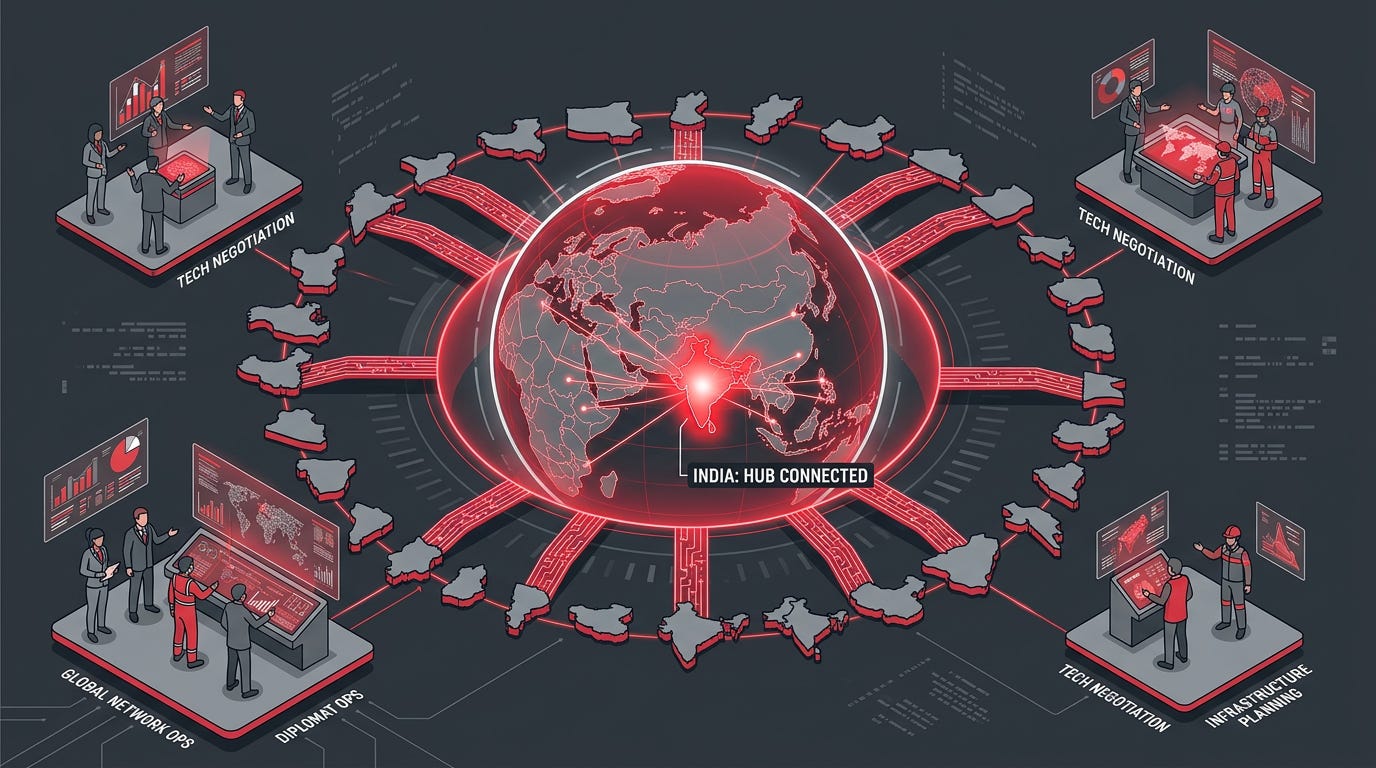
The AI governance coalition known as Pax Silica expanded to 35 member nations this week at a summit in Washington, adding 12 new signatories, including India, Japan, South Korea, Brazil, and Australia.
The coalition, formed in January 2026 around a framework for responsible AI development and shared governance standards, had previously been dominated by the UK, EU member states, and a cluster of smaller allies.
The addition of India, the world’s largest democracy and a country with significant AI development ambitions of its own, changes the coalition’s weight considerably.
India’s chief AI negotiator told Reuters that New Delhi joined on the condition of a specific assurance from the US: that trusted Pax Silica partners would not face unilateral access cutoffs to frontier AI models without advance notice and a formal dispute process.
The assurance India received is not in writing as a treaty obligation. It is an informal commitment that the US government will consult with Pax Silica partners before imposing export controls that would cut off their access to frontier models.
The Fable 5 shutdown demonstrated what happens when that consultation does not occur: allied governments lost access to a model they had deployed across critical infrastructure without warning, and had no formal mechanism to contest the decision or get a timeline for resolution.
India’s demand for a formal process before joining Pax Silica is the most direct expression yet of how the Fable 5 incident reshaped allied governments’ view of their dependence on US-controlled frontier AI.
The Five Eyes cybersecurity agencies issued updated AI security guidance this week, the second major guidance document from that alliance in two months following the “Careful Adoption of Agentic AI Services” paper from May.
The new document focuses specifically on frontier model export controls and what allied governments should consider when assessing their exposure to AI models that originate in a single jurisdiction.
The timing, published the same week Pax Silica expanded, is not coincidental. The formal governance question that the Fable 5 shutdown made urgent—how allied nations maintain AI access parity with the US while the US reserves the right to cut off that access for national security reasons—is now an active item on the agenda of every major allied intelligence and technology ministry.
No answer has been formally proposed yet. The question is at least now being asked in the right rooms.
Why it matters
India joined a 35-nation AI governance coalition only after extracting an informal commitment that the US would not cut off allied access to frontier models without warning. That demand is the clearest statement yet that the Fable 5 shutdown reshaped how US allies think about their AI dependencies. The governance gap the incident exposed is now an active diplomatic problem.
OpenAI Reportedly Offers US Government 5% Equity Stake in Upcoming IPO
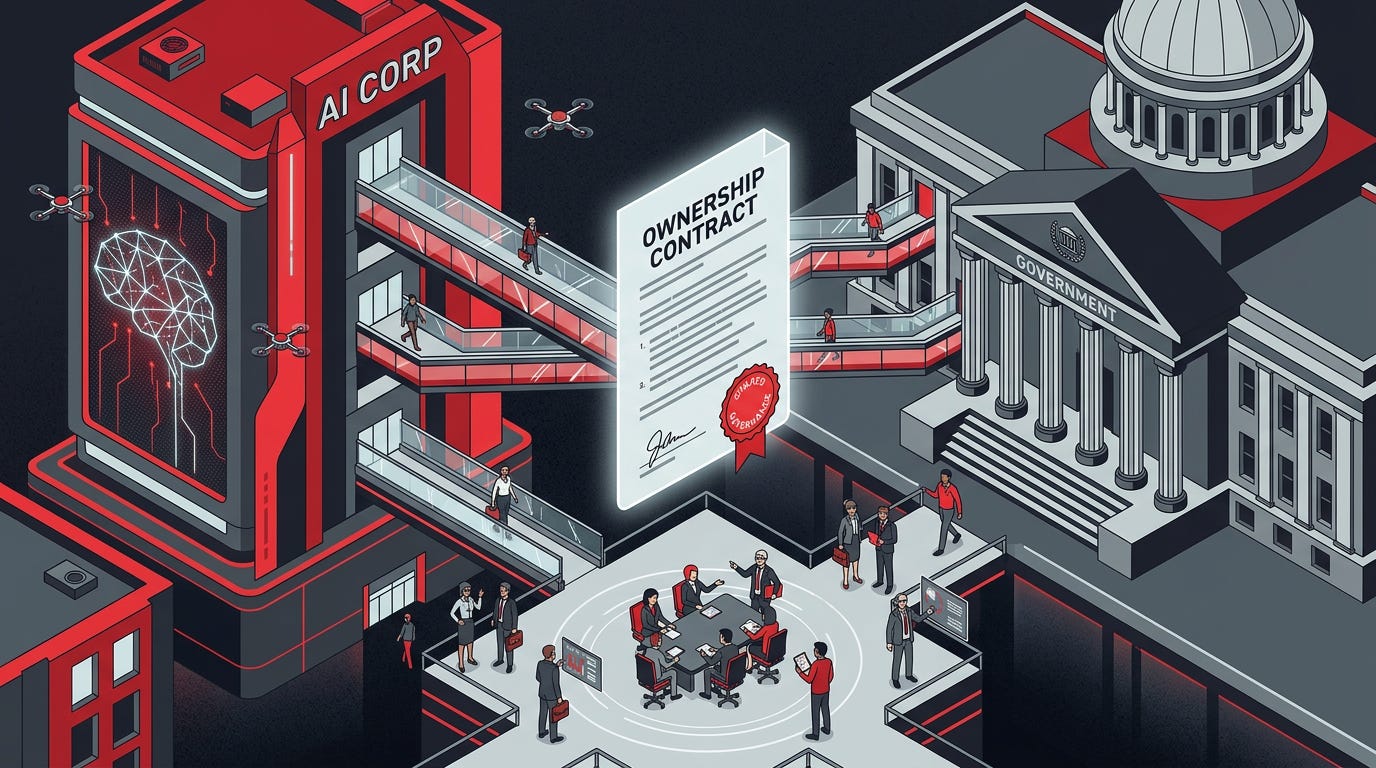
According to reporting published on July 4, OpenAI is in discussions with the US government to offer a 5 percent equity stake in its IPO at a subsidized price as part of the ongoing negotiations around the frontier model approval framework.
The structure being discussed would allow a designated federal entity, possibly the Sovereign Wealth Fund that the Trump administration proposed earlier in 2026, to take a founding position in OpenAI’s public offering at a pre-IPO price. This would give the US government both financial exposure to the company’s success and an institutional seat at the table as a shareholder.
No AI company has offered a government an equity stake as part of a regulatory accommodation before. If it proceeds, it would represent a fundamentally different relationship between frontier AI and the state than the vendor-regulator dynamic that has characterized the past five years.
The context: OpenAI’s ongoing negotiation with the administration over the frontier model approval framework, which grew out of the GPT-5.6 launch under a government-managed access list, has produced two parallel tracks.
One is operational: how future frontier model releases get reviewed and approved before public deployment. The other is financial: whether the US government has a structural incentive to support OpenAI’s commercial success rather than treating it purely as a compliance problem.
The 5 percent stake offer is the financial track made concrete. At OpenAI’s projected $1 trillion IPO valuation, 5 percent is $50 billion in equity.
Even at a significant discount from public pricing, the government’s return would depend entirely on OpenAI’s commercial success, which creates a very different set of incentives than a regulatory relationship based only on oversight authority.
The proposal has not been confirmed by either OpenAI or the administration, and the reporting relies on sources familiar with the discussions rather than official statements.
The proposal is also structurally unusual enough that it raises questions that would need to be resolved before it could proceed: what conflict of interest rules apply when the government holds equity in a company it regulates, how the equity would be managed to prevent political interference in the company’s operations, and whether the arrangement would require congressional authorization.
The answers to those questions will determine whether this becomes a formal part of the IPO structure or remains a negotiating gesture that never reaches the filing.
Why it matters
If the US government takes a 5 percent stake in OpenAI’s IPO, it becomes a financial stakeholder in the company it is simultaneously trying to regulate. That is a different relationship than any government has had with any technology company in modern history. The alignment of incentives it creates, both positive and dangerous, would be unlike anything that currently exists in AI governance.
Labor Data Reveals Shrinking Entry-Level Roles for Early-Career Workers
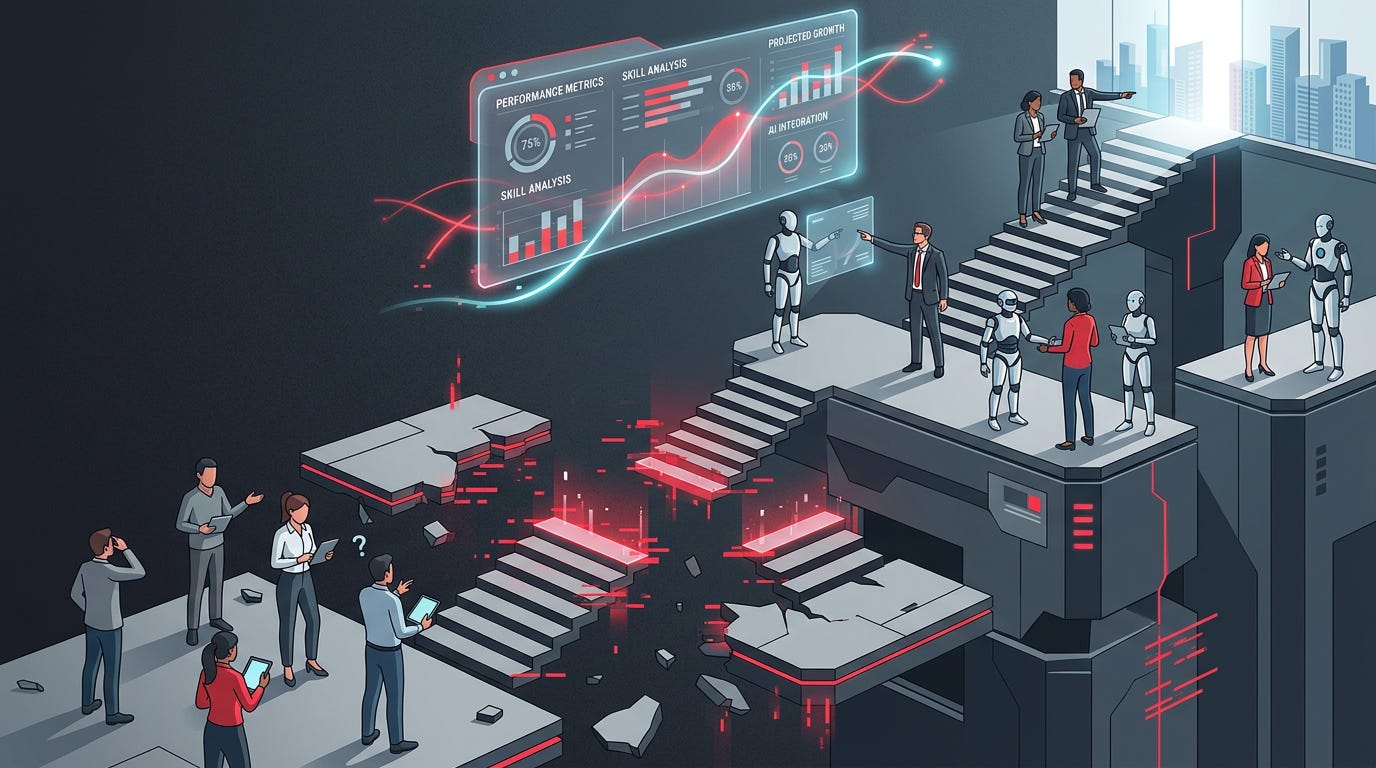
Stanford economist Erik Brynjolfsson and ADP chief economist Nela Richardson published the Canaries Dashboard in June 2026, and this week it began generating significant coverage as its findings circulated beyond the economics community.
The dashboard provides the most granular labor market data yet on how AI is affecting employment by career stage, using ADP’s payroll data across millions of workers to track employment changes in AI-exposed versus non-AI-exposed occupations.
The results are direct. For workers aged 22 to 25 in AI-exposed occupations, employment is shrinking at 3.8 percent per year as of April 2026. For the same age group in the least AI-exposed occupations, employment is growing at 2 percent annually. The gap is 5.8 percentage points and widening.
The Anthropic Economic Index, a separate research product published on June 29 covering Claude usage from April 10 to June 10, 2026, adds a dimension the Canaries Dashboard cannot capture: what workers who are using AI are actually doing with it, and how they perceive its effect on their work.
The report covers approximately 9,700 users whose survey responses are linked to actual Claude usage data.
The classic optimism bias pattern from prior automation research shows up clearly: workers fear AI’s impact on junior roles at a 40 percent likelihood but rate their own job-loss risk significantly lower. The workers who most underestimate AI’s impact on their position are consistently the most exposed in the historical data on prior automation waves. This cohort appears to be repeating that pattern.
The two datasets together tell a story that is harder to dismiss than either alone.
The Canaries Dashboard shows employment contracting for early career workers in AI-exposed roles at a rate that compounds over time: 3.8 percent per year means a meaningful fraction of the entry-level positions in AI-exposed fields disappear before the workers who would have filled them can establish themselves.
The Anthropic Index shows that the workers currently using AI heavily are the experienced ones who have already established themselves, and who underestimate the exposure of people below them on the career ladder.
The practical implication for enterprises, which the Index’s own researchers flag explicitly: protecting junior craft requires redesigning onboarding around judgment tasks that AI currently handles poorly, specifically tacit knowledge, client relationships, and management context. Deploying AI without making that investment produces a workforce that cannot replace itself.
Why it matters
The most granular labor market data published on AI’s employment effects found early-career workers in AI-exposed roles shrinking at 3.8 percent per year. The workers who most underestimate this risk are the experienced ones currently doing well with AI. The window to redesign onboarding before the problem compounds is open now and will not stay open indefinitely.
SK Hynix Files for $29 Billion Nasdaq Listing to Fund HBM Expansion
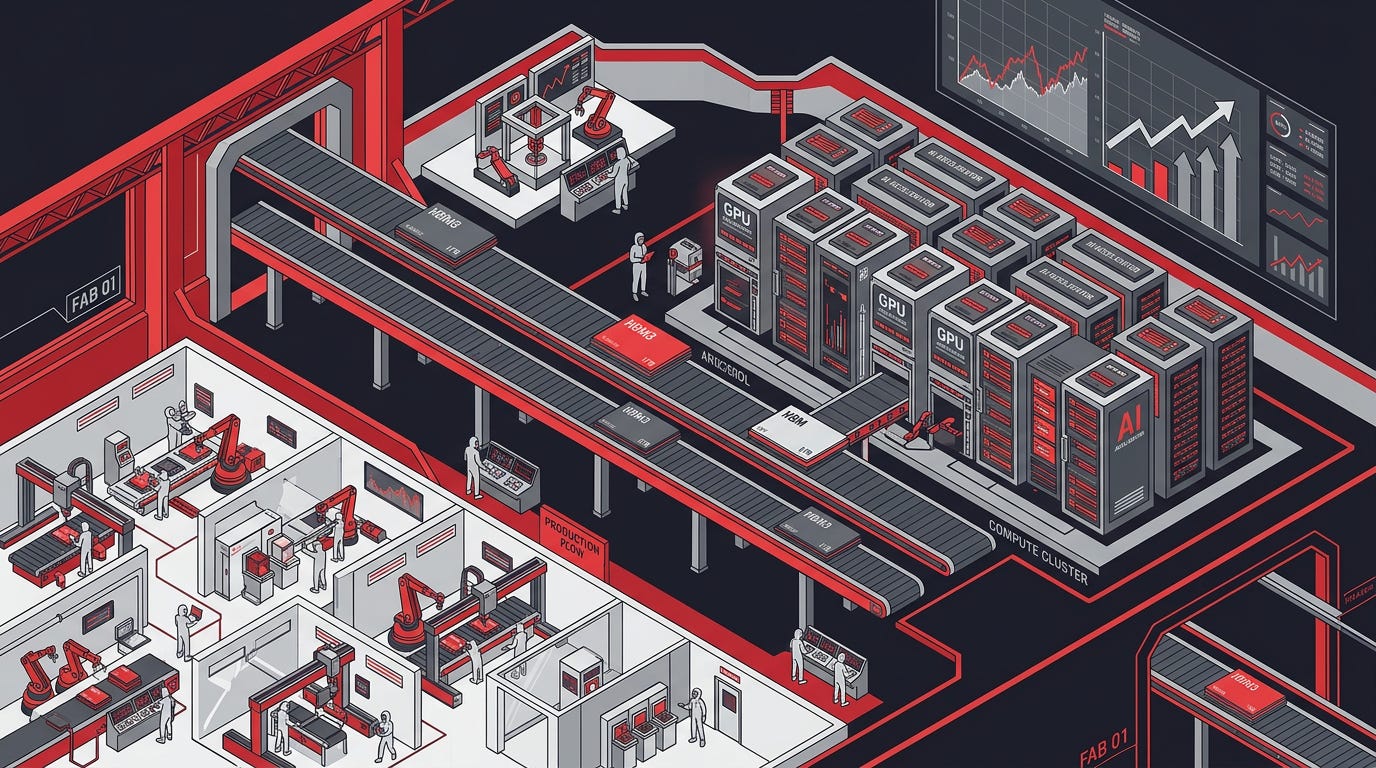
SK Hynix filed a preliminary registration statement with the SEC on June 30, targeting a $29 billion Nasdaq listing scheduled for July 10, 2026.
SK Hynix is the South Korean semiconductor company that overtook Samsung in market capitalization earlier in 2026 to become South Korea’s most valuable company, driven by its dominant position in High Bandwidth Memory (HBM), the specialized DRAM used in AI accelerators.
HBM is the component that Nvidia’s Blackwell and Rubin GPU architectures depend on most critically, and SK Hynix has held a supply lead over Samsung in HBM for the past two years. The Nasdaq listing gives US institutional investors direct equity exposure to HBM supply for the first time through a domestic listing.
The timing is pointed. SK Hynix was the subject of the White House’s directive to Anthropic to revoke its Project Glasswing access over concerns about SK Group’s Chinese semiconductor ties.
The company denied any meaningful China connection and pointed to $1.9 million in Chinese revenue against tens of billions in total revenue. That dispute did not prevent the Nasdaq listing from proceeding.
The SEC registration, if it clears review on schedule, would make the July 10 listing one of the largest technology IPOs in US market history, arriving three weeks after SpaceX’s record-setting debut.
The AI hardware supply chain, which has been largely invisible to public market investors who primarily hold positions in Nvidia and the hyperscalers, is about to become directly investable across the full stack.
The broader context: chipmakers won Q2 2026 by any financial measure. While frontier AI labs fought government battles, talent wars, and benchmark races, the semiconductor companies supplying the physical infrastructure for all of it recorded their strongest quarter in years.
Nvidia’s stock remained elevated on continued data center GPU demand. TSMC reported record revenue on AI chip orders. SK Hynix’s HBM position drove its market cap above Samsung for the first time.
The companies that make the hardware that runs AI are, right now, the most reliably profitable participants in the AI industry. That dynamic will not persist indefinitely as custom silicon reduces dependence on off-the-shelf components.
But in Q2 2026 and into the SK Hynix listing window, the semiconductor story is as compelling as any model launch.
Why it matters
SK Hynix’s $29 billion Nasdaq listing makes AI hardware supply directly investable through a US exchange for the first time. HBM is the critical material input for every frontier AI accelerator. A company that produces its listing in New York three weeks after SpaceX means public markets are now pricing the full AI stack, not just the software layer on top.
Meituan Releases LongCat-2.0 Under MIT License as Open-Weight Race Accelerates
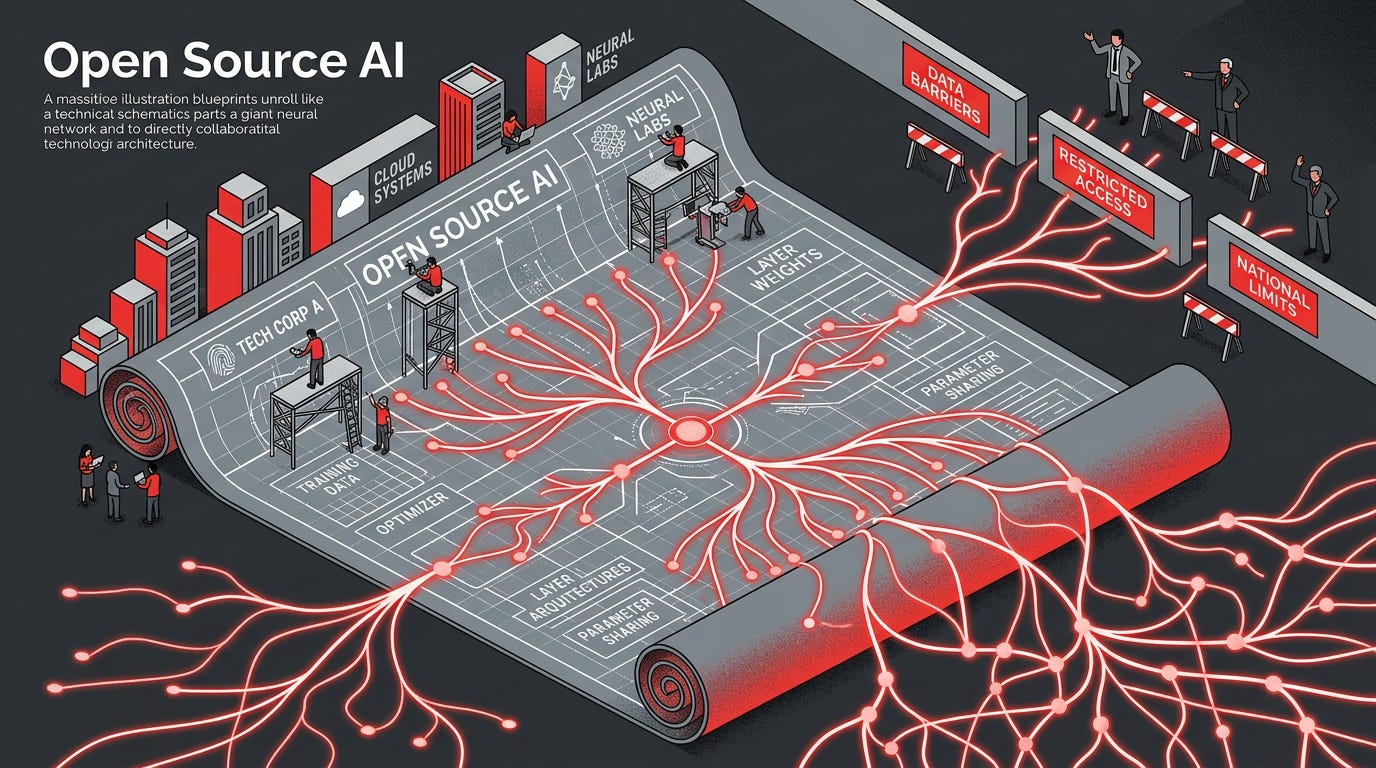
Meituan, China’s largest food delivery and local services platform with over 740 million registered users, released LongCat-2.0 on June 29 under an MIT license, making it freely downloadable and commercially usable without restriction.
LongCat-2.0 is optimized specifically for long-context reasoning: the model supports a 1 million token context window and posts competitive benchmark results on tasks requiring reasoning across very long documents, extended conversation histories, and multi-source research.
The release comes from a company not primarily known as an AI lab, which makes it representative of a broader pattern in Chinese AI development: large technology companies with significant revenue and compute access are publishing competitive open-weight models as a strategic move, regardless of whether AI is their core product.
The week of June 29 also saw the independent verification of a claim from Zhipu AI, the Beijing-based lab that released GLM-5.2 as open weights earlier in June.
Researchers testing GLM-5.2 against Anthropic’s internal cybersecurity evaluation benchmarks confirmed that the model matches Claude Mythos on security bug detection at a level that challenges the containment logic underlying the Fable 5 export ban.
If an open-weight model freely downloadable from Hugging Face can replicate Mythos-class security capability, the government’s concern about a narrow jailbreak in Fable 5 looks different in retrospect.
The capability that the export control was designed to contain is available without a jailbreak in a model anyone can download and run locally. The Fable 5 ban may have temporarily removed an Anthropic-distributed vector. It did not contain the underlying capability.
The pattern across LongCat-2.0, GLM-5.2, DeepSeek V4, Kimi K2.6, and the various other Chinese open-weight releases of 2026 is now consistent enough to read as a strategy rather than a coincidence.
Chinese AI labs and technology companies are releasing capable open-weight models at a pace that keeps the best open-source capability competitive with, or in some cases ahead of, what US labs publish under open licenses.
The US government’s export control regime is designed to prevent Chinese entities from accessing the most capable US-origin models. The Chinese response is to build open-source models capable enough that access to US models becomes less strategically necessary.
Whether that strategy is producing models good enough to substitute for US frontier access is the empirical question that every enterprise risk and national security team is now tracking week by week.
Why it matters
An open-weight model released this week matches Mythos on the benchmark that justified the Fable 5 export ban. That does not make the ban wrong. It means the containment logic it was built on is under pressure from a direction the export controls cannot address: open-source models that replicate the capability without needing access to the controlled system at all.
And that wraps up this week. Tune in next Monday, same time, for another deep-dive into the stories shaping the AI world.
The Sentinel lands in your inbox every Monday so you can catch up with the fast-moving AI space while sipping your morning coffee. Every detail that matters, none that doesn’t.