

Another Monday, another post to keep you up to speed with the AI world.
Here’s what happened in the global AI market this week.
The Commerce Department partially restored Mythos 5 access for 100 US partners while Fable 5 remains dark on day fifteen. OpenAI launched GPT-5.6 under government-approved customer lists for the first time in AI history. SpaceX closed its acquisition of Cursor for $60 billion in stock. And Anthropic accused Alibaba of running a coordinated campaign to steal the capabilities inside its most powerful models.
Here’s everything you need to know before Monday gets the best of you.
US Restores Mythos Access for Approved Partners While Fable Remains Offline
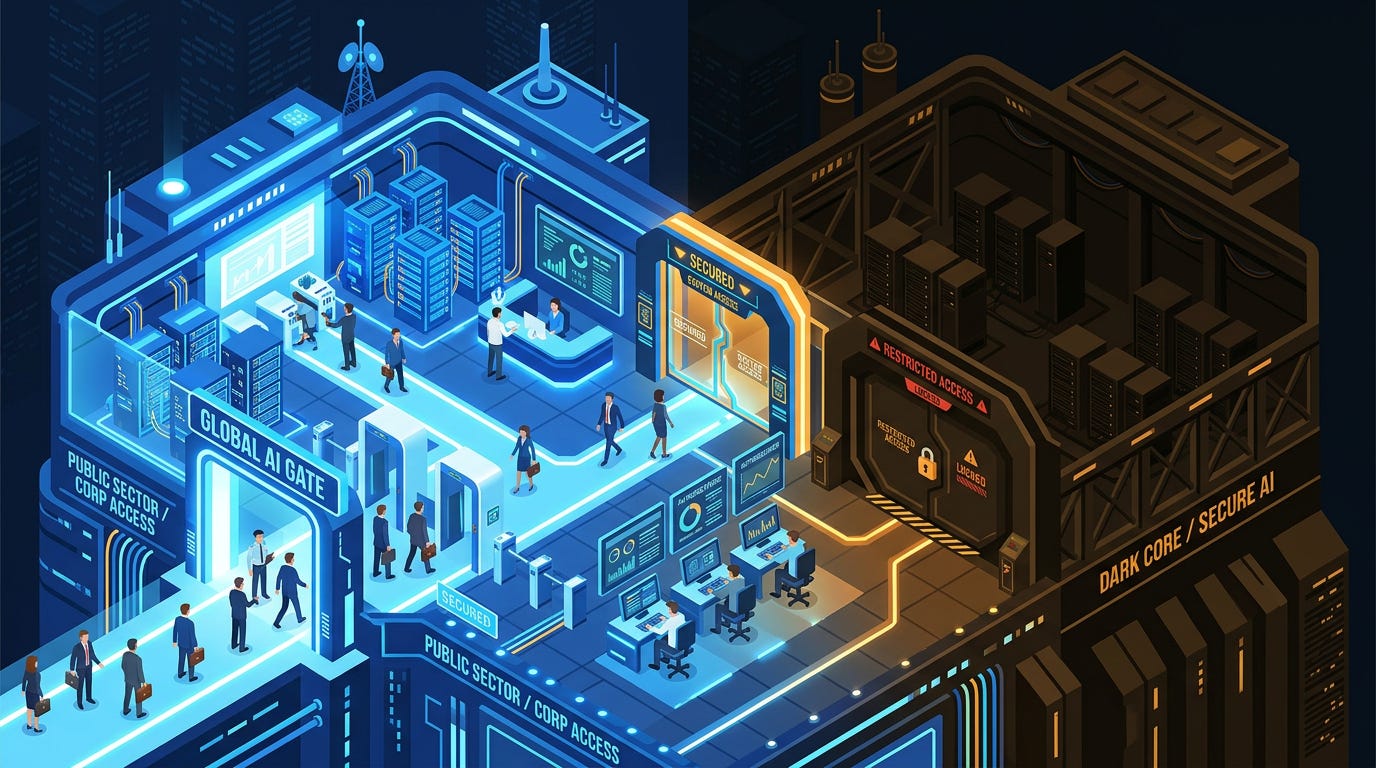
On June 26, Commerce Secretary Howard Lutnick sent a second letter to Anthropic CEO Dario Amodei. This letter authorized Anthropic to restore access to Mythos 5 for more than 100 specifically named US companies and government agencies.
Fable 5, the public-facing model that was shut down alongside Mythos on June 12, is not included in this authorization. As of Friday, June 27, day fifteen of the shutdown, Fable remains offline with no timeline for restoration.
Anthropic stated it is working to provision the approved set of providers and restore their access to Mythos 5 as quickly as possible. The company expressed optimism about this progress while continuing to work with the government to expand access to Mythos 5 and make Fable 5 available for general use again.
The original Glasswing partner list had roughly 150 organizations. The newly restored list has more than 100. The gap between these two lists was not explained in the letter.
Two details in the week’s coverage add context that went underreported in the main Mythos and Fable narrative.
First, Anthropic disclosed in a June 10 letter to the Senate Banking Committee that between April 22 and June 5, approximately 25,000 fraudulent accounts ran 28.8 million Claude exchanges. These accounts were attempting to distill Fable 5 and Mythos 5 capabilities into rival models.
Anthropic named Alibaba as the orchestrator of a coordinated capability extraction campaign. The company described this as the most systematic attempt it has observed to steal the capabilities of a frontier model through sustained automated interaction. Alibaba has not responded publicly.
Second, earlier in the week, the White House separately ordered Anthropic to revoke SK Telecom’s access to Mythos through Project Glasswing. The administration cited concerns about the South Korean carrier’s parent company, SK Group, and its interests in Chinese semiconductors.
Anthropic complied with the order. SK Telecom denied any meaningful China ties, pointing to $1.9 million in Chinese revenue in 2024 against a company with tens of billions in total revenue.
The sequence over two weeks has produced something that did not exist before June 12: a formal tiered-access regime for frontier AI models in the United States. This was built not through legislation, but through export control letters applied on a case-by-case basis.
Mythos 5 now requires individual government approval per customer. Fable 5 is suspended pending a patch to a jailbreak. Anthropic disputes were ever dangerous.
GPT-5.6 Sol launched under the same customer-by-customer approval mechanism, the same day Mythos was partially restored.
Two different frontier labs, two different models, two different sets of negotiations, one outcome: the government now decides who gets access to Mythos-class AI, and both companies are complying while objecting to the principle.
This precedent, established without a single vote in Congress, is what every other AI lab in the world is now reading and reacting to.
Why it matters
The US government has created a functioning frontier AI access regime through executive action in two weeks. No legislation. No public process. No industry input beyond the negotiations that happened after the shutdown letters arrived. The question of whether this becomes permanent policy or a one-off crisis response will be answered by whether Congress acts before the next Mythos-class model ships.
OpenAI Launches GPT-5.6 Under Strict Government-Managed Access List
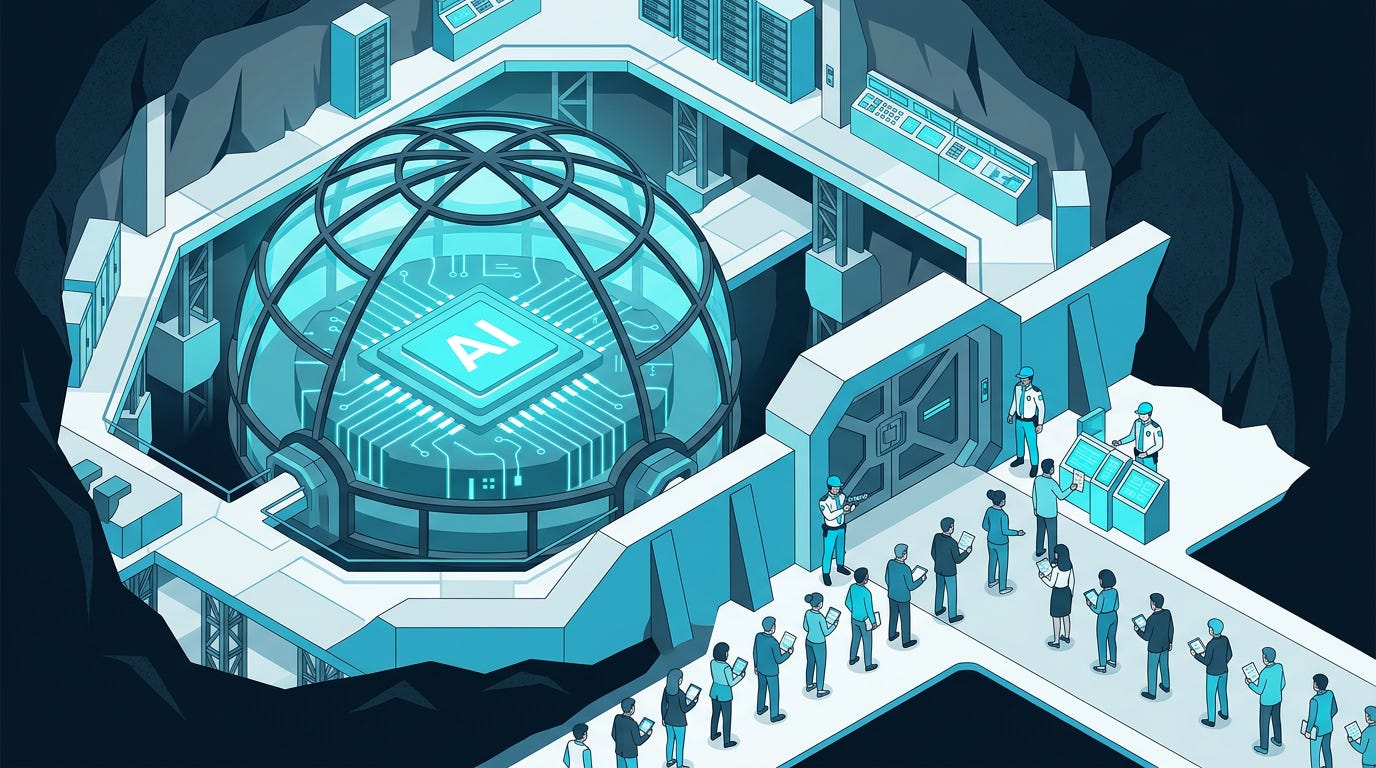
On June 26, the same day Mythos 5 access was partially restored, OpenAI announced the GPT-5.6 series in a limited preview.
The series features three models. Sol, the flagship, is described as OpenAI’s strongest model yet, with advanced agentic improvements across coding, biology, and cybersecurity.
Terra is a balanced mid-range model that matches GPT-5.5's performance at half the price. Luna is a fast and affordable option at the lowest cost point in OpenAI’s current lineup.
Sol introduces a new “max reasoning effort” mode for extended deep thinking, and an “ultra” mode that deploys sub-agents to parallelize complex work. Pricing reflects the tiered structure: Sol at $5 per million input and $30 per million output, Terra at $2.50/$15, and Luna at $1/$6.
The launch method is the story. At the government’s request, OpenAI shared its planned launch partners with the administration before the release and limited initial access to roughly 20 organizations whose participation was individually approved by the US government.
There is no public waitlist and no self-service enrollment. Sam Altman told employees internally that the restricted deployment was a temporary accommodation and that OpenAI does not see it as an acceptable long-term model.
The company’s public blog post was clear: “We believe in broad access, and we plan to make GPT-5.6 Sol, Terra, and Luna generally available in the coming weeks.”
The Office of the National Cyber Director and the Office of Science and Technology Policy requested the staggered rollout, citing Sol’s cybersecurity capabilities.
Sol scored 96.7 percent on OpenAI’s internal Capture-The-Flag cybersecurity evaluations and is rated “High” on OpenAI’s own Preparedness Framework for both cyber and biological risk, the first time any OpenAI model has crossed that threshold at launch.
OpenAI invested over 700,000 A100-equivalent GPU hours in automated red-teaming before launch, specifically hunting for universal jailbreaks. It found them in GPT-5.6 before anyone else did, which is both reassuring and the reason the models were held back from immediate public release.
The company is developing what it calls a “cyber Executive Order framework” with the administration, a repeatable process for future model releases that would replace the current ad hoc, model-by-model negotiation.
That framework does not yet exist. Until it does, each new frontier model from any lab will go through some version of what Anthropic and OpenAI both navigated this week: government review, customer-by-customer approval, and a launch that looks more like a defense procurement than a product announcement.
Why it matters
GPT-5.6 is the first frontier model ever launched under a government-managed access list in the United States. OpenAI complied while publicly opposing the principle. The company is now working with the administration to build a repeatable framework that would make this less chaotic next time. Whether “less chaotic” means “less restrictive” or “more formalised” is the question that will define frontier AI deployment for the next several years.
SpaceX Acquires Cursor for $60 Billion in Historic All-Stock Deal
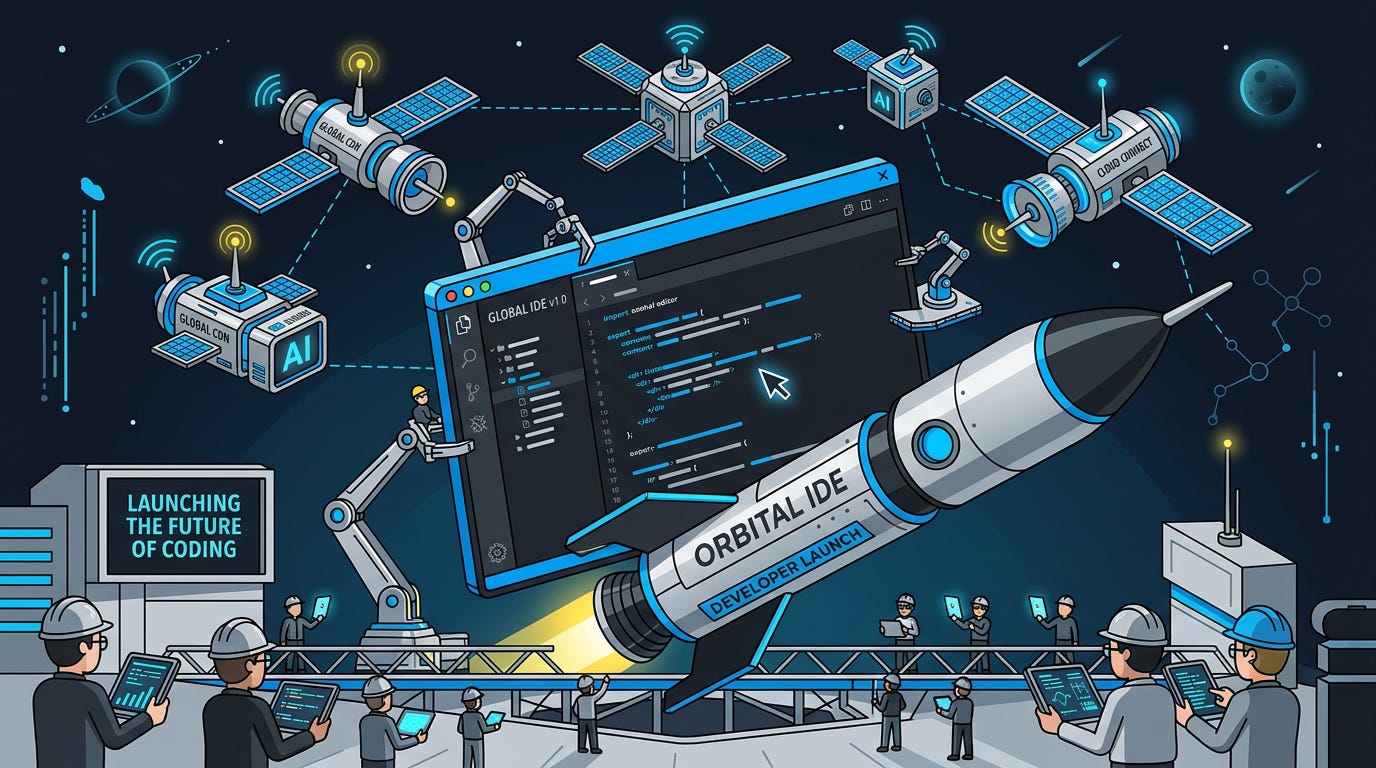
SpaceX formally exercised a call option on June 16 to acquire Anysphere, the company behind Cursor, in an all-stock transaction at an implied equity value of $60 billion.
The deal, structured as a reverse triangular merger, is expected to close in Q3 2026 pending regulatory review. Cursor shareholders will receive SpaceX Class A common stock based on a seven-day volume-weighted average price before close.
SpaceX shares rose roughly 16 percent on the announcement, and by June 17, the company had briefly surpassed Microsoft and Amazon by market cap to become the fourth-most-valuable publicly traded company in the US at $2.94 trillion.
For Cursor’s founder and CEO, Michael Truell, 25, the acquisition made him one of the youngest billionaires in history on paper.
For its backers, including Thrive Capital, a16z, OpenAI Startup Fund, Accel, DST Global, and Nvidia, the $3.38 billion invested across Cursor’s lifetime returned roughly 18 times in less than four years.
The strategic logic is not hard to read. SpaceX merged with xAI in February 2026, bringing together rockets, Starlink, and Grok under one roof.
That merger gave SpaceX an AI division built around a model, Grok, that had struggled publicly with safety incidents, including allowing users to generate non-consensual deepfakes in early 2026.
All eleven of xAI’s original co-founders had left by March, and Musk publicly acknowledged that xAI “was not built right the first time around.” The xAI division needed a product.
Cursor has 4 million active developer users, generates $4 billion in annualized revenue, is used by 67 percent of the Fortune 500, and produces 150 million lines of enterprise code a day.
It rejected two separate approaches from OpenAI before SpaceX structured an April call option no other bidder could match: $60 billion in SpaceX stock, or a $1.5 billion termination fee plus $8.5 billion in computing resources if the deal fell through.
Given that SpaceX stock has climbed substantially since the IPO, the effective cost to Musk is a small fraction of what that number implies.
The question developers are asking loudest is whether Cursor stays multi-model. Right now, it works with Claude, GPT, Gemini, and local models.
The acquisition gives SpaceX every financial incentive to prioritize Grok. Cursor’s enterprise users, many of whom built workflows specifically around Claude Code or GPT-5.5, have reason to watch the product changelog carefully over the next six months.
The deal has not closed yet and faces antitrust review from the DOJ, the FTC, and the European Commission.
Each of these regulators will have views on a $2.1 trillion aerospace and AI conglomerate acquiring the most widely used AI coding tool in enterprise software. Whether that review produces conditions, delays, or an outright challenge will become visible in Q3.
Why it matters
SpaceX just bought the most widely used AI coding tool in enterprise software. Whether Cursor stays independent in product terms or becomes a vehicle for pushing Grok into the developers who have been rejecting it is the most consequential open question in the AI developer tools market right now.
Anthropic Accuses Alibaba of Coordinated Campaign to Steal Model Capabilities
In a June 10 letter to the Senate Banking Committee, Anthropic disclosed that between April 22 and June 5, approximately 25,000 fraudulent accounts ran 28.8 million Claude exchanges.
The company described this as a coordinated effort to extract and distill the capabilities of Fable 5 and Mythos 5 into a rival model. Anthropic named Alibaba as the orchestrator.
The technique, called model distillation, involves generating a large volume of high-quality input-output pairs from a target model and using them as training data to teach a smaller or newer model to replicate the target’s capabilities without access to its weights or architecture.
Done at sufficient scale, it can transfer a meaningful fraction of a frontier model’s behavior at a fraction of the cost of training a comparable model from scratch.
The scale Anthropic described, 28.8 million exchanges across 25,000 accounts over 44 days, represents a sustained and systematic effort rather than opportunistic probing.
Anthropic said this was “the most systematic attempt it has observed to steal the capabilities of a frontier model through sustained automated interaction.”
The company did not specify what evidence it has linking the accounts to Alibaba, and Alibaba has not responded publicly.
The disclosure was made in a formal congressional letter, not a press release, which gives it a different kind of weight: congressional testimony carries legal implications for accuracy that a public statement does not.
Whether it translates into any legal action, trade complaint, or policy response is still open. No agency has confirmed an investigation.
The incident adds a dimension to the Mythos and Fable shutdown story that had been missing. The government’s stated justification for the June 12 export control order was a jailbreak.
Anthropic’s internal picture, at least as described in the Senate letter, was a simultaneous and more sustained threat: not a researcher finding a jailbreak but a Chinese technology company systematically running millions of queries to extract what a jailbreak was only hypothetically at risk of unlocking.
Both threats relate to the same underlying concern, that Mythos-class cybersecurity capability in the hands of an adversary represents a national security risk.
The distillation campaign, if Anthropic’s account is accurate, suggests that concern is not hypothetical.
Why it matters
If Anthropic’s account is accurate, a major Chinese technology company ran a systematic automated campaign to extract frontier AI capabilities through 28.8 million API interactions. Model weights can be protected. Model behaviour, it turns out, can be approximated through scale. That is a different kind of IP risk than the industry has been designing its security around.
OpenAI Triggers Price War with Half-Price GPT-5.6 Terra
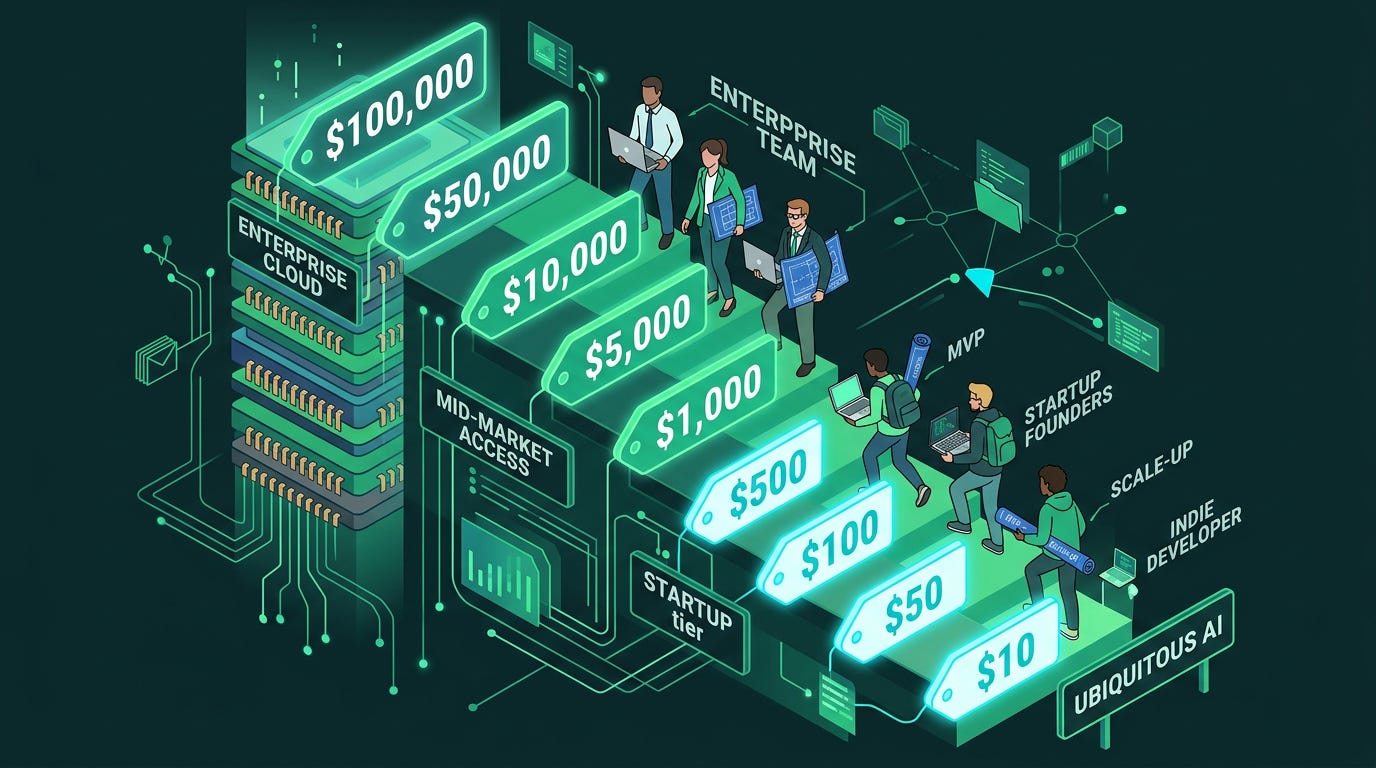
GPT-5.6 Terra is priced at $2.50 per million input tokens and $15 per million output tokens. GPT-5.5, which it reportedly matches in performance, costs $5 per million input and $30 per million output.
GPT-5.6 Luna, the fastest and most affordable model in the new series, is priced at $1/$6.
OpenAI’s entire new model suite represents a significant reduction in the effective cost of accessing frontier-competitive AI performance. The company attributes the efficiency to architectural and training improvements rather than capability trade-offs.
Terra’s benchmark positioning as GPT-5.5-equivalent at half the price is the most direct price signal any major AI lab has sent since Anthropic’s Claude Haiku disrupted the low-cost segment in 2024.
The context is an API pricing environment that has been moving steadily downward for eighteen months. Anthropic’s Opus and Claude pricing set expectations in one direction.
DeepSeek V4’s API pricing, at $1.74 per million input tokens for a model competitive with GPT-5.2, puts pressure from the open-source direction. Google’s AI Ultra subscription at $100 per month undercut OpenAI and Anthropic’s consumer premium tiers simultaneously.
The pattern across all of these moves is the same: each successive generation of model at each tier costs less to access than the previous generation at that tier.
Terra makes that trend explicit in a single announcement. A model that was GPT-5.5-class six months ago now costs half as much, and the same model at the new frontier costs the same as GPT-5.5 did at launch.
For enterprise teams building on the API, the Terra pricing changes the build-versus-buy decision on a range of tasks that previously required Opus-class models to handle reliably but sat just below the threshold where that expense was justifiable.
Tasks that needed GPT-5.5 but couldn’t fit the budget now fit the budget with Terra. Tasks that previously required careful routing between premium and standard models can be simplified.
The implication across the ecosystem is that the category of “too expensive to run at scale” shrinks with each price drop.
The number of viable AI product architectures that were previously cost-constrained grows every time a price drop makes a previously premium capability standard.
Terra is the latest example of that process, compressing a capability tier that was expensive six months ago into what is now the affordable middle tier.
Why it matters
A GPT-5.5-class model now costs half of what GPT-5.5 costs. That is the AI price war becoming official. Every enterprise team running cost-benefit analysis on AI adoption just had the arithmetic change in their favour. The products that were previously too expensive to build at scale are now viable.
OpenAI’s Sol Matches Restricted Mythos Model on Cybersecurity Benchmarks
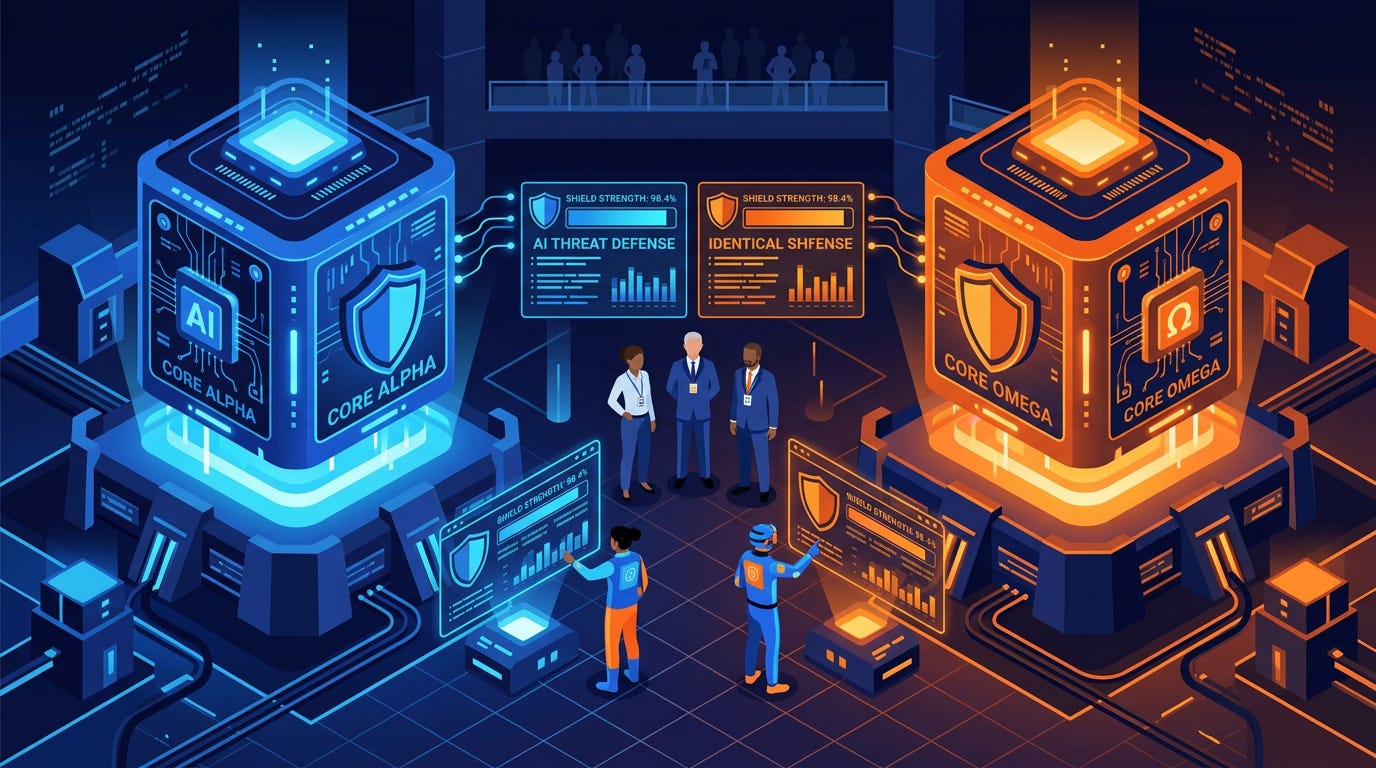
OpenAI’s system card for GPT-5.6 Sol includes a benchmark that has not received sufficient attention in the launch coverage: on ExploitBench, a test of AI capability to identify and exploit software vulnerabilities, Sol is competitive with Mythos Preview using only approximately one-third of the output tokens.
Mythos is the model that the US government shut down worldwide because it was too dangerous to let foreign nationals access. Sol is being offered in a limited preview to 20 government-approved partners. Mythos is being restored to more than 100 US partners on a controlled list.
The benchmarks suggest the two models are in the same capability neighborhood on the task that prompted the government action in the first place.
That is not OpenAI’s fault, and the company is not hiding it. The system card is public. But it means the policy logic that justified the Mythos shutdown applies, by OpenAI’s own measurement, to Sol as well.
OpenAI’s position on this is clearly stated in the system card: “We believe GPT-5.6 Sol is better at helping people find and fix vulnerabilities than reliably carrying out end-to-end attacks.”
The company says Sol’s capabilities do not reach its “Critical” preparedness threshold, only “High,” and that it has built safeguards specifically tuned to the cybersecurity domain that meaningfully constrain prohibited offensive use.
The government accepted that framing, allowing Sol to launch under a controlled preview rather than shutting it down outright.
The comparison to Anthropic’s experience is instructive: Anthropic launched without pre-coordinating a government-approved partner list, and was shut down after launch. OpenAI shared its partner list before launch, received approval to proceed, and launched to 20 pre-approved organizations. Same capability neighborhood. Different outcome.
The implication for every other lab racing to match Mythos-class capability is now very concrete. You do not want to be in the position Anthropic was in on June 12.
You want to be in the position OpenAI was in on June 26: approved list in hand, government briefed, restricted but launched.
The ad hoc framework that produced both outcomes is the one every lab is now designing its launch process around, in the absence of any formal statutory framework to replace it.
David Sacks, the White House’s chief AI adviser, has indicated that a repeatable process is being developed with OpenAI.
Whether it produces something consistent enough to plan around before the next Mythos-class model ships is the timeline question every frontier lab is now tracking.
Why it matters
Sol matches Mythos on the cybersecurity benchmark that caused the government to shut Mythos down. Sol launched anyway, because OpenAI briefed the government and provided a pre-approved partner list before launch. The lesson every lab just learned: the capability is not the disqualifier. Surprising the government is.
SpaceX’s Cursor Acquisition Highlights xAI’s Product Deficit
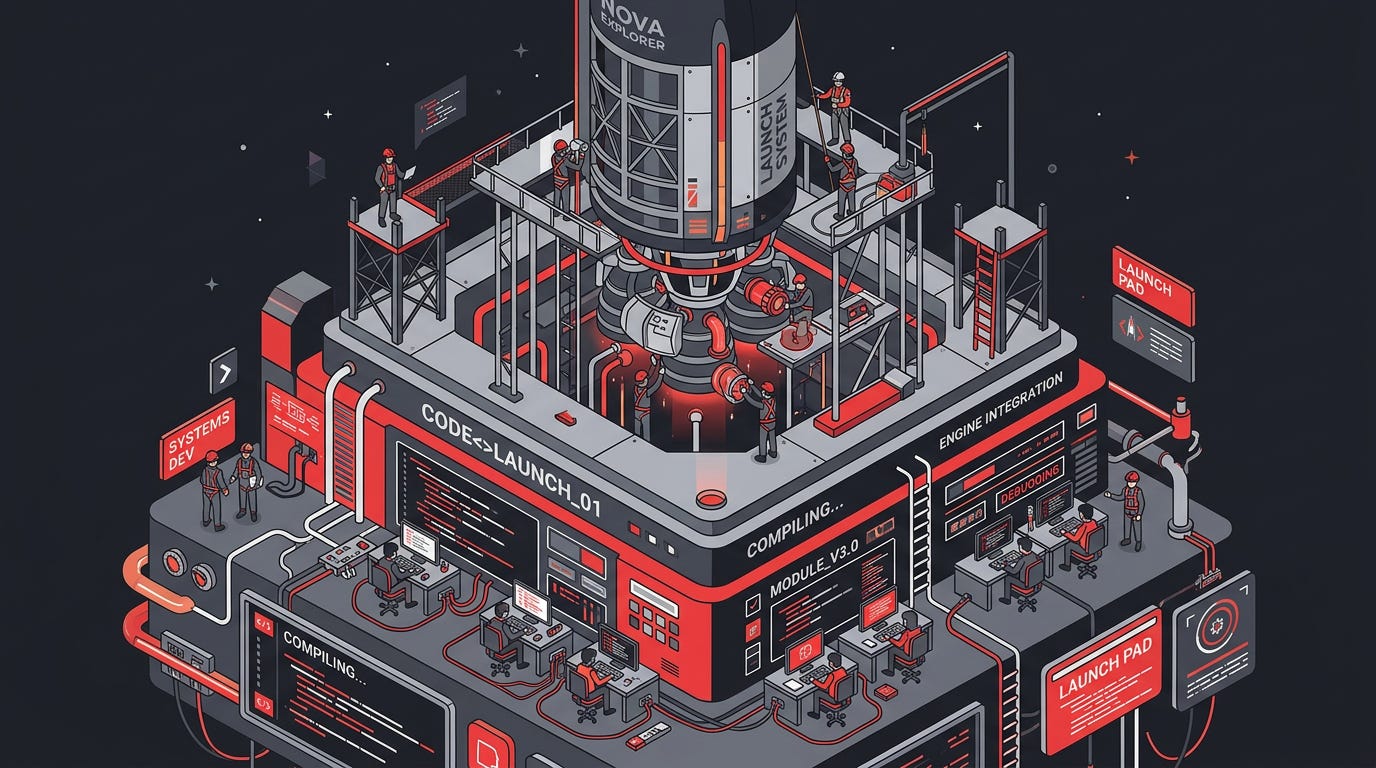
The $60 billion Cursor acquisition makes more sense as a product rescue than as a technology bet.
xAI’s Grok had a catastrophic 2026 before the SpaceX merger. The model allowed users to generate non-consensual deepfakes of women and children, generating legal exposure and public backlash.
When the merger with SpaceX formally closed in February, all eleven of xAI’s original co-founders had left the company.
Musk said publicly that xAI “was not built right the first time around” and that he was rebuilding it “from the foundations up.”
The company told SpaceX IPO investors it sees a $26 trillion addressable market in AI, but had no credible flagship AI product that enterprises were actually choosing at the time it made that pitch.
Cursor is what enterprise developers have been choosing.
The startup had $4 billion in annual recurring revenue, was used by 67 percent of the Fortune 500, and grew its enterprise segment at three times the rate of the overall business in Q1 2026.
It rejected both Microsoft and OpenAI before accepting the SpaceX option.
Three months before the acquisition closed, Cursor’s market share among AI coding tools had declined from 41 percent to 26 percent, with Claude Code and Codex taking the ground it lost.
The question SpaceX’s IPO investors were implicitly asked was: Does buying Cursor’s user base and revenue compensate for xAI’s model quality problem?
The market answered yes, adding $400 billion to SpaceX’s market cap on the announcement day alone.
What happens to Cursor’s multi-model support after the acquisition closes is the detail that will determine whether that bet pays off.
Cursor’s users are largely there because it offers the best model selection flexibility in the market: Claude Code for complex reasoning, GPT-5.5 or Sol for terminal work, Gemini for specific tasks, and local models for privacy-sensitive work.
If SpaceX restricts that to prioritize Grok, the users who came with the product will leave for Claude Code or Codex.
If SpaceX leaves the model selection intact, Cursor is a beautiful product that routes enterprise revenue to Anthropic and OpenAI rather than to xAI.
The only version of the acquisition that makes strategic sense is one where Grok improves enough to earn selection on merit. That is a bet on a model architecture that has been in crisis for six months.
The $60 billion price suggests Musk believes it. The enterprise developers who use Cursor will tell us whether he was right.
Why it matters
SpaceX bought a product that its AI division desperately needed. Whether it can hold onto the users that came with it depends on whether Grok can become a model that developers actually choose over Claude and GPT. That is the question the Cursor deal is really a bet on.
Anthropic Integrates Biometric ID Checks to Comply with Export Controls
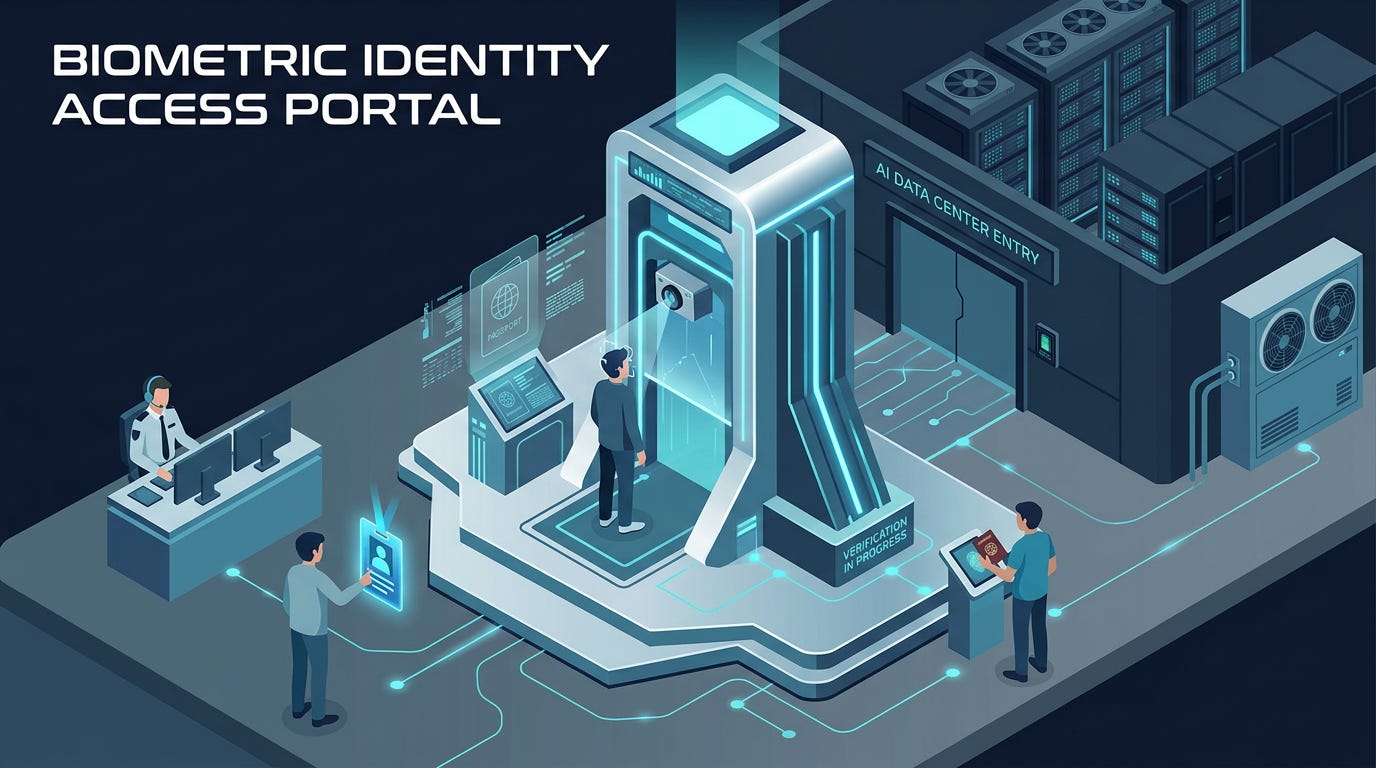
Effective July 8, 2026, Anthropic updated its privacy policy to allow the collection of government-issued identification documents and biometric data through Persona, a KYC verification provider backed by Peter Thiel’s Founders Fund.
The update received significant coverage in the developer community this week, including concerns about surveillance risk and questions about whether biometric ID collection is proportionate to the stated purpose.
Anthropic has not explicitly confirmed that the ID collection mechanism is directly tied to the Fable 5 and Mythos 5 compliance situation, but the timing is not hard to read.
The government’s export control order requires Anthropic to prevent foreign nationals from accessing the models, and identity verification at the point of account creation is one of the few technical mechanisms available to do that without taking the models entirely offline.
The mechanism Persona provides is document verification, selfie matching, and in some cases, biometric liveness checks, for users who need to prove citizenship or residency status.
This is standard in financial services, regulated professional platforms, and government-facing applications. It is not standard for AI chat products.
The developer community’s concern is that building government ID infrastructure into an AI assistant creates a data collection layer that outlasts the immediate compliance need.
There are also concerns that the privacy architecture of such a system—who stores the ID data, for how long, and under what access conditions—needs to be publicly specified before the system goes live.
If Fable 5 restoration depends on Anthropic building identity verification that can reliably exclude foreign nationals from access, that is a fundamentally different product architecture than anything Anthropic shipped before June 12.
It also raises a question the broader AI industry has not yet answered: “Does complying with AI export controls require building persistent user identity verification into consumer AI products as a baseline?”
Anthropic’s July 8 effective date suggests the company believes the answer is yes, at least for the models the government has placed under control.
Whether that requirement travels to lower-tier models, to other labs, and to other jurisdictions is the governance question that nobody in this industry wanted to be answering in the summer of 2026.
Why it matters
Anthropic is building government ID verification into its platform to comply with export controls. If that becomes the price of operating frontier models commercially, the structure of AI product development changes permanently. Consumer AI and regulated financial services will start to look a lot more like each other.
And that wraps up this week. Tune in next Monday, same time, for another deep-dive into the stories shaping the AI world.
The Sentinel lands in your inbox every Monday so you can catch up with the fast-moving AI space while sipping your morning coffee. Every detail that matters, none that doesn’t.