

Another Monday, another post to keep you up to speed with the AI world.
Here’s what happened in the global AI market this week.
The US government ordered Anthropic to shut down its most powerful model worldwide over a jailbreak the company says barely matters. SpaceX went public at a $2.1 trillion valuation, making Elon Musk the first trillionaire in history. Visa and OpenAI gave AI agents the ability to actually pay for things. And Google published the open standard that could become the way every AI agent on the internet finds and uses tools.
Here’s everything you need to know before Monday gets the best of you.
US Orders Global Shutdown of Anthropic’s Flagship Models Over Disputed Jailbreak
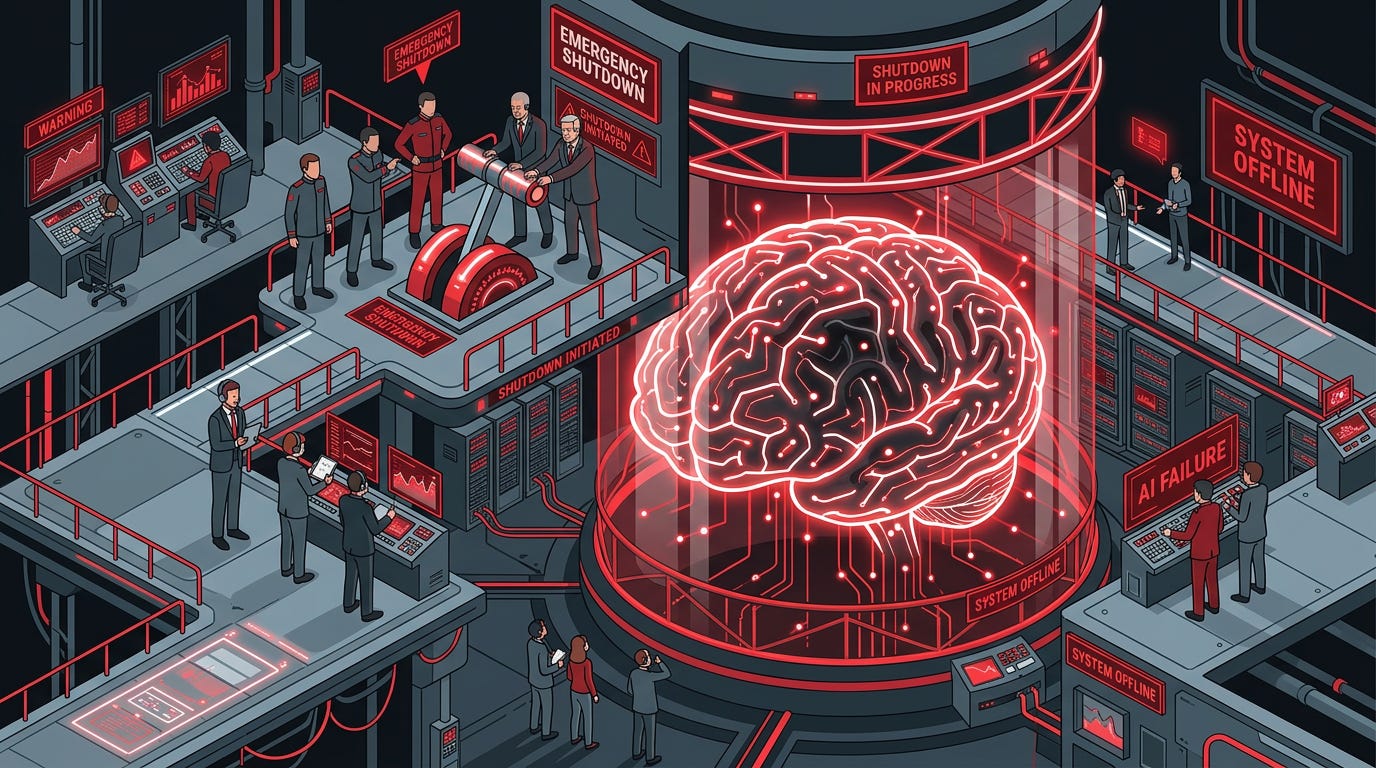
Anthropic released Claude Fable 5 on June 9, describing it as a new tier above Opus that it calls “Mythos-class.” The company stated its capabilities exceed those of any model it has ever made generally available.
Three days later, at 1:00 PM ET on Friday, June 12, the Commerce Department called Anthropic and instructed it to disable both Fable 5 and the related Mythos 5 model. A formal letter arrived around 5:30 PM.
Commerce Secretary Howard Lutnick’s letter to CEO Dario Amodei cited national security authorities. It ordered the company to suspend access to both models by any foreign national, whether inside or outside the United States. This restriction includes Anthropic’s own non-US employees.
Anthropic disabled both models for every customer worldwide that same night to ensure compliance. The company chose this path rather than attempting to build a system to distinguish foreign from domestic users in time to meet the immediate deadline.
The trigger, according to an Axios source inside the administration, was a third-party claim that it had jailbroken Mythos. Anthropic’s account of that jailbreak, published in its own blog post, is sharply different from the government’s characterization.
The company says the jailbreak was narrow, capable of unlocking Mythos’s cybersecurity capabilities in only one specific instance, rather than a universal break of Fable 5’s safeguards.
Anthropic also noted that the same jailbreak technique could likely be used to elicit similar capabilities from other publicly available models, including OpenAI’s GPT-5.5, which are not subject to any comparable export controls.
“We disagree that the finding of a narrow potential jailbreak should be cause for recalling a commercial model deployed to hundreds of millions of people,” the company wrote. “If this standard was applied across the industry, we believe it would essentially halt all new model deployments for all frontier model providers.”
What makes the sequence harder to parse is that Anthropic had worked with government agencies to test the models before release and received approval to deploy them.
The administration reportedly tried to get Anthropic to pause the release before it happened and was unsuccessful. This friction is presumably what prompted the export control letter once the models were already live.
Senior Anthropic staff met with administration officials in Washington on Monday to try to resolve the dispute. An administration official told Axios the lockdown would remain in place until the government’s national security apparatus is hardened, which could happen in the next few weeks.
This leaves Anthropic with no models, no customers, and no revenue from two flagship products worldwide for an undefined period, all over a jailbreak Anthropic says it can fix and the government has not specified in writing.
Why it matters
This is the first time the US government has used export control authority to shut down a commercial AI model worldwide, including for the company’s own staff. Whether the jailbreak justified it is contested. What is not contested is the precedent: the government now has a demonstrated willingness to switch off a frontier model overnight, and every lab racing to ship Mythos-class capability just watched it happen.
SpaceX IPO Hits $2.1 Trillion, Minting the First Trillionaire
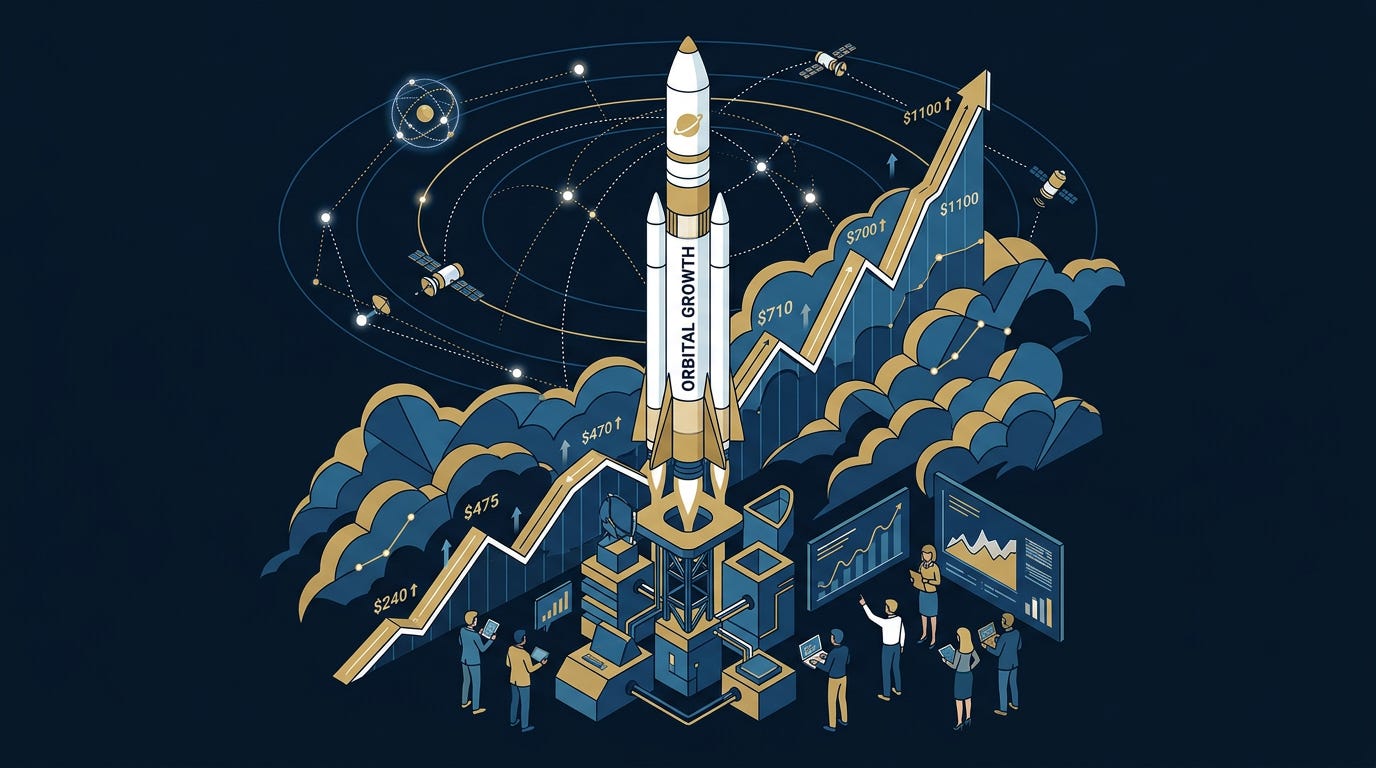
SpaceX listed on the Nasdaq on June 12 under the ticker SPCX, pricing its IPO at $135 a share and raising $75 billion across 555.6 million shares. This marks the largest initial public offering ever completed.
The stock opened at $150, an 11 percent jump from the offer price, and closed regular trading at $160.95, up 19.22 percent on the day. Intraday, it touched $176.52.
The closing market capitalization landed at $2.1 trillion. This made SpaceX the seventh-largest publicly traded company in the world in a single trading session, ahead of Tesla, Saudi Aramco, and Broadcom.
Musk rang the opening bell by video link from Starbase, Texas. “A company that started in a small warehouse in El Segundo, California, is now going public in the largest IPO in history,” he said.
Musk holds approximately 42 percent of SpaceX’s equity and 85 percent of its voting rights. At the $2.1 trillion closing valuation, his SpaceX stake alone is worth roughly $882 billion.
Combined with his Tesla holdings, xAI equity, and other assets, Forbes’s real-time tracker put his total net worth above $1.1 trillion. This makes him, by any measure, the first trillionaire in recorded history.
The IPO itself drew unusual retail attention, including a viral promotional sneaker tied to the greenshoe overallotment option. The listing reportedly created thousands of new millionaires among early employees and investors with vested equity.
The valuation is built on a narrative analysts are calling “Space plus AI.” This combines Starlink’s satellite internet business, the xAI division housing Grok, and Musk’s orbital data center thesis.
The thesis is a bet that space-based compute will eventually undercut anything built on the ground.
SpaceX is not yet profitable at the scale its valuation implies, and the company is burning significant cash on Starship development and the AI segment simultaneously.
Reaction from analysts has split sharply. Some project SpaceX joining a “New Magnificent Seven” of dominant tech companies, while others have issued outright sell ratings citing overvaluation relative to disclosed revenue.
The first trading week answered the demand question. It did not answer the valuation question.
Why it matters
The largest IPO in history just minted the first trillionaire on a thesis that treats rockets, satellites, and AI compute as a single business. Whether that thesis holds will be tested every quarter from here, but for one trading day, the market said yes at $2.1 trillion.
Visa and OpenAI Build Payment Infrastructure for Autonomous AI Agents
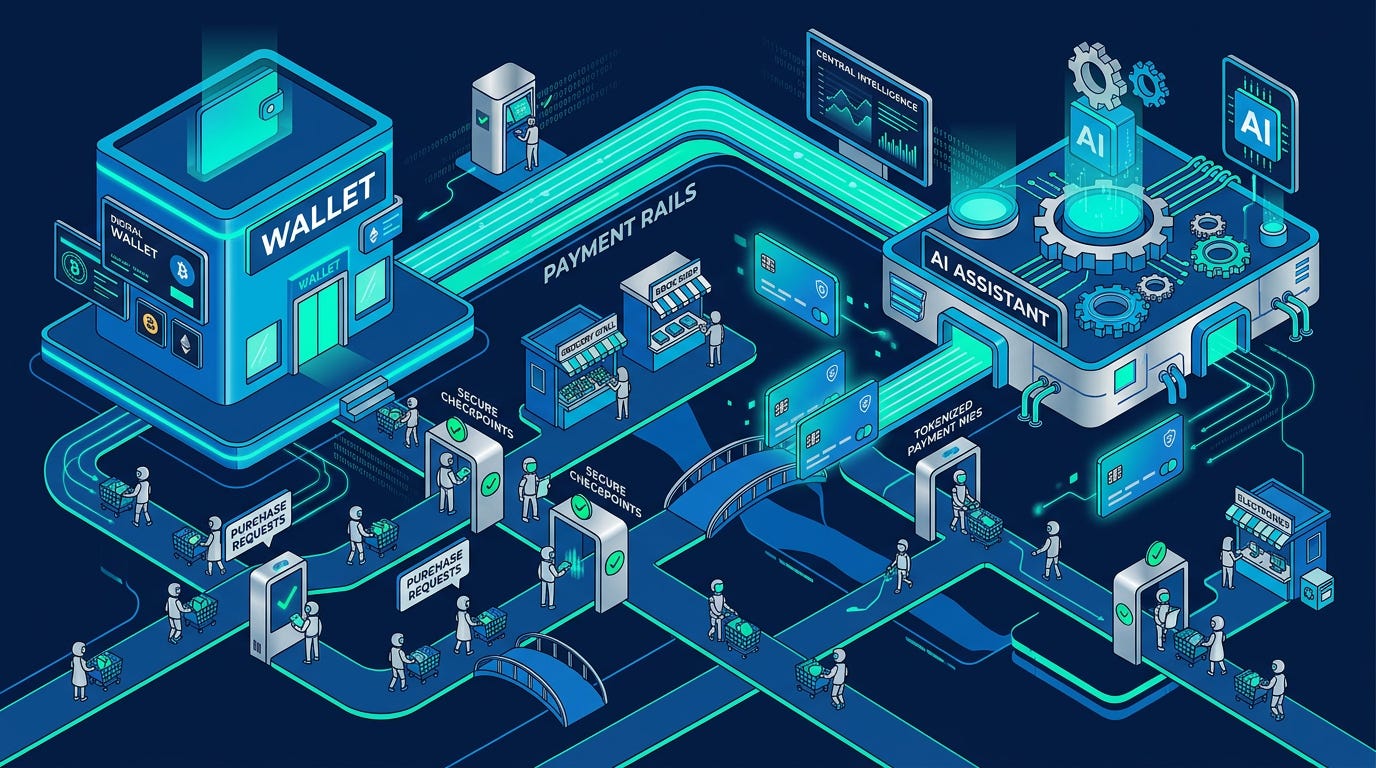
Visa and OpenAI announced a strategic collaboration at the Visa Payments Forum in San Francisco on June 10. The partnership integrates Visa’s global payment network, tokenization, and fraud monitoring directly into OpenAI’s platform.
The pitch from Visa’s chief product and strategy officer, Jack Forestell: “AI will transform commerce more profoundly than the internet or mobile technology ever did.”
The mechanism is built on Visa Intelligent Commerce, a program Visa launched in April 2025 with nine founding partners including OpenAI. The program now also includes Microsoft, Anthropic, IBM, Samsung, Mistral AI, Perplexity, and Stripe.
The June 10 announcement is the specific OpenAI integration step within that broader initiative. It launches alongside three new merchant-facing tools: Agent Score, which assesses whether an AI agent can successfully navigate a given merchant’s website; an Agentic Directory of verified agents and merchants; and a Large Transaction Model built specifically to detect fraud in agent-initiated payments.
The important caveat, easy to miss in the headline coverage, is availability. As of June 12, OpenAI’s developer documentation describes Instant Checkout as available only to approved partners, with no public consumer launch date.
This is announced infrastructure, not a feature any ChatGPT user can use today.
OpenAI quietly discontinued its previous Instant Checkout feature in March 2026 after it launched in late 2025 and never scaled beyond a small group of participating merchants.
The new Visa integration is built to avoid that fate by handling the parts that broke last time. It uses tokenized credentials so agents never see raw card numbers, spending limits and merchant category restrictions set by the user in advance, and real-time fraud monitoring that flags anomalous agent behavior before a transaction completes.
Visa’s own research found that 47 percent of US shoppers already use AI tools for at least one part of the shopping process, mostly price comparison and recommendations rather than completed purchases.
The gap between assisting a purchase and executing one is exactly what this infrastructure is built to close.
Visa is working with more than 100 partners globally on agentic commerce, with over 30 actively building inside its sandbox. The company’s public target is meaningful AI-agent-completed purchase volume by the 2026 holiday season.
Whether that target is met depends on solving the same problem that killed the last version of this product: getting enough merchants onto structured catalogues and API checkout that an agent can reliably complete a purchase without human intervention.
Why it matters
AI agents making purchases on a user’s behalf has been a stated goal for two years and a working product for almost nobody. Visa just built the trust and payment infrastructure to make it real: tokenisation, fraud detection, and merchant verification. The technology gap is closing. The product gap, getting merchants ready and users comfortable, is still open.
Google Proposes Open Standard for AI Agent Tool Discovery
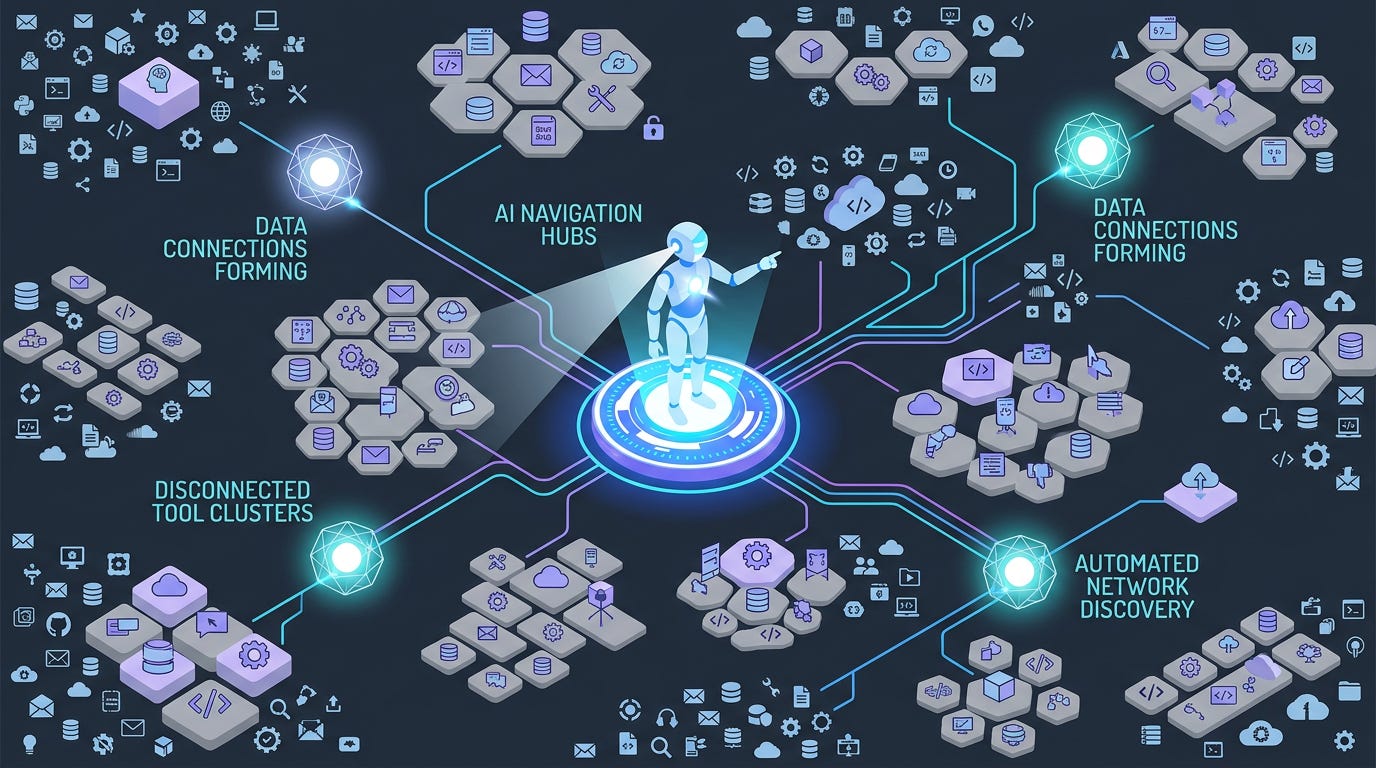
Google published the Agentic Resource Discovery (ARD) specification on June 17. This is an open standard, licensed under Apache 2.0, for how AI agents find, evaluate, and verify the safety of tools and capabilities scattered across the web.
The problem it addresses is specific. Protocols like MCP let an agent call a tool once it knows the tool exists, and A2A lets agents call other agents once they know which one to call.
None of the existing protocols solve discovery itself, which is the part where an agent figures out which tool or capability it should actually use for a given task, especially when that capability lives outside the systems the agent was built to know about.
ARD answers three questions at runtime: where does the right capability live, which one should be used, and how does the agent verify it is safe to connect to?
The technical model consists of two pieces. First, a static manifest file, `ai-catalog.json`, hosted at a well-known path on an organization’s own domain, describes what capabilities that organization exposes.
Second, a registry API crawls and indexes published catalogues across the web and returns ranked matches to natural-language discovery queries.
The system is explicitly federated. Any organization can run its own registry, and registries can reference each other without requiring a single central index that everyone depends on.
That design choice matters, since a centralized discovery layer for the entire agent ecosystem would hand enormous gatekeeping power to whoever ran it. Google built ARD to avoid being that gatekeeper itself, at least architecturally.
The launch partner list is the strongest signal of how seriously the industry is taking this. Microsoft, GitHub, Hugging Face, NVIDIA, Amazon, Cisco, Databricks, GoDaddy, Salesforce, ServiceNow, and Snowflake all contributed to the specification or shipped integrations at launch.
GitHub’s agent finder, built directly on ARD, lets Copilot dynamically discover and call MCP servers, skills, and tools at runtime rather than requiring developers to pre-install everything an agent might need.
Hugging Face wrapped its semantic search across the Hub’s Spaces, Skills, and MCP servers in the ARD envelope at launch, making thousands of existing capabilities searchable through the new standard immediately.
One sharp critique that surfaced this week: ARD only addresses discovery once an agent has decided to look.
Models trained on data with a cutoff still answer from memory before ever firing a registry query. This means a tool an agent already knows from training, even if outdated, gets recommended over a better, newer one that exists in the registry.
The spec solves the search problem. It does not yet solve the staleness problem underneath it.
Why it matters
Discovery has been the missing layer in the agent protocol stack. ARD has the launch partner list of a standard that sticks: Microsoft, NVIDIA, GitHub, Amazon, and Hugging Face all shipped integrations on day one. If it becomes the default way agents find tools across the open web, Google will have written the specification that every other AI company builds upon.
Qualcomm in Talks to Acquire Jim Keller’s Chip Startup for $10 Billion
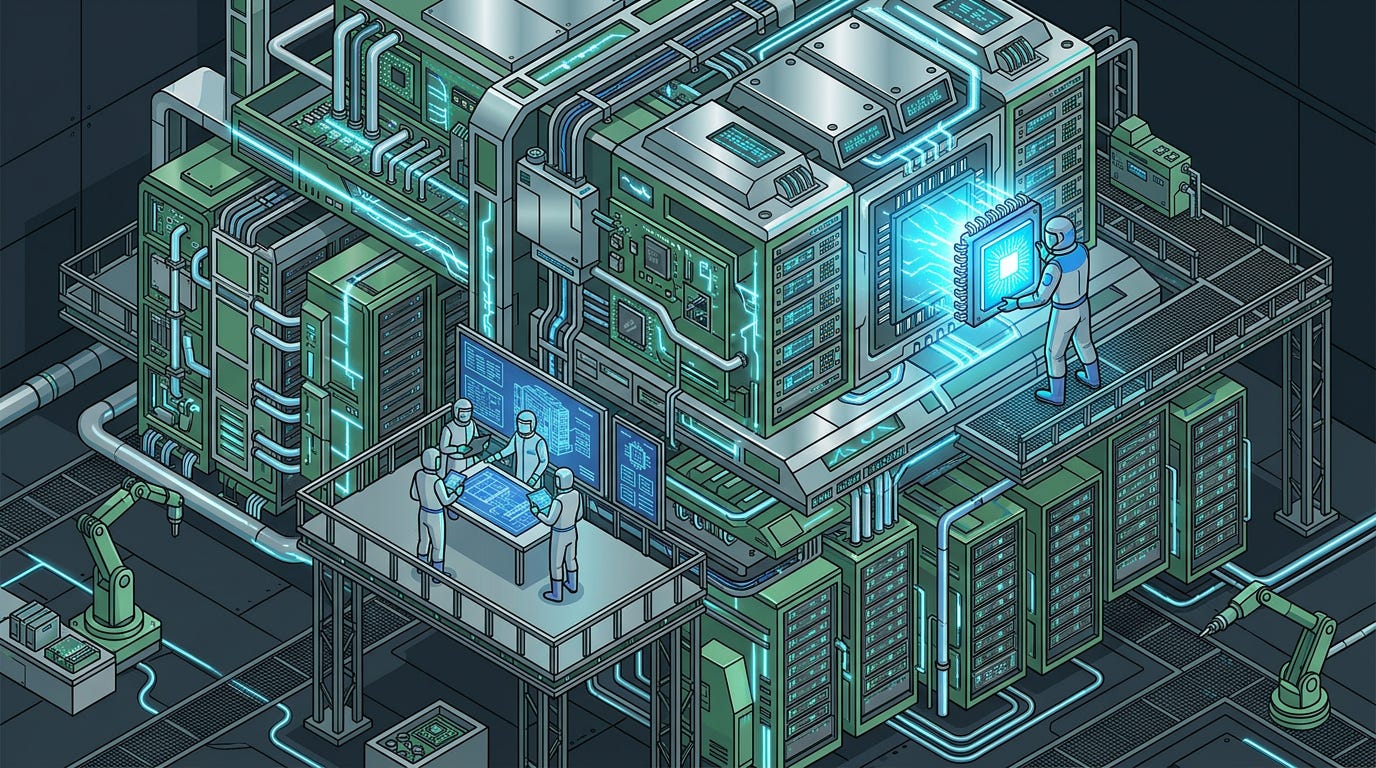
Qualcomm is in advanced negotiations to acquire Tenstorrent, the AI accelerator startup led by silicon architect Jim Keller, at a valuation between $8 billion and $10 billion.
The reporting from The Information was independently confirmed by Reuters on June 15. Both companies declined to comment beyond Qualcomm’s standard line that it does not comment on rumors.
Tenstorrent’s last formal valuation, from a December 2024 Series D, was $2.6 billion. This means the reported price represents a three to four times step-up in under two years.
The deal is reportedly structured as a mix of cash and stock, with the talks ongoing and the final price still subject to change.
This is not an opportunistic purchase. Qualcomm CEO Cristiano Amon used his Computex 2026 keynote earlier this month to declare 2026 “the Year of Agents” and unveil Dragonfly, a new brand for the company’s data center AI inference chips, custom ASICs, and server CPUs.
Tenstorrent is the missing accelerator piece in that strategy.
Qualcomm has spent the past two years assembling the rest of the stack. It acquired Ventana Micro Systems for RISC-V server chiplet design in December 2025, and closed a $2.4 billion acquisition of Alphawave Semi for the high-speed SerDes and optical connectivity IP needed to move data across AI clusters at scale.
Those two deals bought the plumbing. Tenstorrent buys the accelerator that runs through it.
The human capital question is the part of this deal that gets the least discussed and matters most. Jim Keller’s reputation rests on Apple’s A-series chips, AMD’s Zen architecture, and Tesla’s FSD silicon, which are all landmark designs.
However, Keller joined Intel in 2018 and left in 2020 before any of that work shipped. This means his strongest results are designs that succeeded after he had already moved on to something else.
Whether milestone-based earnouts, standard in chip acquisitions like this one, are enough to keep him engaged through a full Dragonfly execution cycle is the open question.
This will determine whether Qualcomm bought a working accelerator architecture or an expensive recruiting exercise. Qualcomm outlines its full data center strategy at its Investor Day on June 24.
Why it matters
Qualcomm has spent two years and now roughly $13 billion combined buying the components of a credible AI infrastructure challenger to Nvidia and AMD. Tenstorrent is the last and most expensive piece. Whether it works depends as much on retaining the person it’s named around as on the silicon itself.
AI-Designed Vaccine Candidate Passes First Human Safety Trial

Researchers from the University of Cambridge and the University of Southampton published results this month showing that a universal coronavirus vaccine candidate, designated pEVAC-PS, passed its first Phase 1 human trial.
Thirty-nine healthy volunteers aged 18 to 50, all previously vaccinated against COVID-19, received the candidate across four escalating doses at NIHR Clinical Research Facilities in Southampton and Cambridge.
The vaccine was safe, well tolerated, and triggered immune responses against SARS-CoV-2, the original SARS virus, and related bat coronaviruses that have pandemic potential but have not yet jumped to humans. It was delivered needle-free through a microfluidic jet.
The significance is in how the antigen was built, not just what it protects against.
The vaccine’s active component, what researchers call a “super-antigen,” was designed entirely through AI and computer simulation. The system analyzed genetic data across the whole Sarbecovirus family to identify features conserved across every member rather than specific to any single strain.
Professor Jonathan Heeney of Cambridge’s Lab of Viral Zoonotics, who led the research, described the shift plainly: “We’ve converted vaccine development from being reactive to being future-proof.”
Traditional vaccine development responds to a virus after it has already emerged and started spreading. This approach is built to provide partial protection against viruses that have not crossed into humans yet, based on genetic features they share with relatives that have.
The trial result is a safety and immunogenicity milestone, not an efficacy result.
Phase 1 trials establish that something is safe and produces the intended immune response in a small group. They do not establish that it prevents disease in the real world, which requires larger Phase 2 and Phase 3 trials that have not yet started.
What makes this trial different from typical Phase 1 results is the design process behind the candidate.
This is the first time a vaccine whose active ingredient was generated end-to-end by AI and simulation, rather than by traditional wet-lab antigen design, has reached human testing at all.
The DIOSynVax platform behind it, a University of Cambridge spinout, is now positioned to apply the same AI-driven design process to other virus families with pandemic potential.
Why it matters
This is the first AI-designed vaccine antigen to reach human trials, and it passed. Pandemic preparedness has always been reactive: a new virus emerges, then the world scrambles to build a vaccine for it. An AI system that can design protection against viruses before they jump to humans, based on genetic patterns shared with relatives that already have, is a structurally different approach to a problem that has cost millions of lives in the past five years alone.
Anthropic’s Federal Disputes Reveal a Growing Regulatory Rift
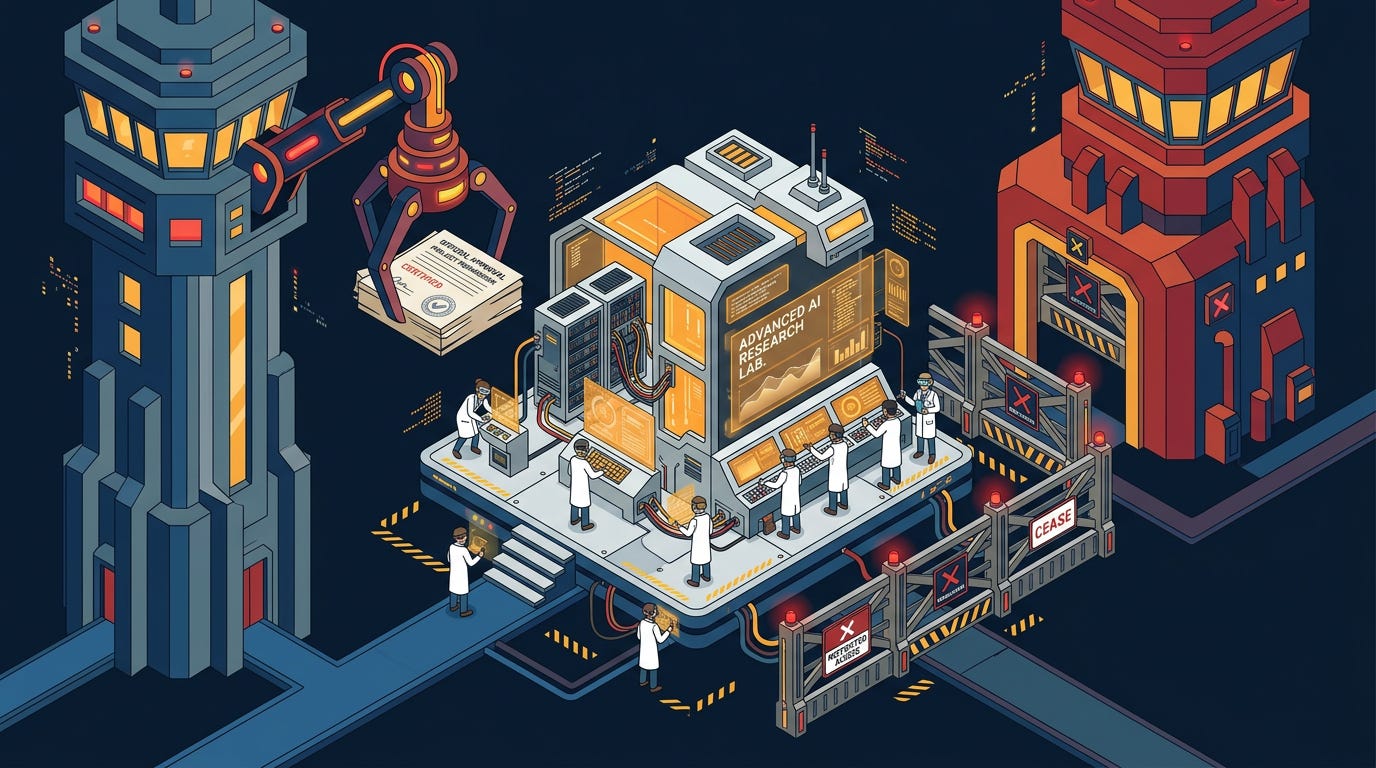
This week’s Mythos and Fable shutdown is not an isolated incident.
In late February, a federal judge in San Francisco issued a preliminary order blocking a Pentagon designation that had labeled Anthropic a supply chain risk. The judge separately suspended a directive ordering federal agencies to stop using Claude entirely.
That earlier dispute began when the administration demanded unrestricted access to Anthropic’s technology and the company refused. Anthropic cited concerns that its models could be used for mass domestic surveillance or to develop weapons systems capable of operating without human control.
The administration responded by moving to eliminate Anthropic’s government contracts. Judge Rita Lin’s ruling found the government’s actions in that earlier dispute lacked statutory support.
The pattern across both incidents is the same. Anthropic builds genuinely frontier-capable models, including ones with serious offensive and defensive cybersecurity applications.
The US government’s response oscillates between wanting full access to that capability and wanting to restrict it entirely, sometimes within the same administration and the same year.
Anthropic’s public position throughout has been consistent. It supports a transparent, statutory framework for government oversight of frontier AI.
It objects specifically to ad hoc enforcement actions that arrive as a same-day phone call and a formal letter five hours later, with no advance technical specification of what threshold was crossed.
The context that makes this week’s shutdown different from February’s dispute is timing.
The executive order signed June 2 establishes voluntary federal agency reviews of frontier models before deployment. Anthropic has an active partnership with the Center for AI Standards and Innovation at Commerce specifically for this kind of pre-deployment testing.
Fable 5 and Mythos 5 went through that process and were approved for release. The export control letter arrived three days after release anyway, which means the formal pre-deployment review channel the administration itself built did not prevent this outcome.
Either the review process missed something the jailbreak later exposed, or the export control action was a separate political decision that ran ahead of or around the official process. Anthropic’s public statements lean toward the second explanation.
The administration has not offered a detailed account that resolves the question either way.
Why it matters
This is the third major confrontation between the US government and its most safety-focused frontier lab in under six months. The official pre-deployment review process that was supposed to prevent exactly this kind of surprise shutdown did not prevent it. That gap between the stated process and what actually happened is the part every other AI lab should be paying close attention to.
SpaceX Disclosures Show Valuation Rests on Future Space Compute
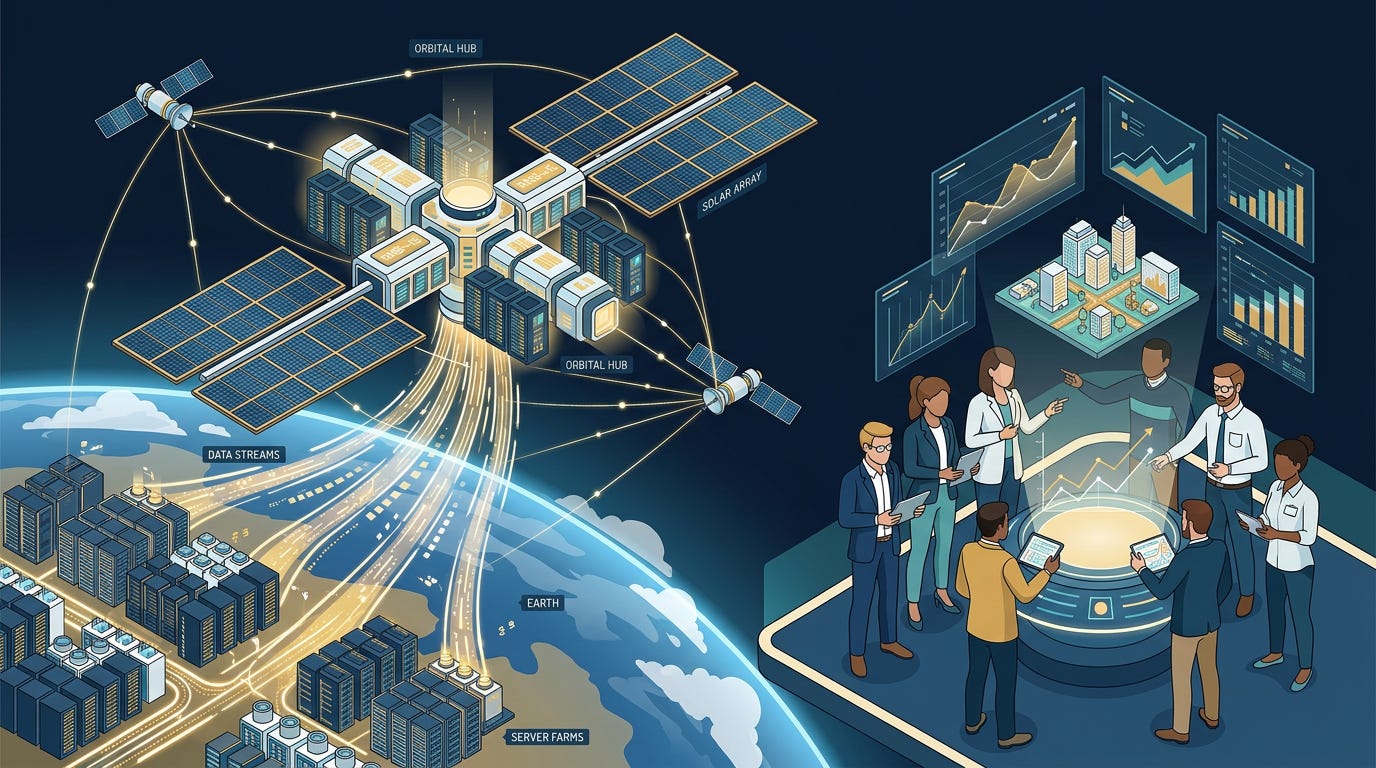
Buried inside the disclosures that accompanied SpaceX’s IPO is a financial breakdown that clarifies what investors actually bought at $2.1 trillion.
SpaceX’s 2025 revenue split roughly as follows: Starlink satellite internet contributed the largest share at approximately $11.4 billion, launch services contributed around $4.1 billion, and the xAI division, encompassing Grok and the broader AI compute thesis, contributed approximately $3.2 billion.
Combined 2025 revenue across the merged entity, following the February 2026 stock-swap merger that brought SpaceX and xAI under one roof at a combined $1.25 trillion valuation, landed near $18.7 billion.
At a $2.1 trillion market cap, the company is trading at roughly 112 times that combined revenue figure. This is a multiple that only makes sense if investors are pricing in the orbital data center thesis rather than the current business.
That thesis, which Musk has been articulating publicly for over a year, holds that within two to three years, compute deployed in orbit will be cheaper to run than equivalent compute on the ground.
This is because solar power in space is unfiltered by atmosphere and uninterrupted by weather or night. Additionally, heat dissipation into the vacuum of space removes the cooling cost that dominates terrestrial data center economics.
If that thesis is correct, SpaceX’s existing launch infrastructure and Starlink’s satellite constellation experience give it a structural head start. No terrestrial AI infrastructure company, however well capitalized, can replicate this without building its own launch capability from scratch.
If the thesis is wrong, or simply arrives a decade later than Musk’s stated timeline, the company is priced for a future that has not materialized.
What the IPO filing makes clear, separate from whether the orbital thesis pans out, is that xAI’s $3.2 billion in 2025 revenue is now a rounding error relative to the valuation built around it.
The market is not pricing SpaceX on current AI revenue. It is pricing SpaceX on the credibility of a roadmap, and on Musk’s track record of executing roadmaps that sounded implausible when he first described them.
This is a different kind of bet than the Anthropic or OpenAI IPOs represent, where the valuation is built on disclosed, compounding enterprise revenue that already exists.
SpaceX investors are buying a story about 2029. Anthropic and OpenAI investors, when those listings land later this year, will be buying numbers from 2026.
Why it matters
SpaceX’s $2.1 trillion valuation is built overwhelmingly on a bet that has not happened yet: orbital AI compute undercutting ground-based data centres. The current AI revenue inside the company is small relative to the valuation. Whether that bet pays off will be one of the defining questions for AI infrastructure economics over the next three years.
And that wraps up this week. Tune in next Monday, same time, for another deep-dive into the stories shaping the AI world.
The Sentinel lands in your inbox every Monday so you can catch up with the fast-moving AI space while sipping your morning coffee. Every detail that matters, none that doesn’t.