

Another Monday, another post to keep you up to speed with the AI world.
Apple held its most consequential WWDC in years and rebuilt Siri from the ground up. OpenAI filed a confidential S-1, days after Anthropic did the same. Codex crossed 5 million weekly users; OpenAI bought a startup to make it run longer. And the AI IPO race became a three-company story with combined valuations that dwarf anything public markets have seen in a generation.
Here’s everything you need to know before Monday gets the best of you.
Apple Rebuilt Siri From Scratch. Tim Cook’s Last Keynote Was His Most Important One.
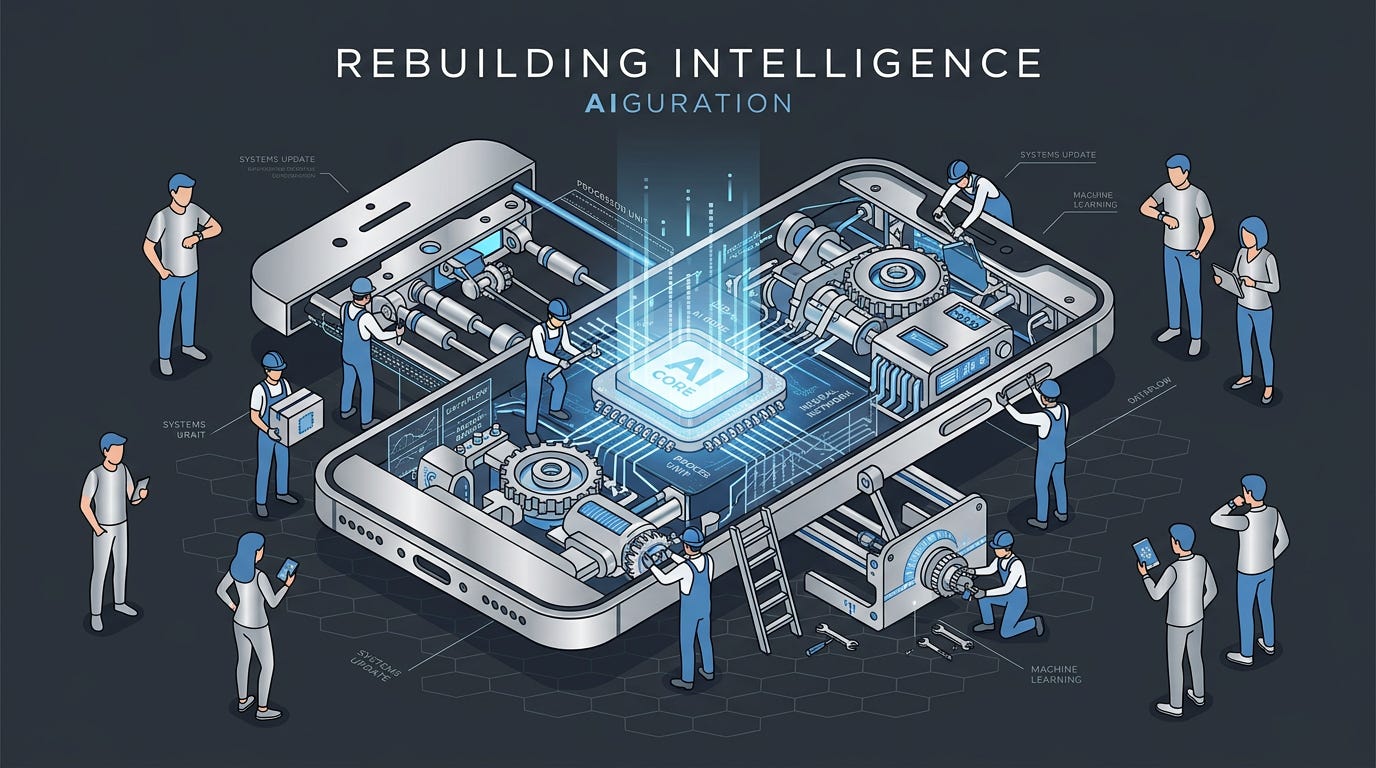
WWDC 2026 opened on June 8 at Apple Park and carried more weight than most developer conferences.
It was Tim Cook’s final keynote as CEO before handing over to John Ternus on September 1. It was Apple’s most direct attempt yet to answer two years of criticism that it had missed the AI moment.
The centrepiece: Siri AI. A complete rebuild of the assistant Apple has been apologising for since iOS 18.
Built on Apple’s own Foundation Models and supplemented by Google’s Gemini for queries requiring broader knowledge, the new Siri operates at the operating system level, with real-time access to Messages, Mail, Photos, Calendar, and on-screen content simultaneously, without switching apps.
Demos showed it surfacing a specific photo without opening Photos, building a multi-stop navigation route from an image in a conversation, and replying to an email in the sender’s own tone.
The Snow Leopard framing. iOS 27 is positioned as a release that fixes underlying machinery. App launches are up to 30 percent faster. Photo processing is up to 70 percent quicker. The design language has been revised again after Liquid Glass in iOS 26 drew mixed responses.
Craig Federighi’s private technical briefing after the keynote offered one revealing detail. Apple’s approach to agentic AI remains “highly structured and deterministic,” and Federighi described long-horizon autonomous tasks as “an exciting experiment” rather than something Apple is ready to ship at scale.
Did Apple catch up. Partially. The new Siri is genuinely better and the OS-level integration is real capability, not demo magic.
The decision to use Google Gemini for the knowledge layer is the most consequential strategic move Apple has made in AI, acknowledging that building a frontier model from scratch is not where Apple’s advantage lies.
Apple’s advantage is hardware integration, privacy, and on-device processing. The new Siri leans into all three.
Why it matters
Two billion devices are about to get a rebuilt Siri powered partly by Google’s model.
Apple’s acknowledgment that it needs an external AI partner for knowledge tasks is the clearest signal yet that the frontier model race has consolidated to a level where even Apple cannot compete alone.
OpenAI Filed Its S-1. Its Eight-Sentence Announcement Said Everything About How It Feels About Wall Street.
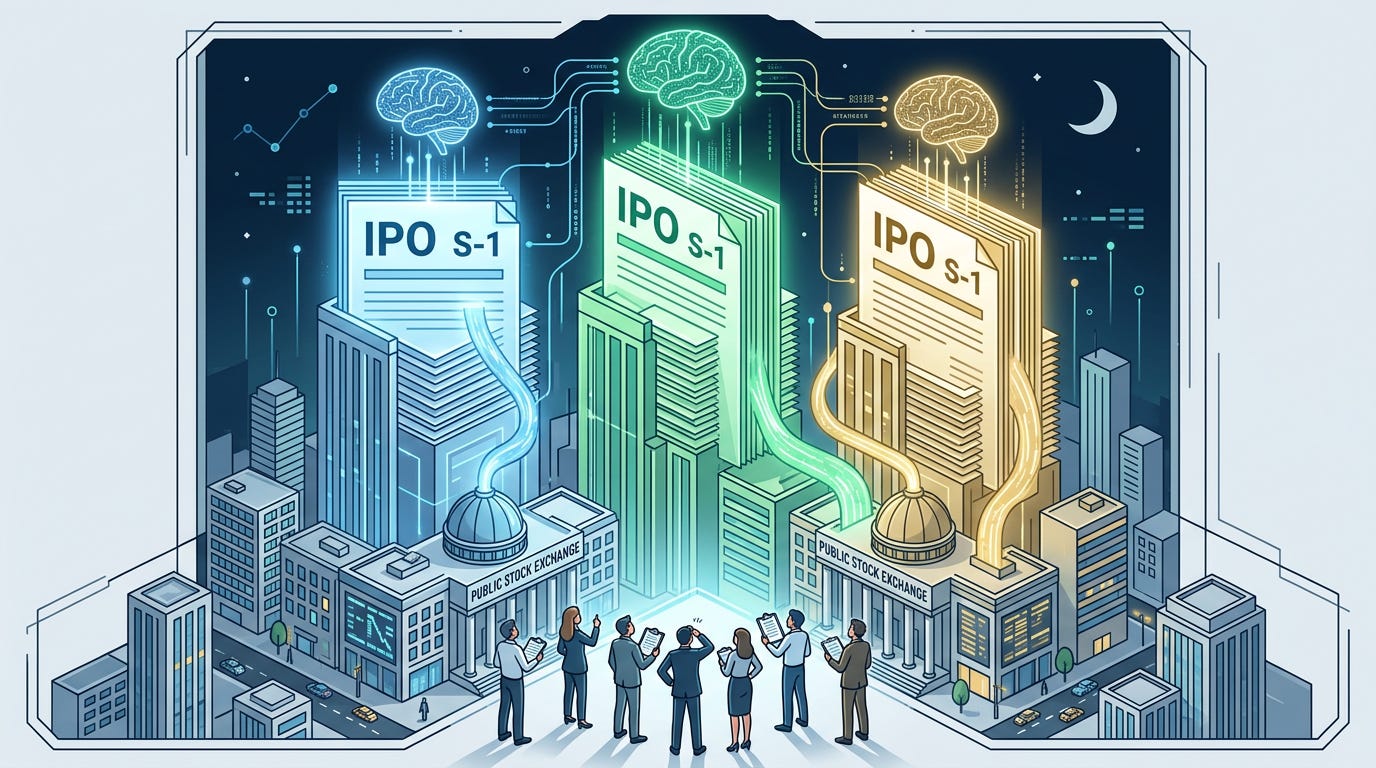
On June 8, OpenAI announced it had submitted a confidential S-1 registration statement to the SEC. The statement was eight sentences long and included this: “We recently submitted a confidential S-1. We expect it to leak so we’re just announcing it.”
That sentence captures something real about OpenAI’s relationship with financial disclosure norms. The company is preparing to be a public company while making clear it would rather control the narrative than let the SEC process do it.
The filing came exactly one week after Anthropic filed confidentially on June 1, and days before SpaceX is set to begin trading, creating what Bloomberg has described as a $3.6 trillion AI-related IPO pipeline moving simultaneously.
The financials. OpenAI is valued at $852 billion, reported more than $20 billion in annual recurring revenue for 2025, and has tripled its revenue figures each year since 2023.
Internal documents suggest management is projecting a $14 billion loss in 2026. The company does not expect to be profitable until 2029.
Goldman Sachs and Morgan Stanley are leading the offering. A September to November 2026 window is the current target, though OpenAI itself stressed that timing is undecided.
The competitive framing. OpenAI and Anthropic filing confidential S-1s within a week of each other turns the AI lab race into a public market horse race. Every quarter after listing, the two companies will disclose revenue, margins, and growth rates in direct comparison.
Anthropic goes into listing with $47 billion in annualised revenue, improving margins, and a narrative of compounding growth. OpenAI goes in with larger absolute scale, a $14 billion projected loss, and a monetisation timeline that asks investors to be patient.
Why it matters
OpenAI and Anthropic will both be public companies by early 2027. That means quarterly earnings calls, direct revenue comparisons, and a public market that will price the AI model race in real time.
The era of private AI valuations as the only signal of who is winning is ending.
Codex Hit 5 Million Weekly Users. OpenAI Bought A Startup To Keep It Running After You Close Your Laptop.
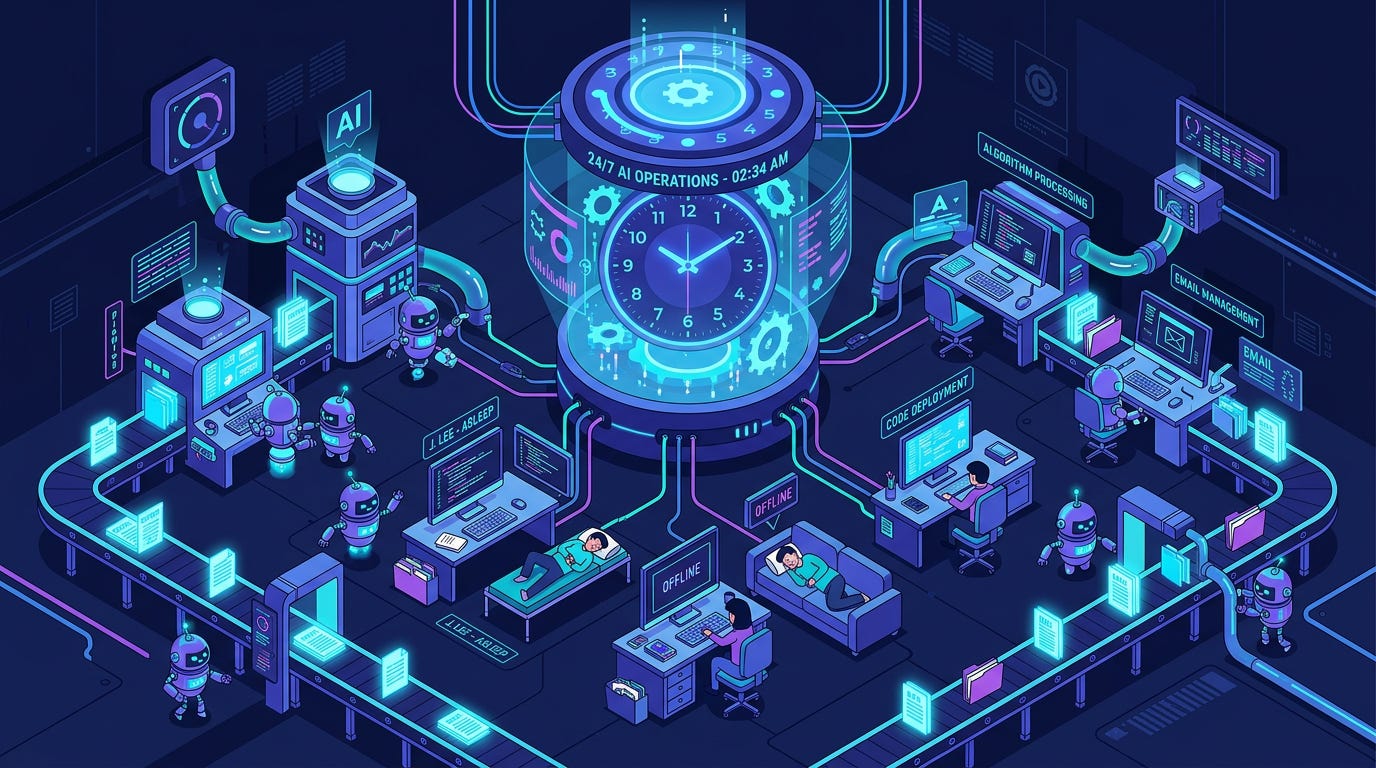
OpenAI disclosed on June 11 that Codex now has more than 5 million weekly active users, up 400 percent from earlier this year. The same announcement introduced the acquisition of Ona, a Kiel-based startup formerly known as Gitpod that builds persistent cloud environments for AI agents.
The timing is not coincidental. The tool that launched as a developer coding assistant is increasingly being used for tasks that unfold over hours or days rather than minutes: modernising entire codebases, patching a class of vulnerabilities across a repository, or automating multi-step business workflows.
Tasks of that length need somewhere to keep running after the developer closes the laptop. Ona provides exactly that.
What Ona brings. Secure, pre-configured cloud environments stocked with the tools, systems, and context required to complete extended work.
A Codex agent running inside an Ona environment can continue executing across sessions, pick up where it left off, and deliver results when the work is done rather than requiring the user to stay connected throughout.
Ona has supported around 2 million developers with cloud workspaces. Its enterprise agent usage grew 13-fold in 2026, with clients including major banks, pharmaceutical companies, and sovereign wealth funds. CEO Johannes Landgraf and the full team will join OpenAI’s Codex group after closing.
Who is actually using Codex. Knowledge workers now account for roughly 20 percent of Codex’s user base and are growing at three times the rate of developers.
The product OpenAI launched for software engineers is being adopted by people who have never written a line of code, using it to build internal tools, automate reporting, and delegate multi-step work to an agent.
Why it matters
The coding agent race is moving from “who writes the best code” to “who can run reliably in production for the longest time.” OpenAI just bought the answer to that question.
The IPO Race Is Now A Three-Way Sprint. The Combined Valuation Is $3.6 Trillion.

Anthropic filed its confidential S-1 on June 1. OpenAI filed on June 8. SpaceX began its IPO roadshow this week, pitching itself to institutional investors at a valuation near $1.75 trillion, having already raised commitments including a reported $5 billion from Saudi Arabia’s Public Investment Fund.
For context: the largest IPO in history is Saudi Aramco at $1.7 trillion. The combined pipeline from this three-company listing wave exceeds the total market capitalisation of every company in the S&P 500 except the top three.
The cluster framing. SpaceX is framing itself as an AI-enabled space infrastructure company, not just a rocket business. Starlink, the xAI division housing Grok, and the orbital data center thesis Musk has articulated are the AI-adjacent angles it is pitching to investors.
Anthropic and OpenAI are pure AI plays at $965 billion and $852 billion respectively, both carrying the same pitch: frontier model leadership translating into compounding enterprise revenue.
Anthropic has the cleaner financial story with better margins. OpenAI has larger absolute scale and larger projected losses.
The banks have a new problem. Goldman Sachs and Morgan Stanley are leading the OpenAI offering. Goldman is also involved with Anthropic. The conflict management alone will generate legal commentary for months.
What matters for the broader market is what these listings reveal about AI economics that private valuations have kept hidden. When S-1 documents become public, investors will see revenue breakdowns, cost structures, compute spend, and margin trajectories that no amount of analyst estimation has been able to accurately predict.
Why it matters
The S-1 filings, when they become public, will be the most revealing financial documents in AI history. Everything the industry has claimed about its economics will be tested against disclosed numbers for the first time.
Codex Sites Turned Non-Coders Into App Builders. 20% Of Codex Users Have Never Written A Line.
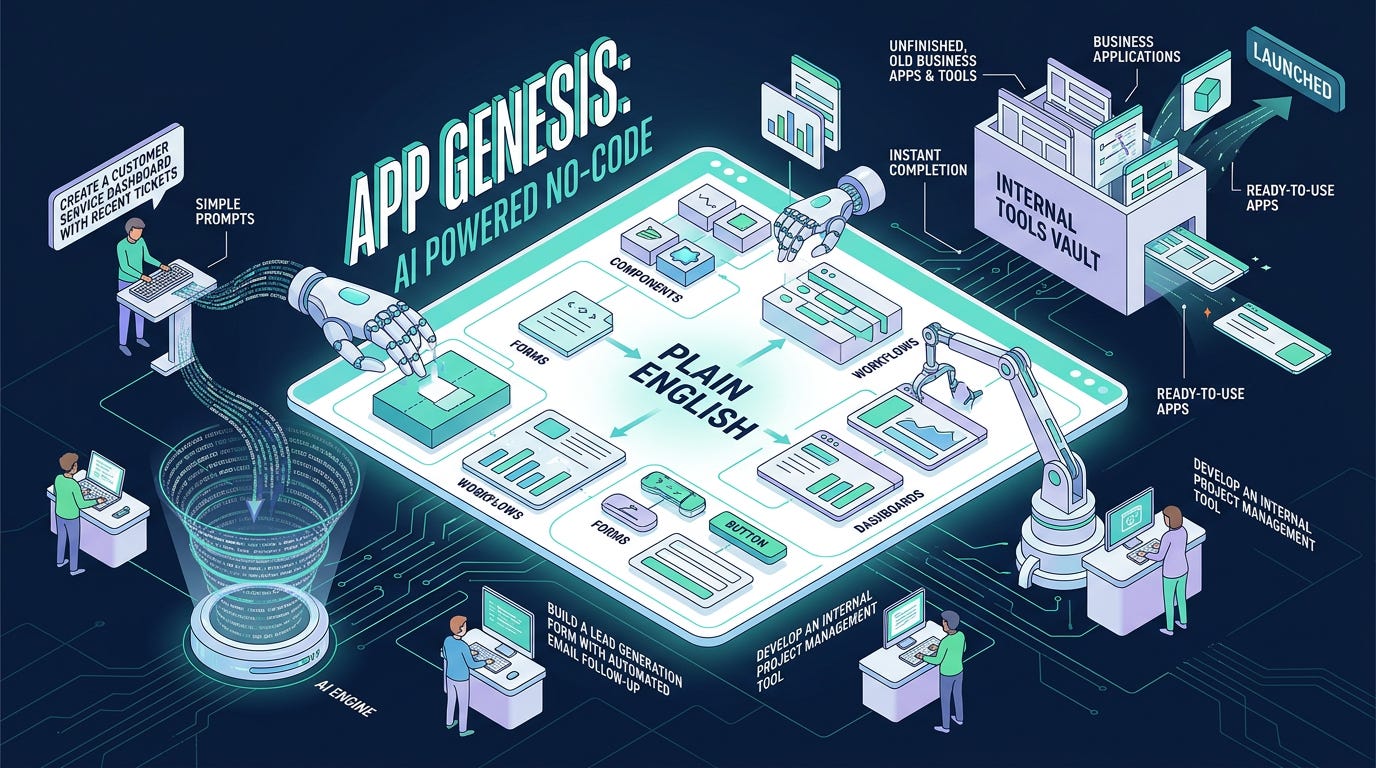
Codex Sites, launched June 2, lets users describe an internal tool in plain English and receive a live, hosted web application with a shareable URL, built and deployed on OpenAI’s infrastructure, with workspace authentication built in. No deploy pipeline, no hosting account, no DevOps ticket.
The use cases OpenAI highlighted at launch, dashboards, planners, review workspaces, project boards, launch trackers, are all internal tools, not public websites.
The product is not competing with Squarespace or Webflow. It is competing with the backlog of internal apps every company needs and no engineering team ever has time to build.
The 20% figure. At 5 million weekly Codex users, that is roughly 1 million people using an AI coding agent who are not software developers. They are analysts, marketers, finance professionals, operations managers, and product managers who have discovered that describing what they want produces something they can use.
The knowledge worker segment is growing at three times the rate of the developer segment. Sites is designed for that cohort. It removes the final step that required any technical knowledge, which was deploying the thing Codex built.
The caveat the launch coverage missed. Codex Sites is currently a preview available only to ChatGPT Business and Enterprise workspaces. Individual Plus and Pro subscribers do not have access yet.
Teams on Business and Enterprise plans report that the build-and-deploy workflow works as described for low-complexity tools. More complex applications with multiple data sources and conditional logic require refinement cycles that currently need some technical input.
Why it matters
One million non-developers are already using an AI coding agent weekly. Codex Sites removes the last deployment barrier for the tools they build.
The internal tooling market, where every company has a backlog of needed apps that never get built, is now accessible to people who cannot write code.
Musk Lost His Lawsuit Against OpenAI. The Jury Deliberated For Under Two Hours.

On May 18, a California jury unanimously dismissed Elon Musk’s lawsuit against OpenAI and Sam Altman on the grounds that Musk had waited too long to file.
The nine-person jury found that Musk missed the three-year statute of limitations window. Judge Yvonne Gonzalez Rogers accepted the verdict and dismissed all claims, including those against Microsoft. The deliberation took less than two hours.
The verdict lands in this issue because its consequences became fully visible this week. OpenAI filed its S-1 two weeks after the case was dismissed, a sequence that the company’s IPO counsel almost certainly had in mind when planning the listing timeline. A pending lawsuit seeking $150 billion in damages from the company going public would have complicated the filing considerably.
The case. It had been building since 2024, when Musk sued, alleging that OpenAI betrayed its founding nonprofit mission by transitioning to a for-profit structure.
OpenAI’s defence was that the mission was always to develop safe AI for humanity’s benefit, not to remain a nonprofit indefinitely, and that the for-profit conversion serves that mission.
The jury did not rule on the substance of that argument. It found the claims time-barred, meaning Musk filed too late regardless of whether the underlying facts supported his case. He has said he will appeal.
The sequence. Musk filed the lawsuit, the case went to trial, the jury dismissed it in under two hours, and two weeks later OpenAI filed for IPO. That timeline is not accidental.
The lawsuit was one of the significant governance and legal clouds over OpenAI’s for-profit conversion. Its dismissal removed the most visible legal obstacle to the listing.
Why it matters
Appeals run on different timelines than IPO windows, and OpenAI is moving on a timeline that appears designed to list before that process resolves.
Apple Is Paying Google $1 Billion A Year For Siri. The Price Tells You How The Frontier Model Market Actually Works.
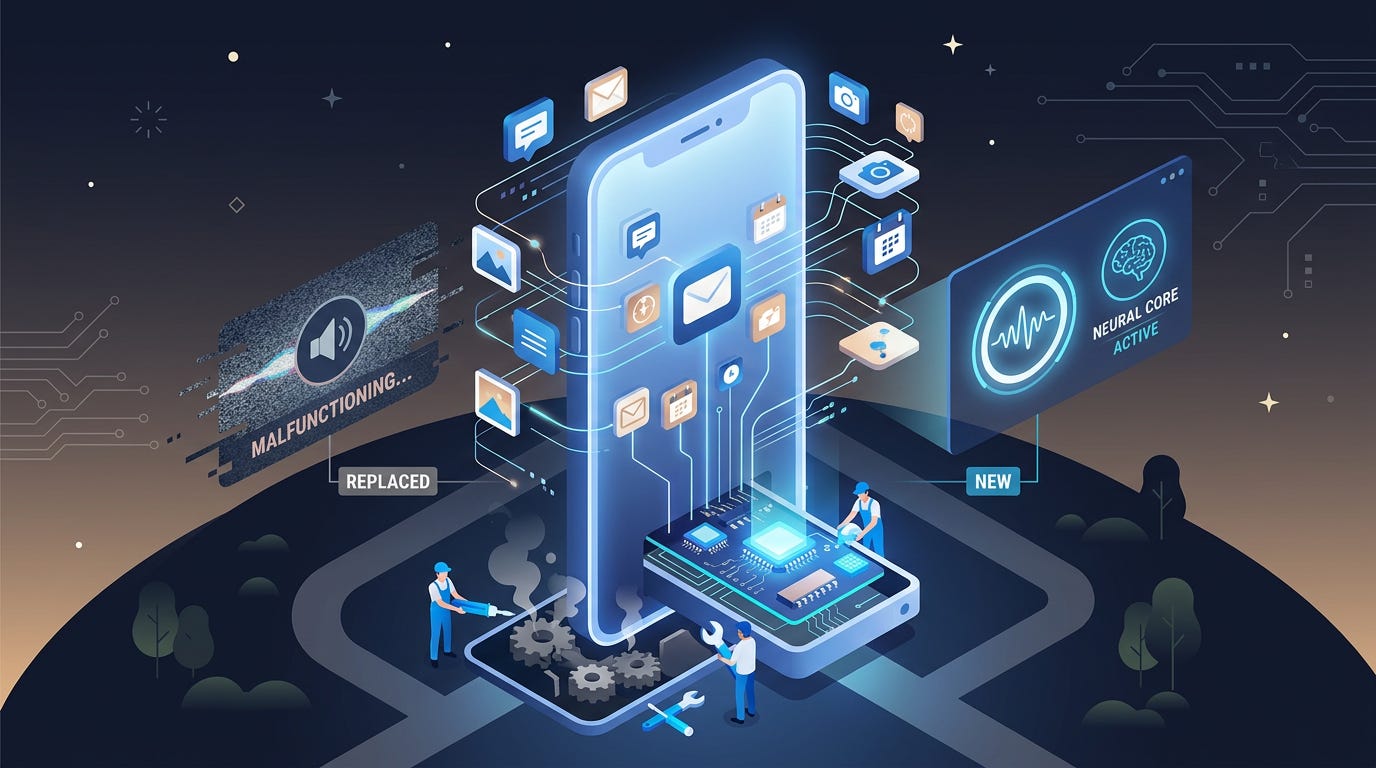
Apple is paying Google approximately $1 billion annually to use a custom 1.2 trillion parameter Gemini model as the knowledge layer for the new Siri AI.
That figure, reported in the lead-up to WWDC, is the most concrete published price for frontier model API access between two major technology companies and the only comparable data point for what a two-billion-device deployment of a frontier model costs at the infrastructure level.
For reference: Google’s existing search default deal with Apple has been estimated at $20 billion annually. The Gemini AI integration is being added at roughly 5 percent of that cost.
The architecture. Siri AI runs Apple’s own Foundation Models on-device for tasks that do not require external knowledge, privacy-sensitive actions, and low-latency responses.
Gemini is called only when the query requires broader factual knowledge, and the call is routed through Apple’s Private Cloud Compute infrastructure, which Apple says means Google does not receive the query content.
Whether that privacy architecture holds up to independent scrutiny has not yet been established.
What the price reveals. Google built a 1.2 trillion parameter custom model, deployed it to serve Apple’s integration, and is receiving $1 billion a year for that service. That is not a standard API pricing arrangement.
It is a bilateral infrastructure deal between two of the largest technology companies in the world, negotiated at the board level, with a custom model built for a specific partner.
The model API market at the very top of capability has two tiers: the standard developer API that any team can access, and the hyperscale bilateral deal where companies of Apple’s size get custom models and bespoke infrastructure. The $1 billion number marks where that second tier begins.
Why it matters
It tells AI infrastructure buyers what it costs to build Siri-scale AI without a frontier model of your own. It also confirms that Google has won the first major non-Google consumer AI integration at the operating system level.
NVIDIA’s Cosmos 3 Arrived Quietly. It Is The Most Capable Physical AI Model Ever Built.
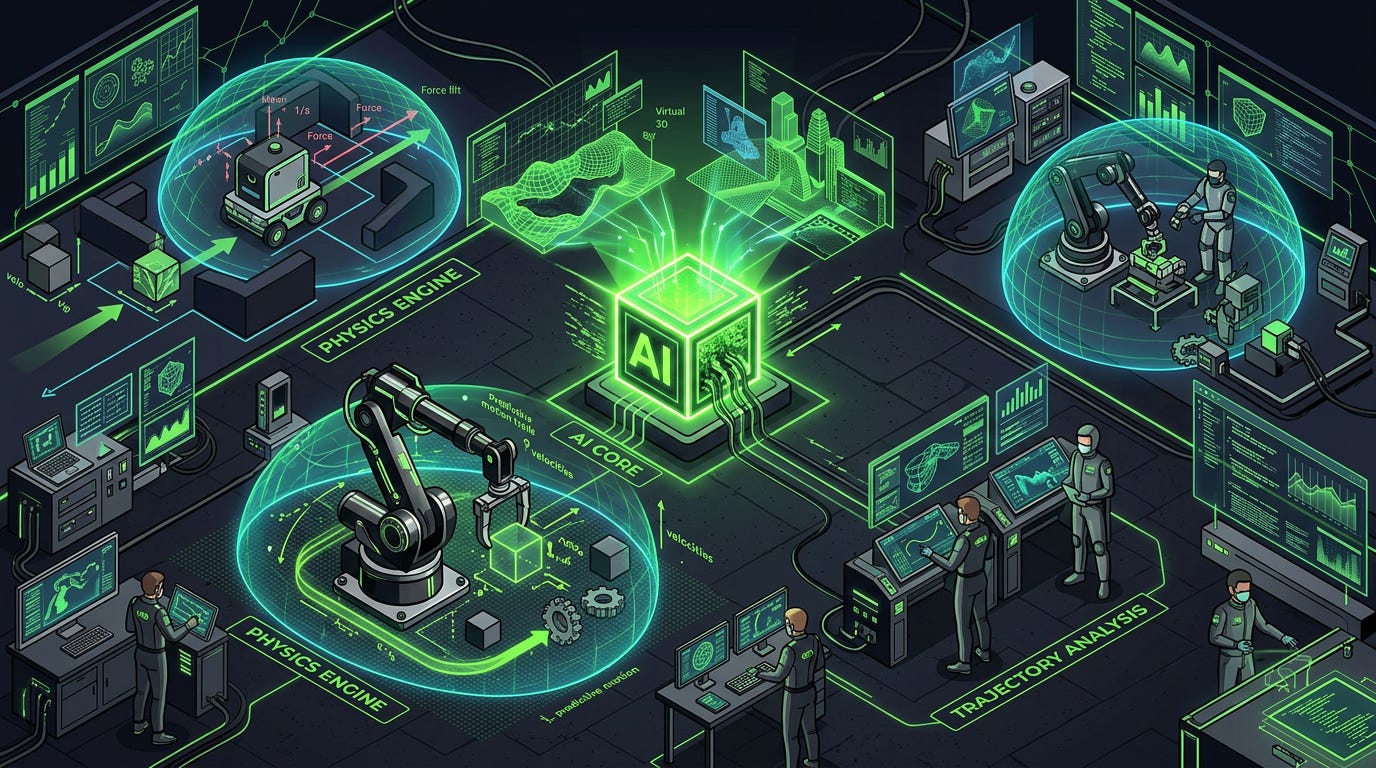
Alongside the Nemotron 3 Ultra announcement at Computex last week, NVIDIA released Cosmos 3, the third generation of its physical AI world model.
Cosmos 3 processes language, images, video, audio, and action signals simultaneously and generates physically plausible predictions about how objects, bodies, and environments behave. It is the foundation model for robotics, autonomous vehicles, manufacturing simulation, and any AI system that needs to understand the physical world rather than just text and images.
Where the practical impact lands. Cosmos 3 can model how a robotic hand should grasp an irregular object it has never encountered, predict the physical consequences of a movement before executing it, and generate synthetic training data for physical tasks at a quality level that reduces the amount of real-world data collection required.
That last capability is the one that changes economics. Collecting real-world physical training data for robots is slow, expensive, and does not scale. Generating it synthetically at Cosmos 3 quality can accelerate robotics development timelines by a significant factor.
The strategic play. NVIDIA’s strategy with Cosmos is straightforward. Make the physical AI development infrastructure dependent on NVIDIA hardware by building the most capable physical world model and releasing it as open infrastructure.
The same logic that drives the Nemotron open-weight model strategy drives Cosmos. Developers who build on NVIDIA’s AI models run on NVIDIA’s chips.
Boston Dynamics, Figure AI, and Waymo have confirmed adoption, most of the robotics and autonomous vehicle sector’s leading names in a single list of early adopters.
Why it matters
The companies building robots and autonomous systems that adopt Cosmos 3 are also locking in to NVIDIA’s infrastructure stack. That is the strategic play, and it appears to be working.
The Data Center Resource War Just Reached Congress. Water, Power, And Land Are All On The Table.
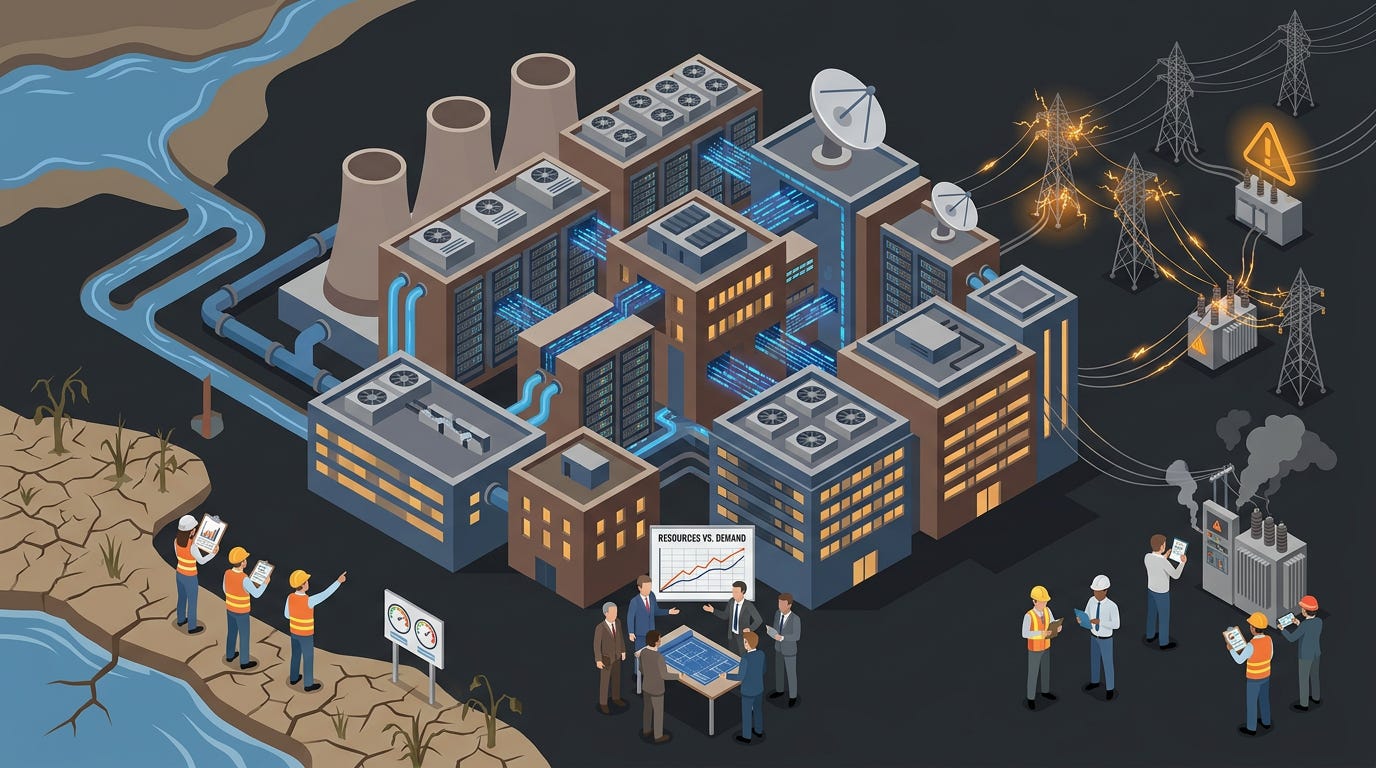
Congressional hearings on AI data center resource consumption ran this week, covering water use, power demand, cooling infrastructure, land acquisition, and community impact.
The proximate trigger was the SoftBank $87 billion France commitment and the $725 billion combined hyperscaler infrastructure spend disclosed last week, which made the resource arithmetic impossible to avoid.
A medium-scale AI data center campus consumes water at the rate of a small town for cooling. Power demand figures disclosed in the hearings indicate that the planned AI data center buildout in the United States alone would require adding the equivalent of several major power plants of new generation capacity by 2028, in regions that are already operating near grid capacity.
The water question. Large language model inference at scale requires significant liquid cooling, and the water used in that cooling is not always returned to the source at the same temperature or in the same condition.
Several data center facilities in water-stressed regions of the southwestern United States have faced community opposition on these grounds in 2026.
The hearings documented that neither federal nor state regulatory frameworks require AI data center operators to disclose water consumption figures, which means there is no public baseline against which to measure the impact of the buildout currently underway. The committee asked NVIDIA, Microsoft, and Google for voluntary disclosure of water usage data within 30 days.
The companies’ defence. Data centers have consumed significant power and water for decades.
The counterargument, which the committee chairs made repeatedly, is that the rate of growth is categorically different. A data center built for traditional cloud workloads at 10 kilowatts per rack and one built for AI training at 140 kilowatts per rack are the same category of building with a 14x difference in resource intensity. The regulatory frameworks were written for the former. The latter is being deployed under the same rules.
Why it matters
Water consumption is undisclosed. Power demand is outpacing grid capacity. Congress is asking for voluntary disclosure. The companies are resisting. Legislation is the likely outcome.
Bezos Just Opened Up About Prometheus. A $12 Billion AI Bet Almost Nobody Knew Existed.
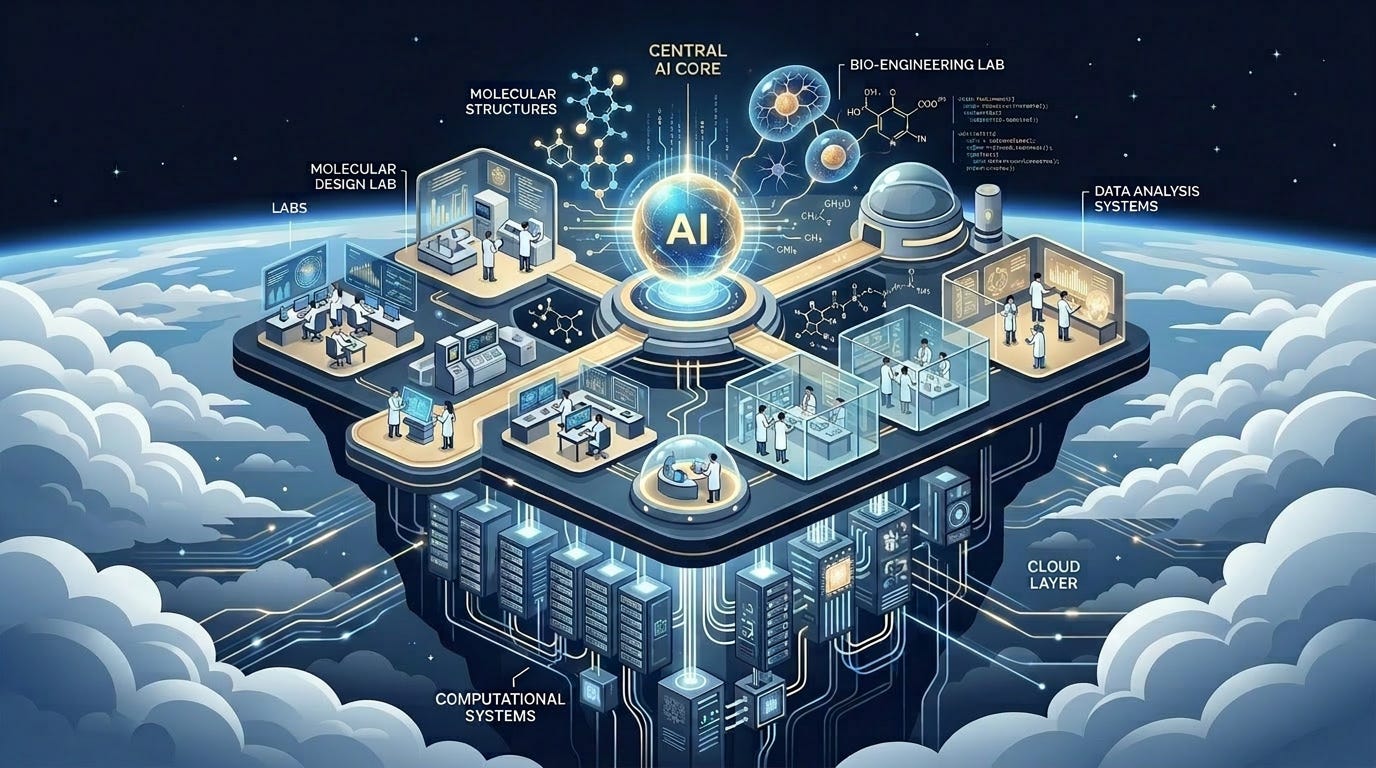
Jeff Bezos gave his first detailed public comments this week about Prometheus AI, the AI research lab he has been funding since early 2025, which has now raised over $12 billion at a valuation that makes it the fourth most valuable AI lab in the world after Anthropic, OpenAI, and xAI.
Bezos described Prometheus as focused on “scientific discovery at the frontier,” specifically on AI systems that can generate and test novel hypotheses in biology, chemistry, and materials science rather than primarily on consumer or enterprise AI products.
“We’re not being secretive,” he told reporters. “We’re being focused. When you’re trying to do something genuinely new, the first thing you protect is the ability to think clearly without being pulled into other people’s frames for what AI is supposed to be.”
What we know about the lab. The research focus on scientific discovery puts it in similar territory to Sakana AI’s peer-reviewed paper milestone covered in Issue 008 and DeepMind’s AlphaProof Nexus work on mathematics.
But Prometheus’s scale is different. At $12 billion raised, it has more capital than most frontier labs had at comparable stages of development.
The team structure has not been publicly disclosed. Bezos declined to name the research leads or the number of employees, saying only that the organisation is “smaller than you’d expect and more focused than you’d believe.” The compute infrastructure is reportedly split between AWS’s proprietary Trainium chips and a dedicated cluster of Nvidia hardware.
Why this matters beyond the headline number. Prometheus has been largely absent from the AI coverage that has dominated the past 18 months.
That means its development trajectory has not been shaped by public benchmarking pressure, investor narrative demands, or the model race dynamics that have pushed every other major lab toward increasingly similar product architectures.
Bezos said publicly listed financial data and a research publication schedule would both arrive before the end of the year.
Why it matters
A $12 billion AI lab that has been operating quietly for 18 months just surfaced publicly. It is focused on scientific discovery rather than enterprise AI, it has more capital than most labs had at this stage, and its founder has deliberately kept it out of the model race frame.
What Prometheus has been building while nobody was watching is the most interesting unknown in AI right now.
And that wraps up this week. Tune in next Monday, same time, for another deep-dive into the stories shaping the AI world.
The Sentinel lands in your inbox every Monday so you can catch up with the fast-moving AI space while sipping your morning coffee. Every detail that matters, none that doesn’t.