

Another Monday, another post to keep you up to speed with the AI world.
SoftBank committed $87 billion to French AI infrastructure and chose nuclear power as the reason. Microsoft Build turned Windows into an agent operating system. NVIDIA shipped the most capable open-weight model America has ever produced. And Congress dropped a 269-page bipartisan AI bill that would freeze every state AI law in the country for three years.
Here’s everything you need to know before Monday gets the best of you.
SoftBank Just Made The Biggest AI Bet In European History. France Won It On Nuclear Power.
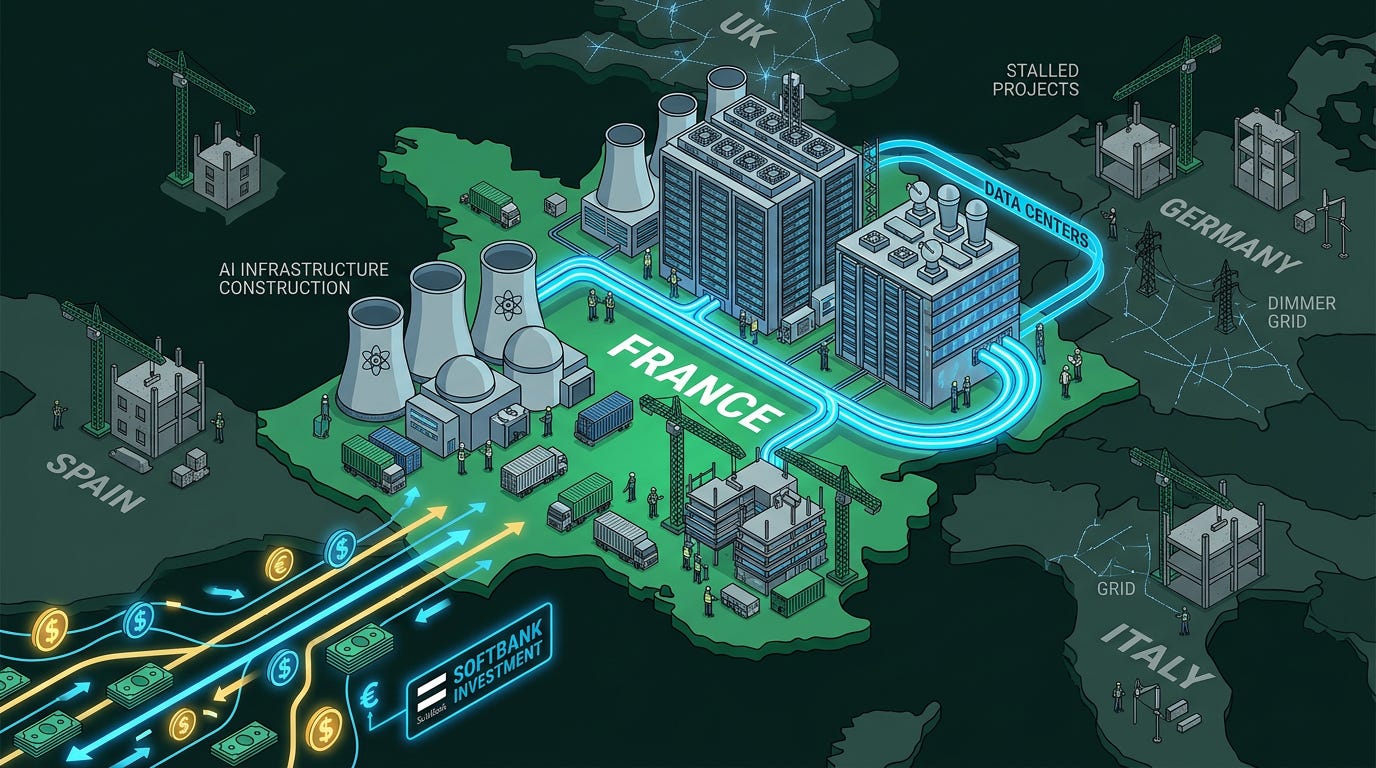
On May 31, SoftBank announced it would invest up to €75 billion ($87 billion) to build 5 gigawatts of AI data center capacity across France, the largest single-country AI infrastructure commitment in European history.
The first phase is €45 billion for 3.1 gigawatts in Hauts-de-France by 2031, with sites confirmed at Dunkirk, Bosquel, and Bouchain.
Masayoshi Son and President Emmanuel Macron formalised the commitment at the Choose France Summit on June 2. EDF and Schneider Electric are named as infrastructure partners.
SoftBank shares jumped 14 percent on Monday and are up over 70 percent this year.
Why France won? France draws approximately 70 percent of its electricity from nuclear reactors, is the world’s largest net electricity exporter, and posts industrial power prices well under half those in the UK.
The decommissioned coal plant at Bouchain is being transferred to SoftBank and repurposed as a data center, eliminating the construction timeline for one site.
AI data centers require 80 to 140 kilowatts per rack. The constraint blocking European AI investment is not land, talent, or capital. It is electricity, and France has a sustainable solution for it.
The bigger bet. Macron has argued for two years that Europe must build its own AI infrastructure or cede the market to the US and China.
SoftBank’s commitment, structured around French nuclear power and French engineering talent, is the largest single validation of that argument to date. Son told reporters he expects the figure to grow further.
SoftBank has ploughed more than $30 billion into OpenAI, with investment gains totalling $45 billion in the year ended March. The France commitment is a bet on the infrastructure underpinning the same AI wave his OpenAI stake is riding.
Why it matters
$87 billion is the largest AI infrastructure commitment in European history, and the reason it went to France is nuclear power. The countries that solve the electricity problem first will host the next generation of AI infrastructure.
Microsoft Build Turned Windows Into An Agent OS. Every App Is Now A Potential Agent.
Microsoft Build 2026, held June 2 and 3 in San Francisco, was themed around a single phrase from Satya Nadella: “agent-first.”
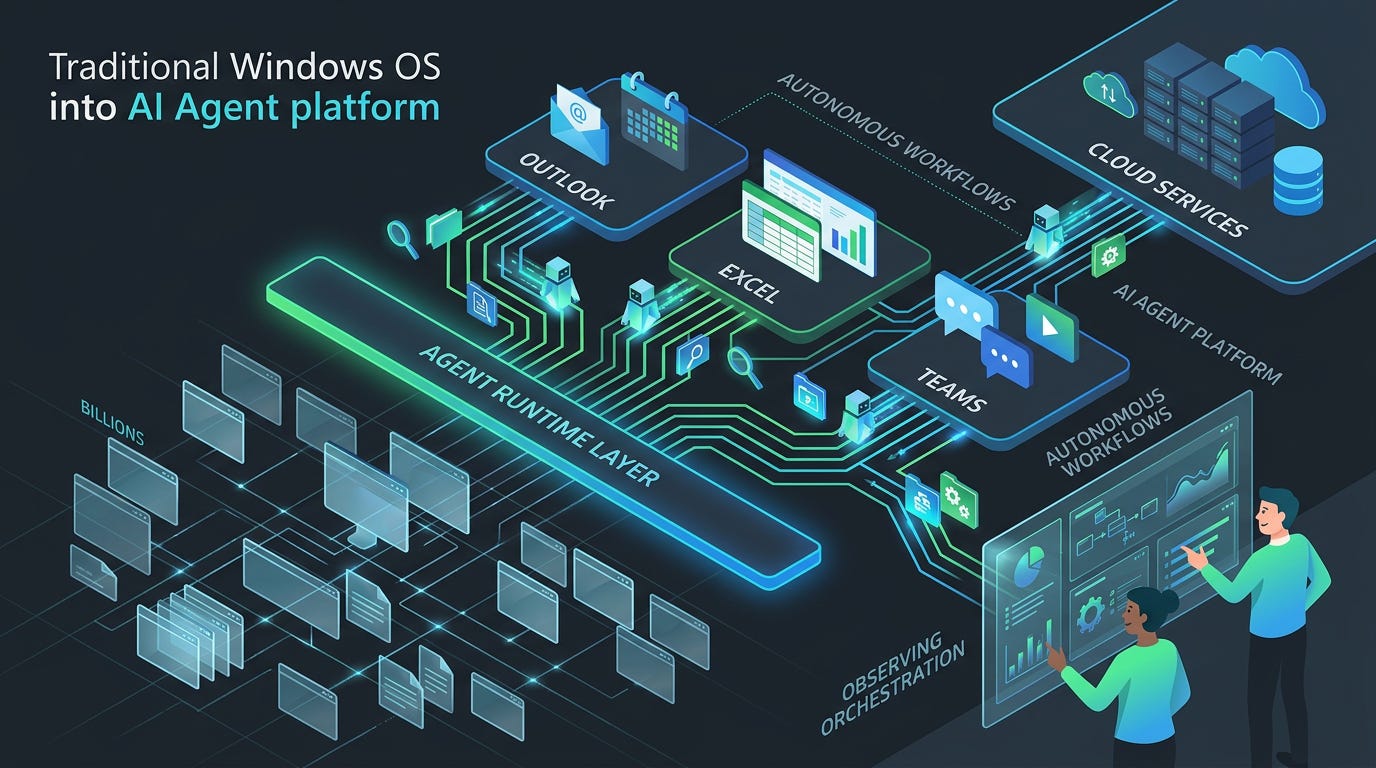
The biggest announcement was a platform designation. Windows Agent Framework reached production status, introducing a system-level agent runtime that lets applications expose their capabilities to each other through a shared manifest.
A user can ask Copilot to “schedule a meeting and send the agenda from yesterday’s Excel file,” and Windows orchestrates Outlook, Excel, and Teams agents in sequence, without the user touching a single app.
Microsoft repositioned Windows as a runtime for AI agents doing work on behalf of users, not a desktop for users running applications.
The supporting announcements. MAI is a new family of seven in-house models optimised for device and enterprise workloads, reducing dependency on OpenAI and Anthropic for lower-stakes tasks.
Copilot was rebuilt as a multi-model platform routing work across OpenAI, Anthropic, and open-source models depending on the task.
Windows 365 for Agents extends the runtime to cloud PCs. Microsoft Execution Containers provide OS-level sandboxing for agents that interact with sensitive data. The Intelligent Terminal brings agent-assisted shell commands to the command line.
The pricing tension. GitHub Copilot’s new AI Credits billing model, metering agent sessions at $0.01 per credit, drew immediate backlash from developers reporting rapid credit consumption on routine tasks.
The agent-first keynote vision and the frustrated developers watching their credit statements are looking at the same product from different angles.
Why it matters
Microsoft shipped an agent runtime to a billion Windows devices this week. No other agent platform has that distribution from day one. Whether developers build on it depends on whether the APIs are compelling and whether the pricing model earns trust back after a rough launch week.
NVIDIA Just Shipped The Strongest US Open-Weight Model Ever. China Is Still Ahead.
Jensen Huang announced Nemotron 3 Ultra at his Computex keynote on June 1. The weights went live on Hugging Face on June 4.
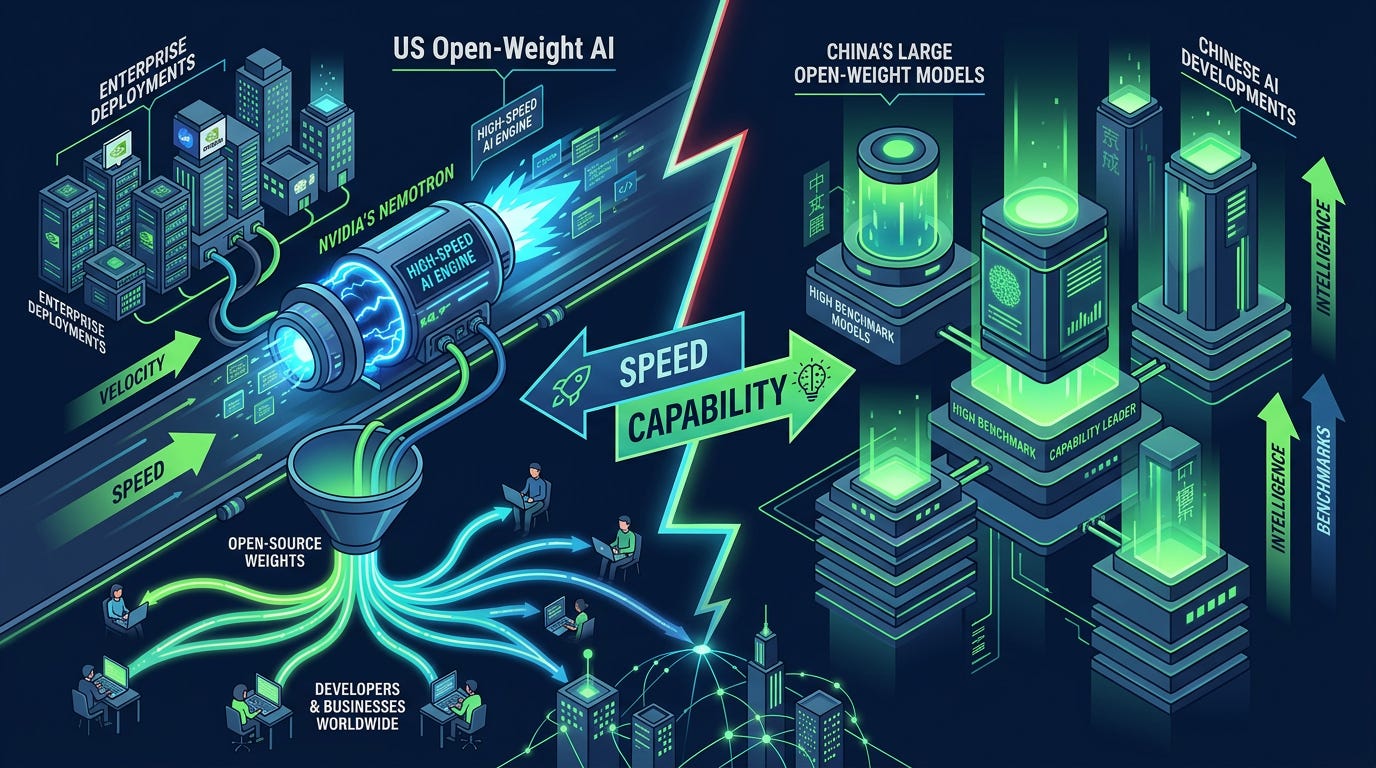
The model has 550 billion total parameters with 55 billion active per forward pass, using a hybrid Mamba-Transformer Mixture-of-Experts architecture that trades raw parameter count for inference speed.
On the Artificial Analysis Intelligence Index, Nemotron 3 Ultra scores 48, the highest-scoring US-origin open-weight model ever released.
It delivers over 300 output tokens per second on NVIDIA hardware, three to six times faster than DeepSeek V4 Pro and Kimi K2.6 through their commercial APIs.
It is available under the Linux Foundation’s permissive OpenMDW-1.1 licence. NVIDIA released the weights, training data, and full recipes.
The gap to China. Kimi K2.6 scores 54 on the same Intelligence Index, six points ahead. DeepSeek V4 Pro is in a similar range.
Both Chinese models trail Nemotron 3 Ultra on throughput, which matters in production systems where inference costs compound across millions of daily requests.
But on raw reasoning quality, the US open-weight frontier is behind. Nemotron 3 Ultra is the best US open model. It is not the best open model.
The early adopters. Accenture, CrowdStrike, Palantir, and Perplexity confirmed at launch.
Pricing on DeepInfra’s pre-release endpoint was indexed at $0.37 per million input tokens and $1.08 per million output, significantly below the major closed frontier models.
Why it matters
NVIDIA shipped the strongest US open-weight model in history and framed it as America’s answer to China’s open-source AI lead. The framing is accurate. The gap is real. The capability gap is not closed.
Congress Just Dropped A Bill That Would Freeze Every State AI Law In America.
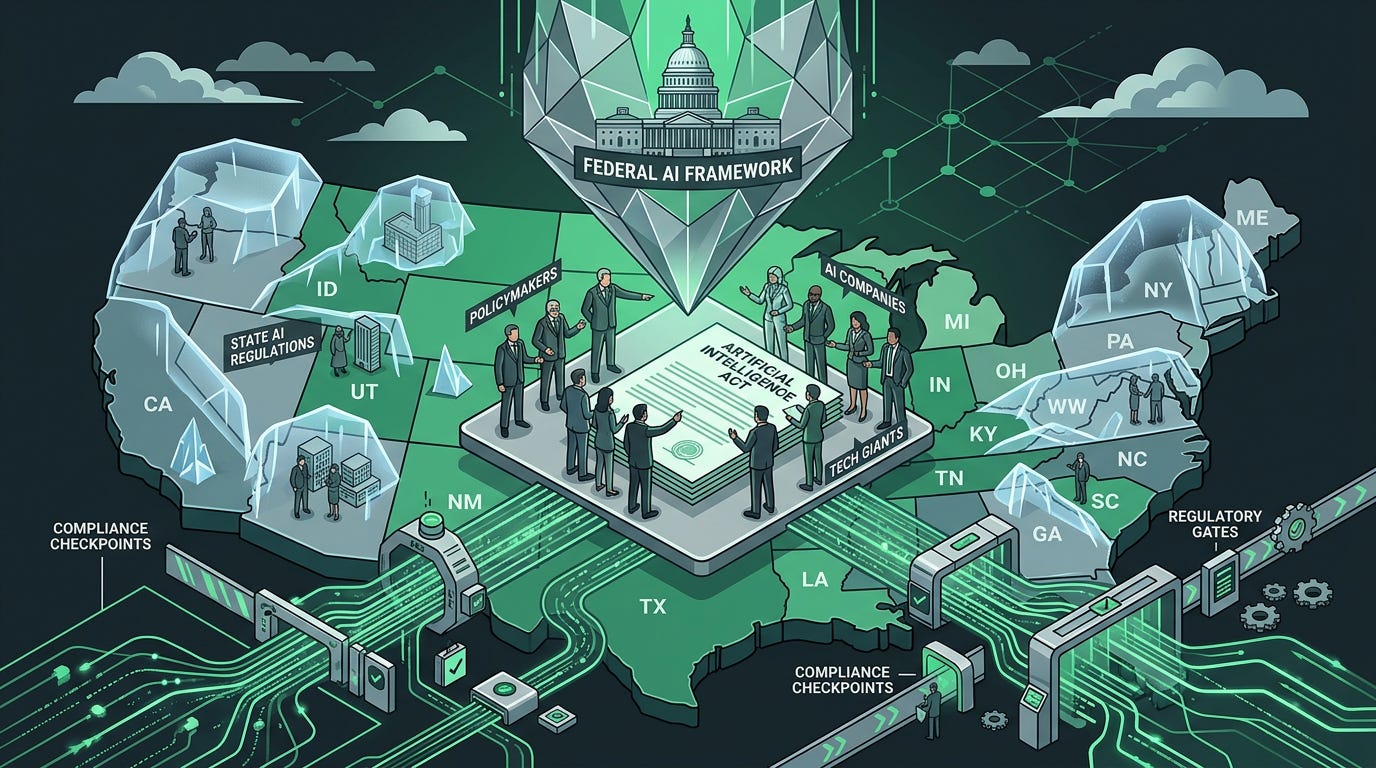
On June 4, Representatives Jay Obernolte (R-CA) and Lori Trahan (D-MA) released a 269-page discussion draft titled the Great American Artificial Intelligence Act of 2026.
The bill arrived two days after President Trump signed an executive order establishing voluntary federal agency reviews of new frontier AI models, making it the most substantive congressional AI governance week in US history.
The core mechanism that drew immediate attention: a three-year preemption of all state AI development laws.
States would retain the ability to regulate how AI systems are deployed within their borders, but would lose the power to legislate how those systems are built. Colorado’s algorithmic discrimination law, the first state AI law the DOJ challenged in federal court, is the direct target.
The obligations on frontier developers. Anthropic, OpenAI, xAI, and Google DeepMind would be required to publish and follow plans for addressing catastrophic risks, submit to semi-annual third-party audits, and report critical safety incidents to the government.
A Center for AI Standards and Innovation would receive $100 million per fiscal year in authorised funding.
The Census Bureau and Bureau of Labor Statistics would be directed to revise federal surveys to capture AI adoption data, giving visibility into displacement effects that currently exist only in patchwork industry surveys.
The reception. Sharply divided.
Labour unions, consumer advocates, and a formal House Democratic commission issued near-universal rejection within hours, arguing that a three-year freeze on state consumer protections is a giveaway to the industry the bill claims to regulate.
The draft is a discussion document. It has no Senate co-sponsors and faces a contested path to passage. What it does have is bipartisan House support and a regulatory vacuum every major AI company has been operating inside for three years.
Why it matters
This is the first serious bipartisan federal AI governance proposal in US history. Whether it passes or not, it defines the terms of the US federal AI governance debate for the next two years.
OpenAI Just Went Fully Live On AWS. Voice AI Is Now A Production API.
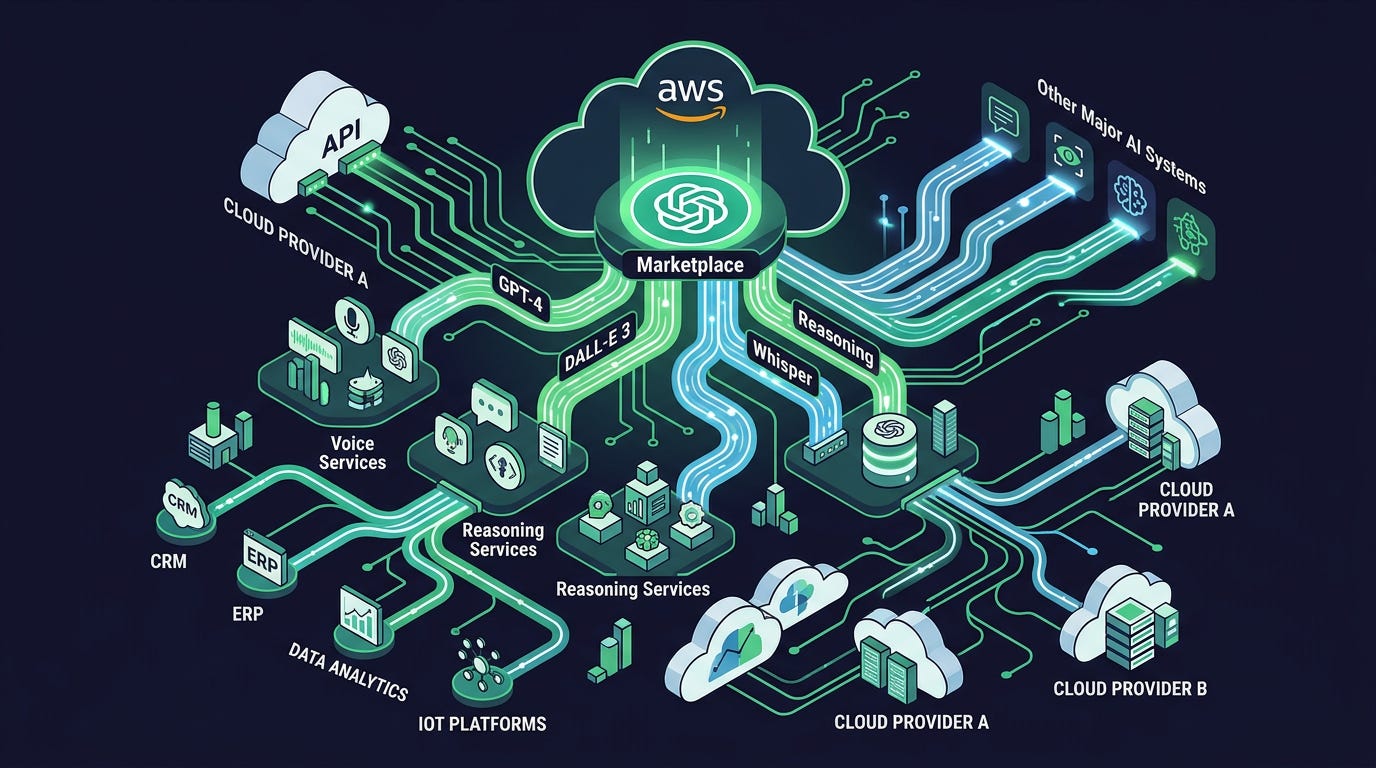
OpenAI’s models reached general availability on Amazon Bedrock this week, completing the transition that began when the Microsoft exclusivity ended in late April.
GPT-5.5, GPT-5.4, and Codex are now accessible to any AWS customer through Bedrock at standard API pricing with no additional distribution markup.
The product is called Amazon Bedrock Managed Agents powered by OpenAI, pairing OpenAI’s models with AWS’s agent infrastructure including persistent memory, Lambda integration, and the full range of AWS data services.
AWS now carries OpenAI, Anthropic’s Claude family, and Meta’s Llama models under the same platform.
Voice goes GA. The GPT-Realtime-2 API and the broader voice suite moved from beta to general availability in the same week.
That covers three products: real-time voice agents for multi-turn spoken conversations at production latency, real-time bidirectional translation, and streaming transcription via an updated Whisper model.
Uber is already running two production deployments, a driver coaching tool and a voice-based ride-booking experience, currently live with hundreds of thousands of US drivers.
The combined effect. The two largest deployment gaps for OpenAI’s commercial models, the inability to run them on AWS and the lack of production-grade voice APIs, closed in the same week.
Enterprise customers who had held off because of AWS dependency, or who had been waiting for stable voice capabilities, lost both reasons for delay simultaneously.
Why it matters
The “frankly staggering” demand OpenAI’s CRO described in her late-April memo is now able to convert into signed contracts.
Trump Signed An AI Executive Order. Two Days Later, Congress Tried To Make It Irrelevant.
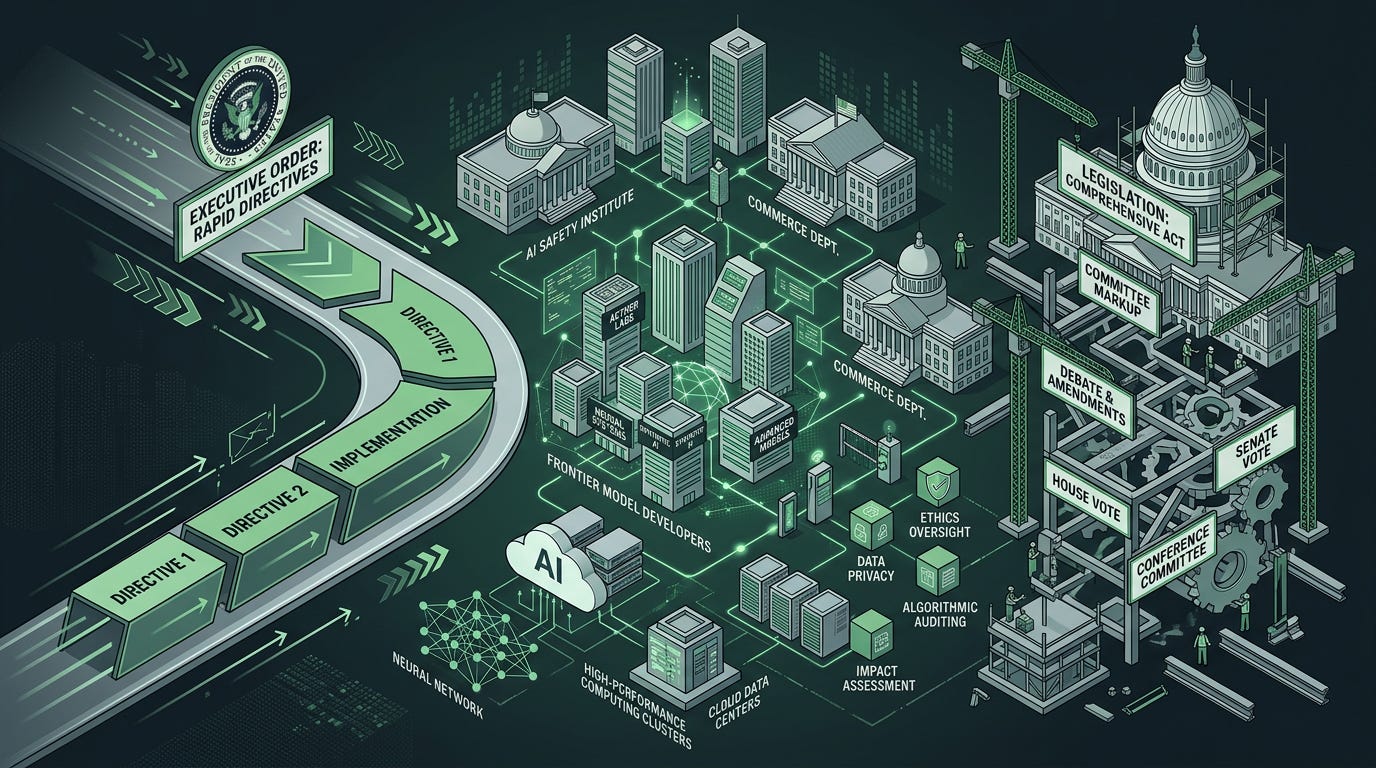
On June 2, President Trump signed an executive order establishing voluntary federal agency reviews of new frontier AI models before deployment in government systems.
The order directs federal agencies to request early access to new frontier models for safety assessment, creates an interagency coordination process for AI procurement standards, and establishes reporting requirements for agencies using AI in high-stakes decisions.
It is voluntary in that it does not impose mandatory safety requirements on private companies, only on federal agency procurement.
The order arrived three weeks after a previous AI executive order was cancelled hours before signing because Trump said he “didn’t like aspects of it.”
The Congressional response. Two days later, the Great American AI Act dropped from the House.
The bill calls for codifying the Center for AI Standards and Innovation, a body the executive order references but does not permanently establish. It would also impose mandatory rather than voluntary safety requirements on frontier developers.
The administration’s preference is voluntary. Congress’s draft is mandatory. That tension will shape negotiations if the bill advances.
The broader picture. US AI governance this week is the most active it has been since the Biden executive order in October 2023.
A signed executive order, a bipartisan House draft, active DOJ litigation against state AI laws, and a White House that cancelled one executive order and signed a revised version in three weeks all signal that federal AI governance has moved from speeches to actual lawmaking.
Why it matters
What gets enacted from here will define the operating environment for AI companies in the US for the next decade.
GitHub Copilot Switched To Token Billing. Developers Are Watching Their Credits Disappear.
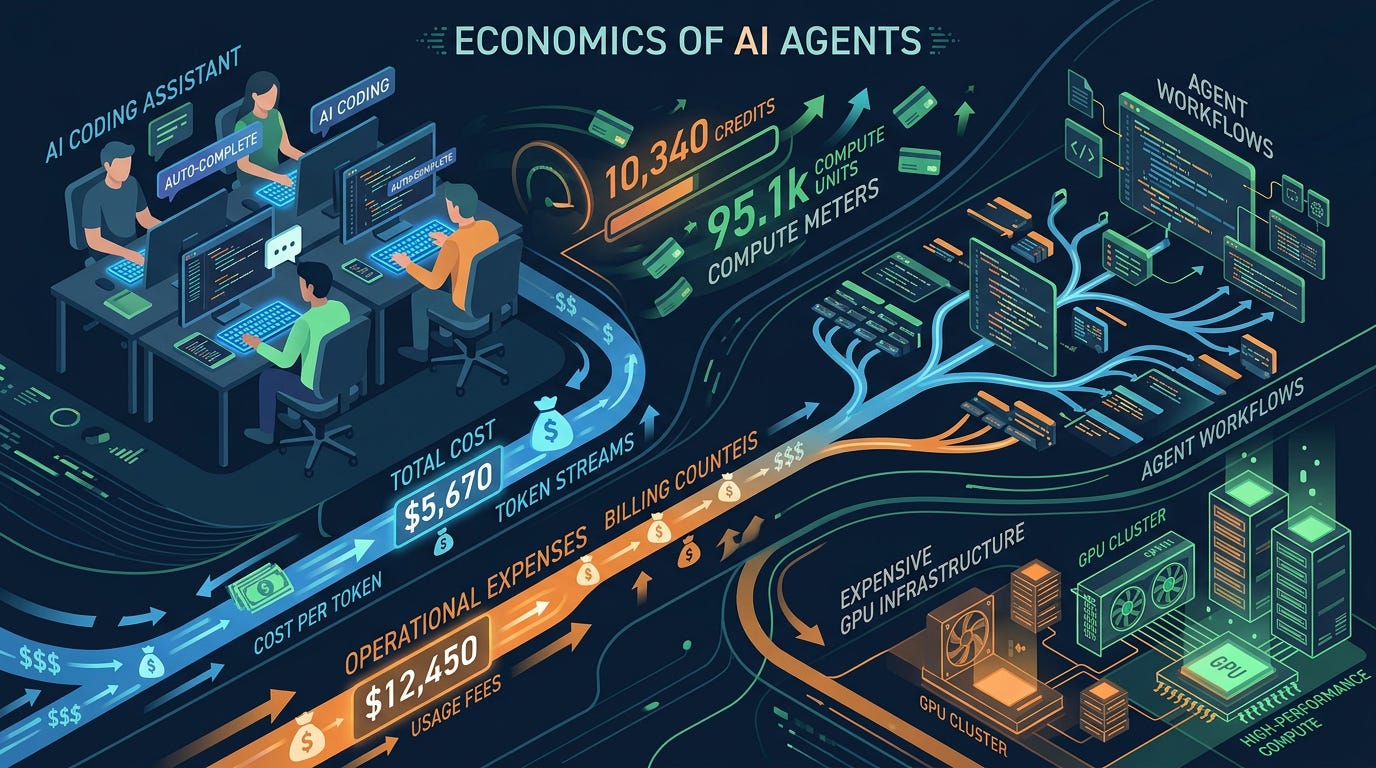
GitHub rolled out AI Credits billing for Copilot this week, moving from flat-subscription to usage-based pricing.
One credit costs $0.01. Inline code completions remain free. Agent sessions, multi-file edits, and complex reasoning tasks are now metered.
The change landed without the fanfare typically attached to product launches, appearing first as a billing update in GitHub settings before Microsoft acknowledged it publicly.
Developer reaction was swift and negative. Threads across GitHub Discussions, Hacker News, and Reddit documented unexpected credit depletion on routine tasks, with some users reporting their monthly allocation exhausted in under a week.
The commercial logic. Agent sessions and complex reasoning consume significantly more compute than inline completions.
Token-based billing aligns cost with actual consumption and gives enterprise buyers a pricing model they can forecast.
What the documentation did not make clear was how quickly agent tasks accumulate credits in practice. Developers using Copilot for multi-file refactors, test generation, and documentation updates discovered the new model by watching their credits disappear.
The awkward timing. Usage-based billing launched the same week Build 2026 positioned Windows as an agent-first platform.
The keynote demo and the billing reality are pointing at the same product. One describes what agents can eventually do. The other is what developers are paying when they try to do it today.
Why it matters
The backlash is not about the model. It’s about the gap between what developers expected to pay and what they’re actually paying. That gap is a product communication problem Microsoft needs to close before it becomes a customer retention problem.
xAI Launched Grok Build. The Coding Agent Race Now Has Three Serious Players.
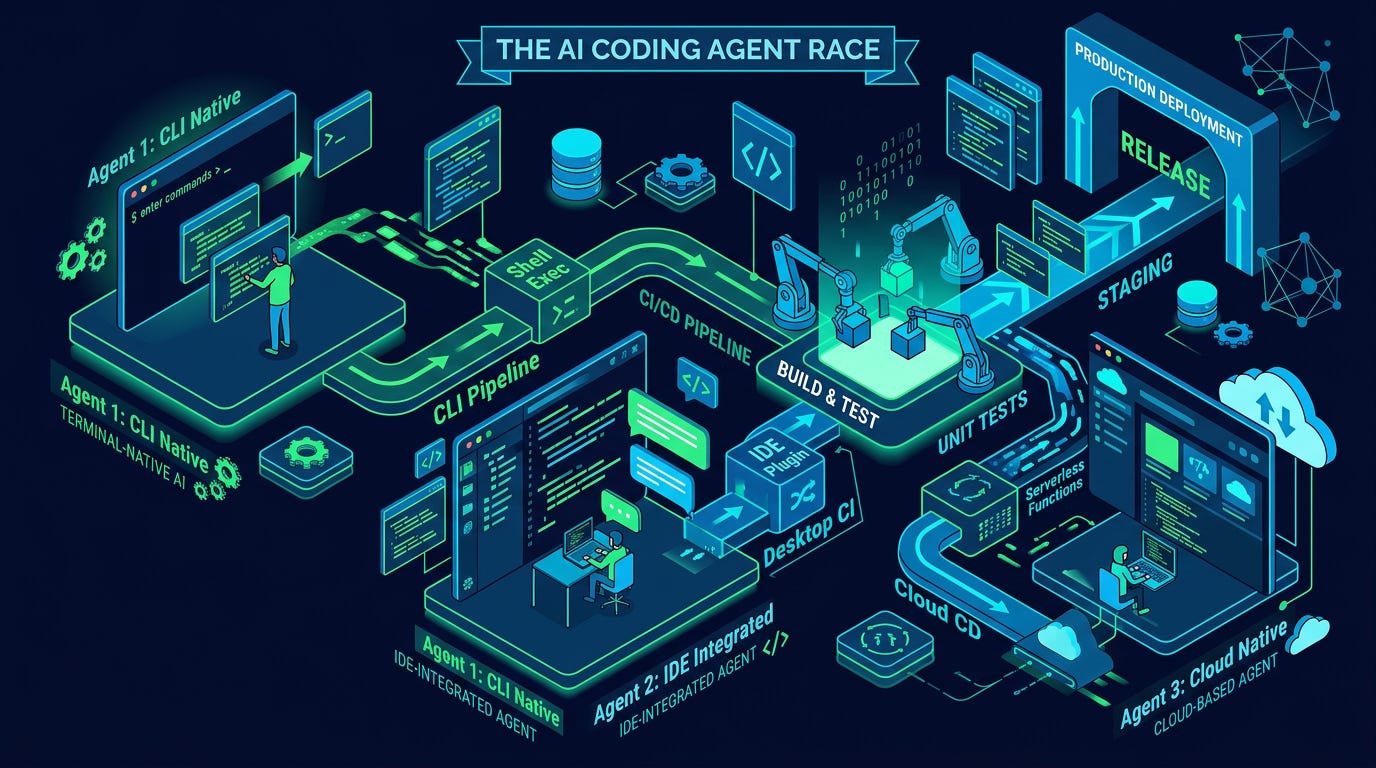
xAI launched Grok Build in beta this week, a terminal-based coding agent built on Grok 4.3 with headless CI scripting support and Agent Client Protocol integration.
The interface is a terminal TUI rather than a browser-based product, targeting developers who live in the command line.
Grok Build can run multi-step coding tasks, execute shell commands, manage files, and trigger CI pipelines without a GUI layer. ACP support means it can communicate with other agents in a multi-agent workflow.
The market it’s entering. Two established competitors are already running.
Claude Code from Anthropic has $2.5 billion in annualised revenue and a strong reputation for complex multi-file tasks. Codex from OpenAI, running on GPT-5.5, leads on Terminal-Bench 2.0 and agentic computer use benchmarks.
The terminal-native approach is a genuine differentiator from both competitors, which rely more heavily on IDE integrations and browser-based interfaces.
The unknowns. Grok 4.3’s benchmark position relative to Claude Opus 4.8 and GPT-5.5 has not been independently verified at scale.
xAI has not published a comprehensive evaluation against the coding benchmarks that define the competitive landscape.
Why it matters
The coding agent market has a third serious entrant. Terminal-native with CI integration is a real differentiator.
Whether it matters depends on how Grok 4.3 benchmarks against its competitors on the tasks developers actually run.
The Pentagon Just Signed A $422 Million Deal Built On Microsoft’s Agent Platform.
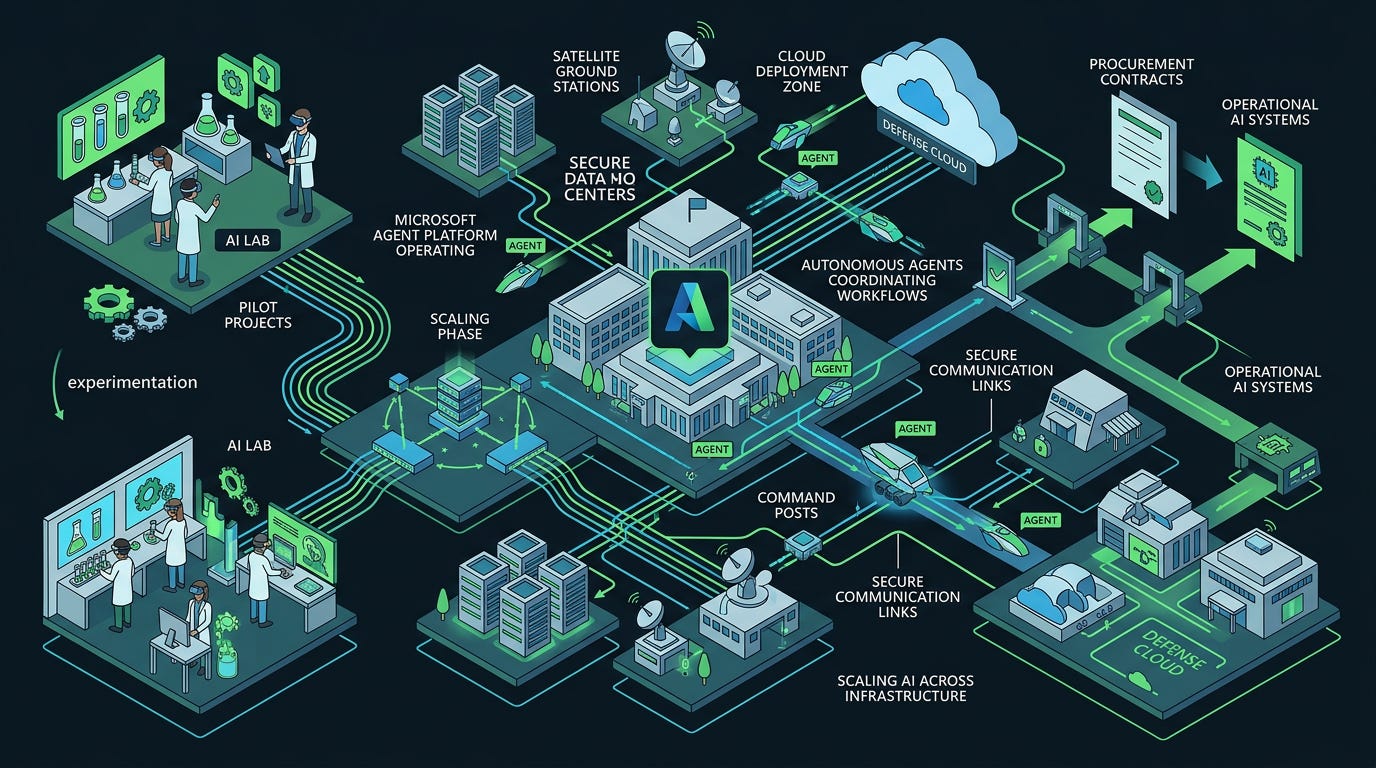
The Department of Defense announced a $422 million enterprise software contract built on Microsoft’s Azure Agent Mesh platform this week, the largest confirmed agentic AI deployment contract in US federal government history.
The deal covers a multi-year rollout of autonomous workflow agents across defence enterprise systems, with Azure Agent Mesh handling orchestration, memory, and tool use across Microsoft 365, Azure, and existing DoD data infrastructure.
The specific agencies and use cases are classified.
The timing. The contract was signed the same week as Build 2026, where Microsoft positioned Azure Agent Mesh as the enterprise orchestration layer for the agent-first computing vision.
A $422 million federal contract is the largest public validation of that vision outside the commercial enterprise market.
Microsoft’s position as the primary federal cloud provider, combined with the new OpenAI multi-cloud arrangement, means the DoD can now access both OpenAI’s models and Anthropic’s Claude through Microsoft’s infrastructure under a single procurement framework.
The bigger picture. The $422 million is a single contract, not total projected spend on agentic AI across the department.
The DoD’s AI adoption has been accelerating since the White House approved $9 billion for intelligence agency AI chips last week. The two procurements in two weeks are the most concrete evidence yet that US national security has moved past evaluation and into deployment.
Why it matters
That procurement signal will accelerate commercial enterprise adoption in regulated industries that treat DoD standards as a reference point.
Kimi K2.6 Is The Strongest Open-Weight Model In The World. Almost Nobody In The West Is Talking About It.
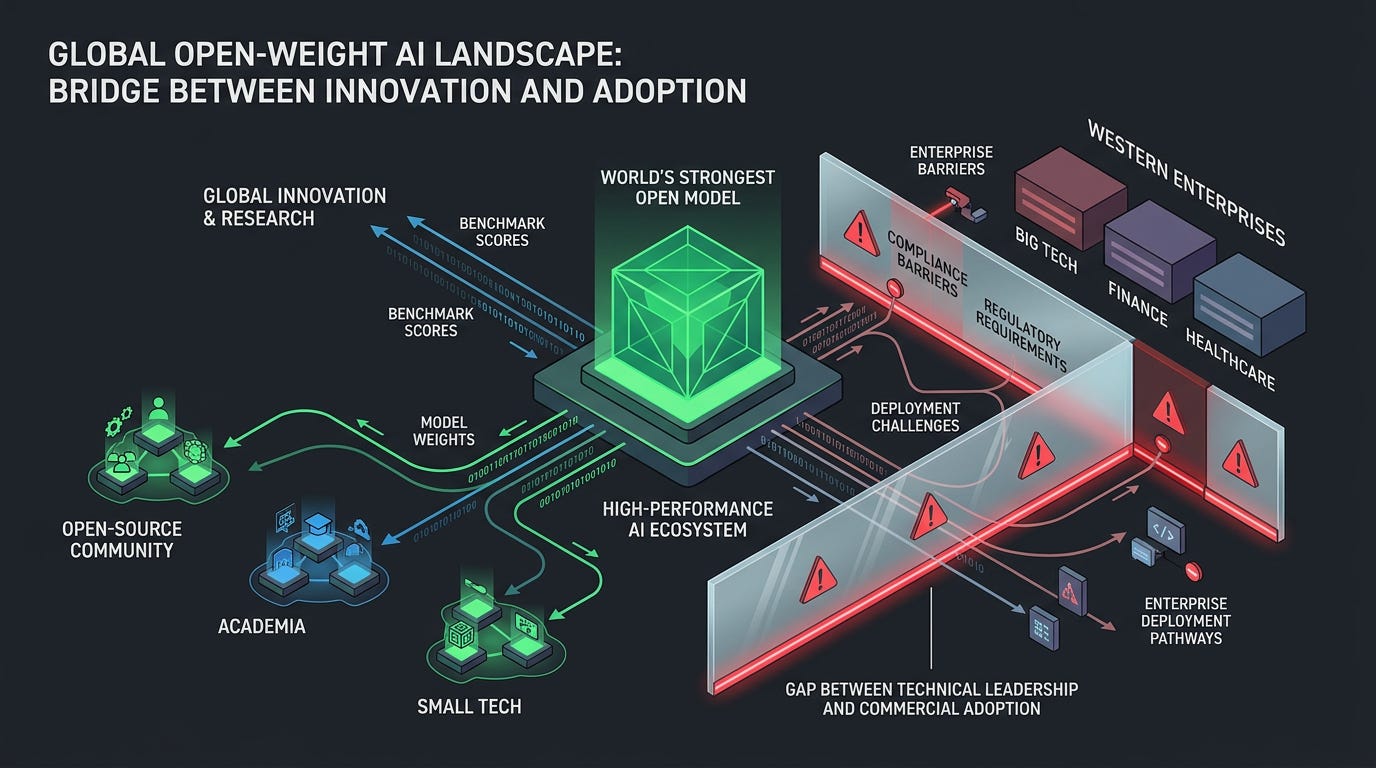
Moonshot AI’s Kimi K2.6, referenced in NVIDIA’s own Nemotron 3 Ultra benchmarking as the current leader, sits at 54 on the Artificial Analysis Intelligence Index, six points above the best US open-weight model at launch.
It is a Mixture-of-Experts architecture with 1 trillion total parameters and 32 billion active per token.
It runs at 50 to 100 tokens per second, three to six times slower than Nemotron 3 Ultra on NVIDIA hardware, but fast enough for most enterprise production use cases.
Its MIT licence permits commercial use. Its benchmark performance on reasoning, coding, and science tasks places it above every publicly available US open-weight model.
The pattern. Chinese open-weight models tend to receive significant attention at launch and then recede from the mainstream AI news cycle, despite remaining at or near the top of open-weight benchmarks.
Kimi K2.6 is the current example. DeepSeek V4 Pro, which launched in April and was covered in Issue 003, is in a similar position: technically competitive, widely benchmarked, used by a significant developer community, but rarely discussed alongside Anthropic or OpenAI in enterprise conversations.
Why the gap exists. The distance between benchmark performance and enterprise adoption for Chinese open-weight models comes down to trust, compliance, and data residency.
Enterprise legal and security teams will not run sensitive workloads on models from Chinese labs regardless of benchmark position, and that constraint will not change in the current geopolitical environment.
NVIDIA’s framing of Nemotron 3 Ultra as “America’s answer” to Chinese open-weight AI is accurate, even if the answer does not yet match the problem.
Why it matters
The strongest open-weight model in the world right now is Chinese. Most Western enterprise buyers cannot use it.
That gap, between what is technically best and what is commercially deployable, is the central tension in the open-weight AI market. It is not getting narrower.
And that wraps up this week. Tune in next Monday, same time, for another deep-dive into the stories shaping the AI world.
The Sentinel lands in your inbox every Monday so you can catch up with the fast-moving AI space while sipping your morning coffee. Every detail that matters, none that doesn’t.