

Another Monday, another post to keep you up to speed with the AI world.
Anthropic raised $65 billion and is now worth more than OpenAI.
Project Glasswing reported its first month of results, and the numbers are extraordinary and alarming in equal measure.
The Pope published the first papal encyclical on artificial intelligence.
And the White House quietly approved $9 billion to stop US spy agencies from falling behind on AI chips.
Here’s everything you need to know before Monday gets the best of you.
Anthropic Hit $965 Billion. The October IPO Is Now A Question Of When, Not If.

On May 28, Anthropic closed a $65 billion Series H at a post-money valuation of $965 billion, passing OpenAI’s $852 billion mark for the first time.
The round was led by Altimeter, Dragoneer, Greenoaks, and Sequoia, with participation from D.E. Shaw, Blackstone, and DST Global.
The figure includes $15 billion of previously committed hyperscaler investment, including $5 billion from Amazon. The round moved from first investor conversations in late April to close in under five weeks.
The revenue picture. Anthropic reported a $47 billion revenue run rate on Thursday, up from $9 billion annualised at the end of 2025 and $30 billion in April.
Gross margins moved from 38 percent a year ago to over 70 percent. Eight of the Fortune 10 are active clients. Over 1,000 enterprise accounts exceed $1 million in annual spend.
The raise is structured to prepay for compute ahead of a planned IPO.
The IPO timeline. Multiple banks are in preliminary discussions. Bloomberg reports a listing could arrive as early as October 2026.
The valuation trajectory shows how fast that window is closing: $380 billion in February, $900 billion in May, $965 billion post-round on May 28.
An October listing at these levels would be the largest technology IPO since at least 2014.
Why it matters
Anthropic tripled its valuation in three months on revenue that tripled in the same period. That is not valuation inflation. That is a business compounding faster than almost anything in software history.
Project Glasswing Found 23,000 Vulnerabilities. Less Than 1% Are Patched.
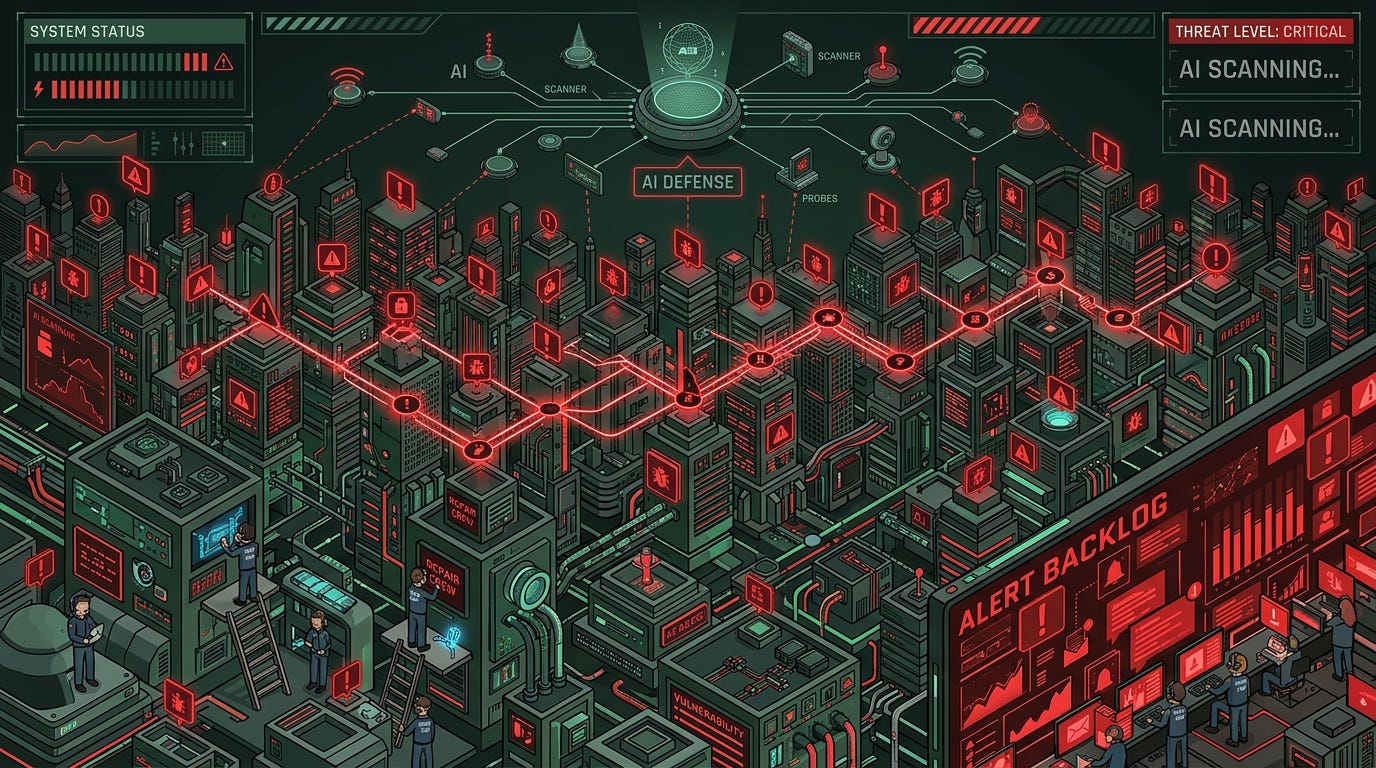
Anthropic published its first monthly report for Project Glasswing on May 22.
The initiative, powered by the unreleased Claude Mythos Preview model, has helped partners identify over 10,000 high- and critical-severity software vulnerabilities in one month.
The fuller picture: Mythos scanned over 1,000 open-source projects and flagged 23,019 vulnerabilities. Of those, 6,202 were estimated to have high or critical severity.
Independent security firms checked a 1,752-finding sample and confirmed 90.6% were real bugs.
Cloudflare found 2,000 bugs, 400 of them high or critical. Mozilla found and fixed 271 vulnerabilities in Firefox, 10 times more than it found using an older Claude model.
The capability picture. Palo Alto Networks said Mythos accomplished the equivalent of a year of pentesting in under three weeks, and noted impressive vulnerability-chaining — combining medium- and low-severity issues into critical exploits.
One wolfSSL flaw, CVE-2026-5194, would have let attackers forge TLS certificates across billions of IoT and industrial devices. A banking partner stopped a $1.5 million fraudulent wire transfer mid-execution.
Microsoft said patch releases will “continue trending larger for some time,” citing Mythos discoveries in part.
The number that should worry security teams. Less than 1% of the vulnerabilities Mythos found have been patched.
A model that finds bugs faster than human teams can respond has produced an enormous backlog of known vulnerabilities that bad actors could also find if they run a comparable model.
Anthropic plans to expand Glasswing with US and allied government partners, and intends to make Mythos-class models generally available once stronger safeguards exist. The patching problem needs to be solved first.
Why it matters
Finding 23,000 vulnerabilities is extraordinary. Patching less than 1% is dangerous. AI can discover bugs at a scale humans cannot match. The rest of the security process, triage, remediation, and disclosure, was not built for this pace.
The Pope Wrote The First Encyclical On AI. An Anthropic Co-Founder Spoke At The Vatican.
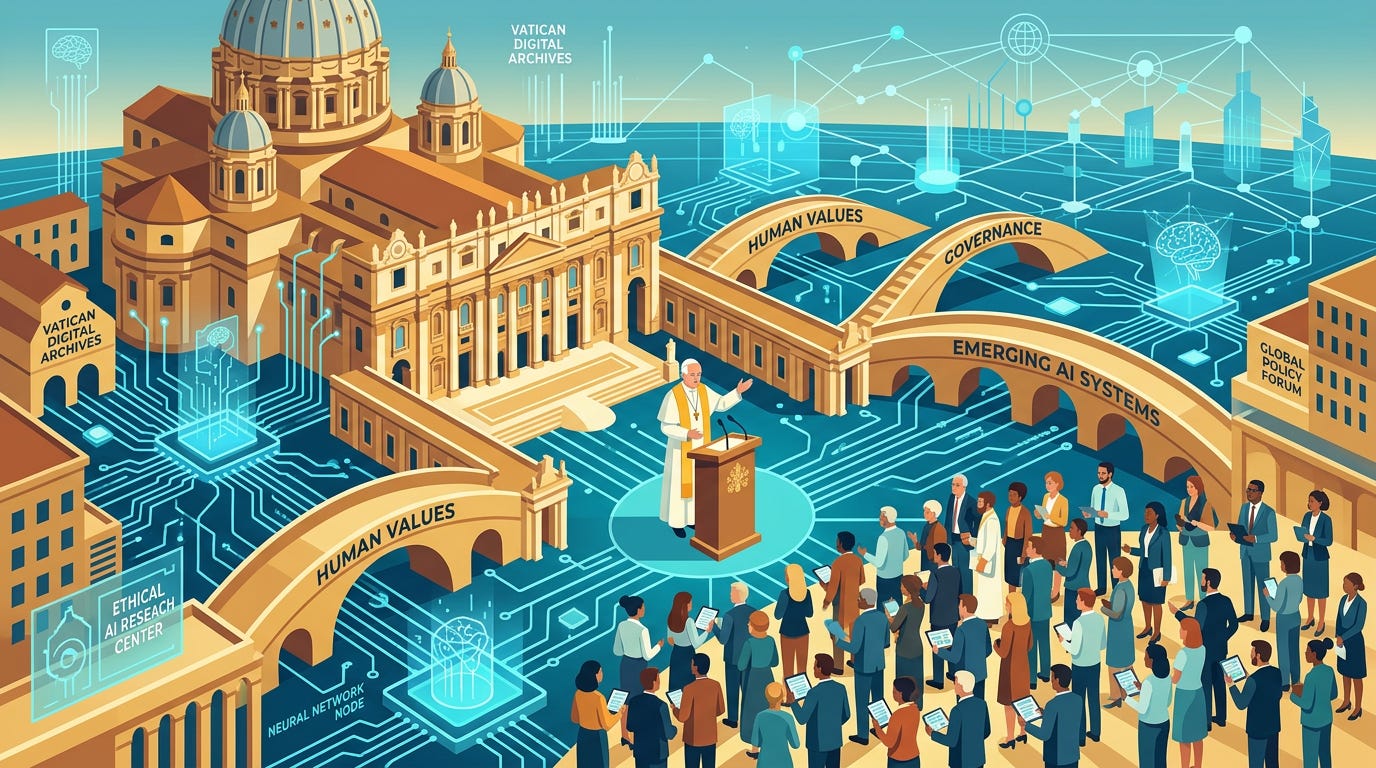
On May 25, Pope Leo XIV released Magnifica Humanitas, the first encyclical of his papacy and the first major papal document ever written specifically about artificial intelligence.
The title translates as “Magnificent Humanity.” The Pope signed it on May 15, the 135th anniversary of Rerum Novarum, the encyclical Leo XIII wrote about industrial-era workers in 1891.
The underlying premise: technology is not “a force antagonistic to humanity” and not “inherently evil,” but “technology is never neutral, because it takes on the characteristics of those who devise, finance, regulate, and use it.”
The presentation. Leo XIV presented the encyclical personally at the Vatican, unlike most popes who delegate the task to cardinals.
AI experts attended, including Anthropic co-founder Chris Olah. Olah, who is not a believer, issued a call to religious communities, civil society, academics, and governments to follow the Pope’s example: “to take this seriously, to look closely, and to push events in a better direction. We need informed critics who will tell the labs when we are failing.”
The argument. Magnifica Humanitas pushes back on a specific strand of AI optimism: the idea that human limitations, illness, ageing, and suffering are defects to be optimised away.
It argues humans often flourish through their limitations, and that AI should support what the document calls “openness and communion.”
The text does not call for a ban or moratorium. It calls for governance frameworks that ensure AI serves the common good and does not concentrate power in ways that exclude the most vulnerable.
The comparison to Leo XIII and industrial-era workers is deliberate: the Church arrived late to that transformation. The document is a statement that it intends to arrive earlier this time.
Why it matters
The Catholic Church has 1.3 billion members and a history of social teaching that has shaped labour law, human rights frameworks, and political philosophy across two centuries. Magnifica Humanitas is the institution formally stating that AI governance is a moral question, not just a technical one. That carries weight in rooms where most AI companies do not have a seat.
The White House Quietly Approved $9 Billion To Buy US Spy Agencies Out Of A Chip Shortage.
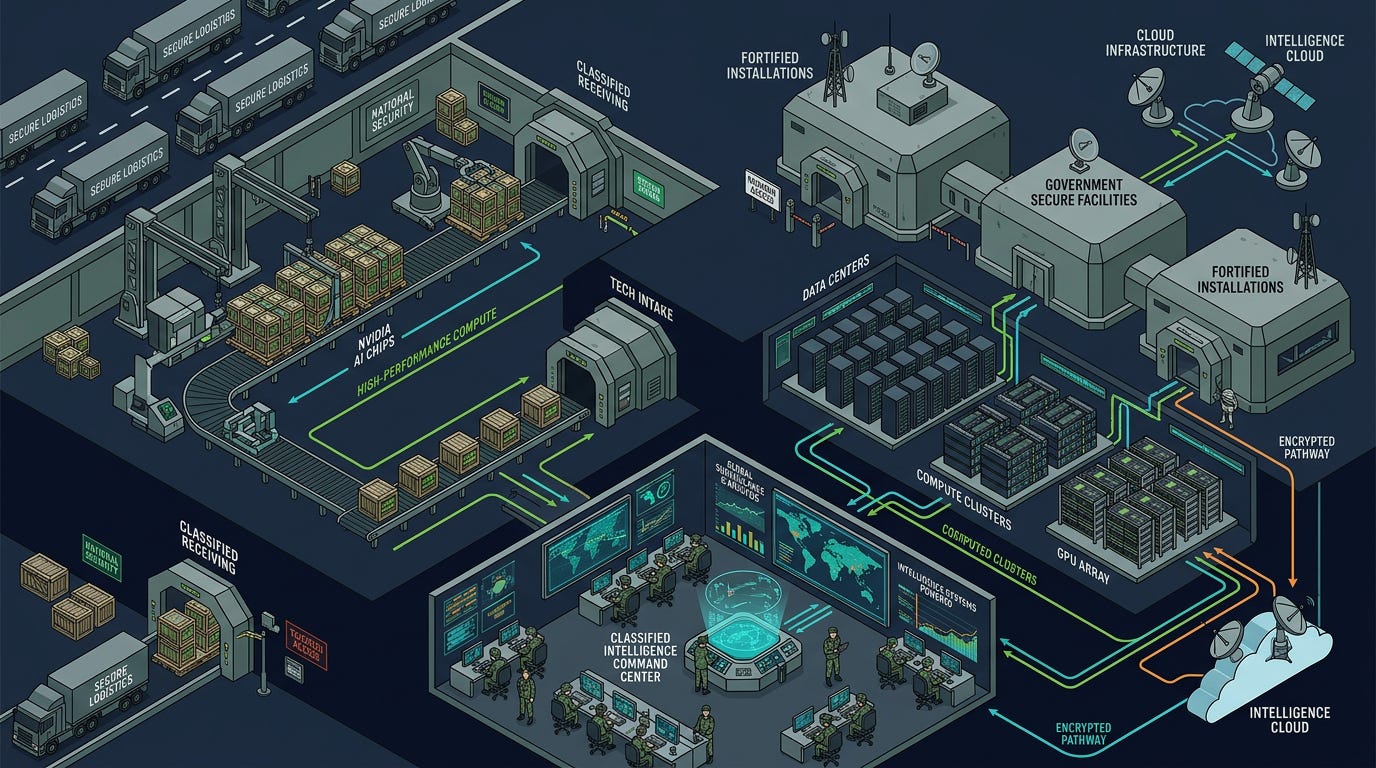
The New York Times reported on May 23 that the White House has approved a secret $9 billion request to acquire frontier AI chips for US intelligence agencies.
New AI models use more compute than even most technology experts anticipated a year or two ago. That fuelled concerns in the White House and Congress that a chip shortage was causing intelligence agencies to fall behind on top-secret AI work.
The $9 billion is intended in part to boost the infrastructure that can support Nvidia’s Grace Blackwell superchip. Congress still must approve the funding, but the administration is reprogramming $800 million for faster acquisition of compute capacity.
The infrastructure picture. The agencies primarily run classified AI models on Amazon Web Services. Amazon announced a $50 billion effort last year to upgrade its government cloud services.
The capability gap is not primarily a model gap but an infrastructure gap. The agencies have access to commercial frontier models. What they lack is dedicated compute to run them at top-secret scale and access controls.
The $9 billion is buying dedicated capacity, not new model capability.
The cancelled order. On Thursday, the White House abruptly cancelled a signing ceremony for a new executive order on artificial intelligence hours before it was scheduled to begin.
President Trump told reporters he “didn’t like aspects of it.” No revised timeline has been announced.
The order had been in development for months and was expected to address AI safety standards, export controls, and AI use in federal agencies.
A secret $9 billion chip approval and a cancelled AI governance order in the same week is the clearest statement of administration priorities: capability first, governance later.
Why it matters
US intelligence agencies running on a chip shortage is a national security gap; the White House is now treating it with the urgency of a conventional weapons shortfall. The cancelled executive order is the other half of that story: the capability investment is moving, and the governance framework is not.
DeepMind Cracked Nine Open Maths Problems. Two Had Been Unsolved For 56 Years.
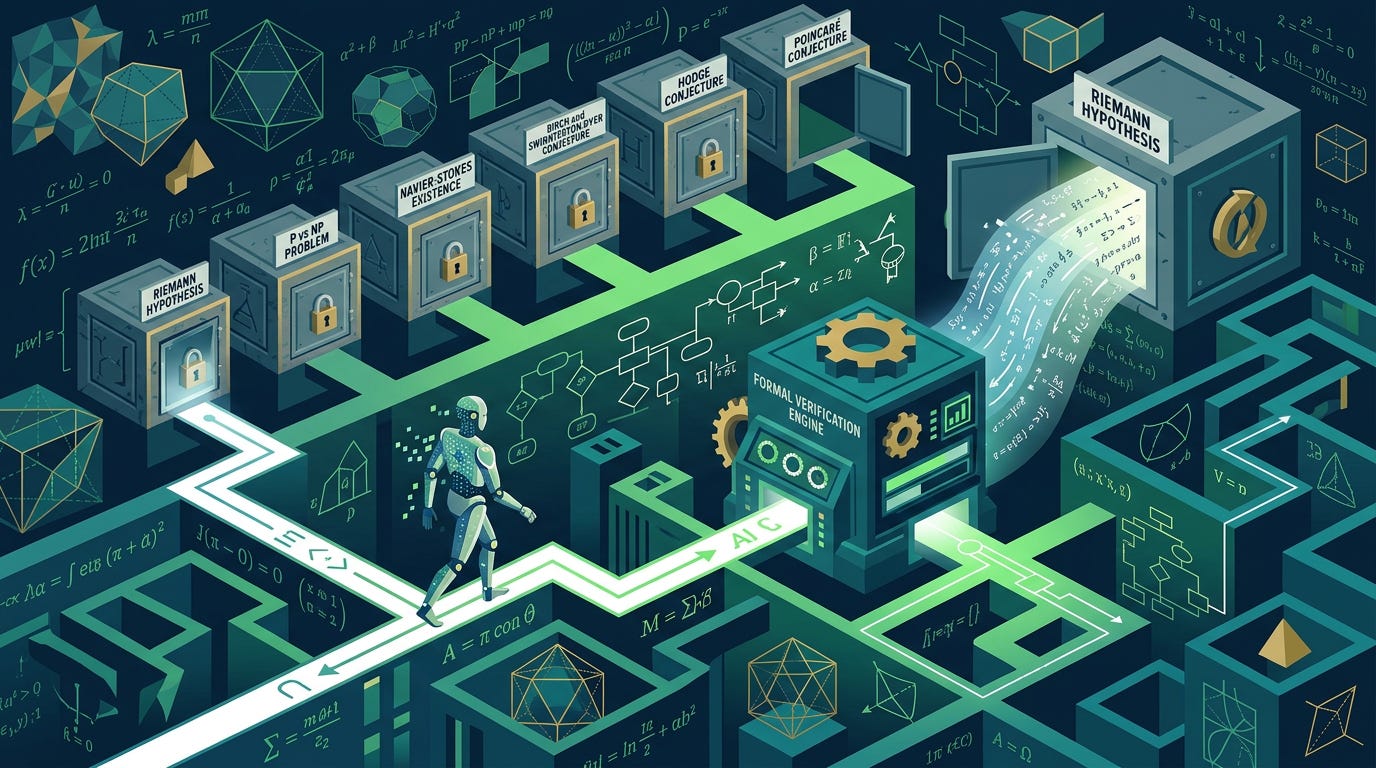
On May 21, Google DeepMind published an arXiv preprint documenting results from AlphaProof Nexus, a system that pairs a language model with Lean, a formal proof assistant that checks every logical step against mathematical axioms.
AlphaProof Nexus autonomously cracked 9 out of 353 open Erdős problems and proved 44 out of 492 open conjectures from the Online Encyclopedia of Integer Sequences.
Two of the nine Erdős problems had been open for 56 years. The cost was a few hundred dollars per problem.
How it works. The AI proposes a proof. Lean checks every logical step against mathematical axioms. If the proof doesn’t hold, it gets rejected.
This changes the nature of the result. Language models are fluent and often wrong. Lean proofs are checked by a compiler.
One academic mathematician who reviewed both this and a concurrent OpenAI result said, “OpenAI’s result was impressive, but it was a natural language argument that still requires peer review. AlphaProof Nexus outputs Lean proofs. There is no ambiguity about correctness.”
DeepMind CEO Demis Hassabis tempered expectations, saying the system is “still not AGI.”
Why are open problems different? They may have resisted specialists for decades. They do not come with the comfort of knowing a solution exists.
Carnegie Mellon mathematician Jeremy Avigad framed it in a March essay: “We are running out of places to hide. We have to face up to the fact that AI will soon be able to prove theorems better than we can.”
AlphaProof Nexus solved 2.5% of the open Erdős catalogue. The interesting question is whether that becomes 10% next year and 30% the year after.
Why it matters
AI solving open research mathematics with machine-verifiable proofs at a few hundred dollars each is a different category of result from anything before it. Mathematics has been one of the last domains where human originality seemed irreplaceable. That assumption is now under pressure.
NVIDIA Crossed $4 Trillion. Every Story This Week Was Good News For Its Stock.
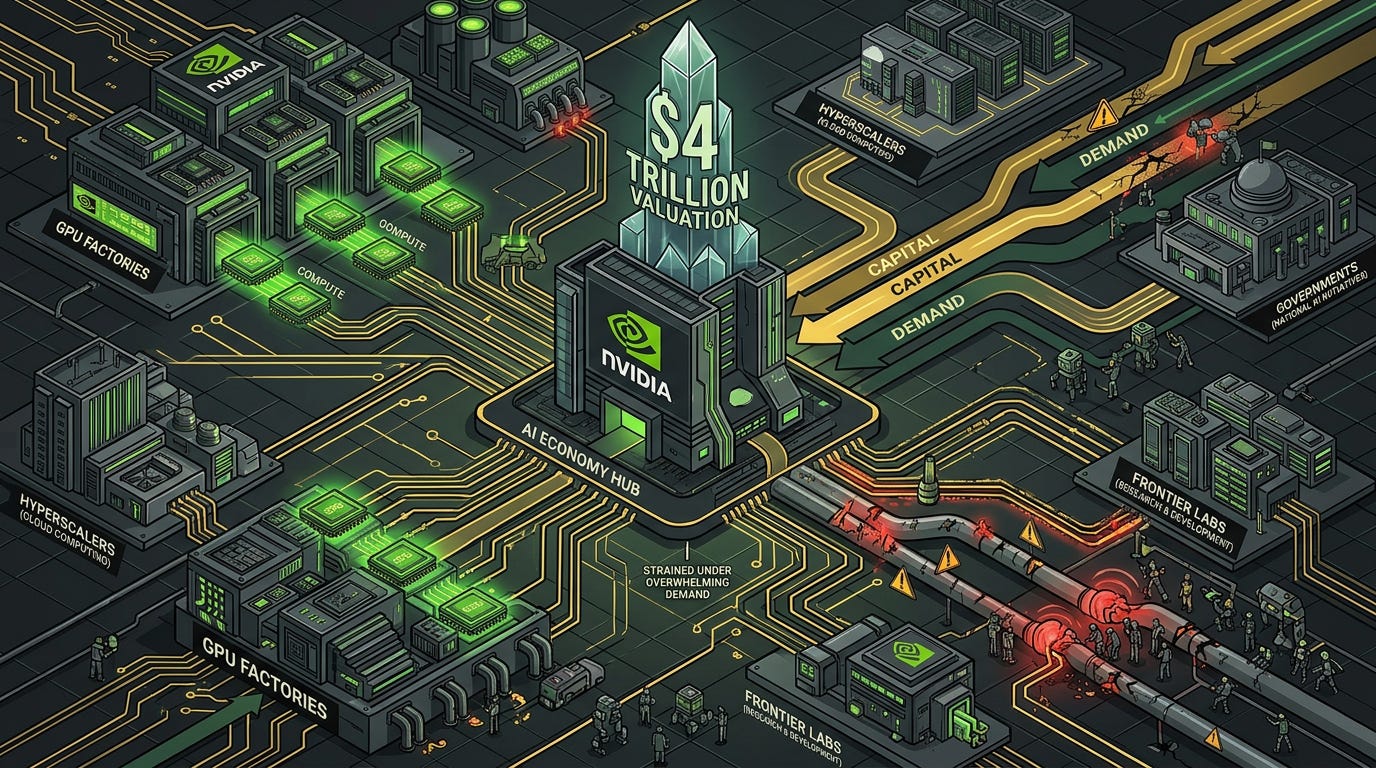
NVIDIA’s market capitalisation crossed $4 trillion this week, a milestone no company has reached before.
The move was driven by converging demand signals: Anthropic’s $65 billion raise, the White House’s $9 billion AI chip approval, and Microsoft’s pre-Build announcements expanding its AI infrastructure stack.
Each story contains Nvidia hardware as the substrate. Anthropic trains on Nvidia GPUs. The Grace Blackwell superchip is the specific hardware that the $9 billion intelligence budget targets. Microsoft’s AI infrastructure relies heavily on Nvidia.
Almost every major AI development in either the commercial or national security sector is a direct driver of Nvidia’s revenue.
The supply constraint. Blackwell has been in shortage since launch. Every major hyperscaler has disclosed that GPU availability is a binding constraint on its AI revenue.
That constraint is not expected to ease until the next generation ships at scale. NVIDIA is selling into a market where demand structurally exceeds supply for at least the next two quarters.
That is the simplest explanation for a $4 trillion valuation: the world needs more than NVIDIA can produce, and the demand is coming from customers committed to spending hundreds of billions to buy it.
The longer-term risk. Google, Amazon, Meta, Microsoft, and OpenAI are all developing inference-optimised chips designed to run their models without paying NVIDIA’s margins.
None have displaced NVIDIA in training, and none are likely to in the near term. But inference is where production compute volume runs, and the share flowing to custom silicon is growing with each chip generation.
Why it matters
NVIDIA at $4 trillion means the market believes AI infrastructure demand will outpace supply for years. The custom silicon risk is real, but it is a long-cycle story. Right now, the shortage is the story.
Microsoft Build Opens This Week. Windows Just Became An Agent Platform.
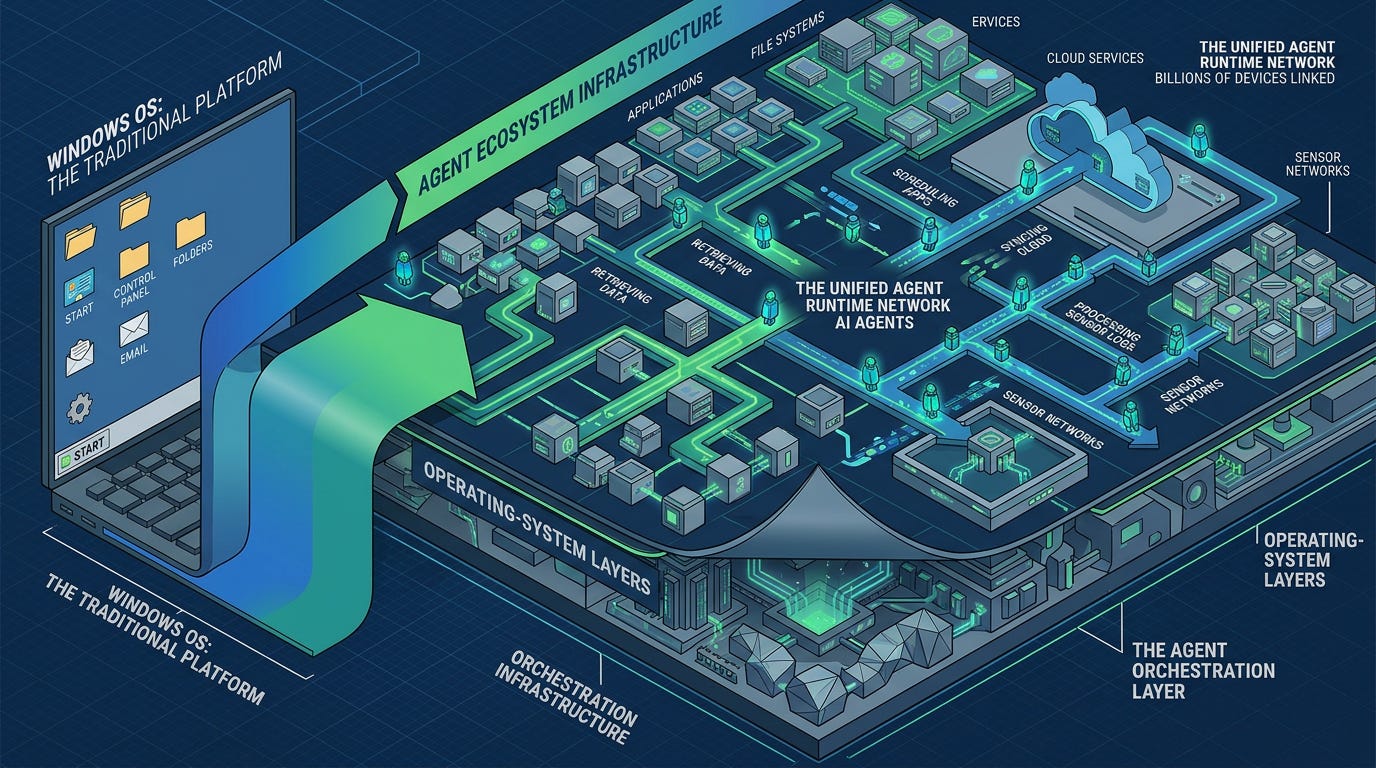
Microsoft Build 2026 opens June 2 in San Francisco. The announcements arriving in preview coverage this week signal the largest repositioning of Windows since the cloud era began.
The centrepiece is the Windows Agent Runtime, a background service that manages agent lifecycles, memory, and permissions at the operating system level.
Agents built on it interact directly with Windows subsystems, file manager, task scheduler, and hardware sensors, using declarative APIs rather than screen-scraping or UI automation.
This repositions Windows to compete with cloud-native agent platforms like LangChain, AutoGen, and Semantic Kernel, but with a billion-device install base behind it.
The platform pieces. All WinRT APIs available to the built-in Copilot will also be available to third-party agents that pass the same certification process.
The Azure Agent Mesh federates agent execution across on-premises Windows servers, Windows 365 Cloud PCs, and Azure Arc edge devices, with consumption-based pricing launching in Q4 2026.
Computer-using agents are now available in Copilot Studio. The multi-model Copilot platform, rebuilt to include Anthropic’s Claude alongside OpenAI’s GPT family, is the most visible sign of Microsoft’s shift away from exclusive model dependency.
The shift. Microsoft has moved from “AI features in Windows” to “Windows as an agent execution environment.”
The billion-device install base means whatever agent runtime ships at Build will reach a larger population of devices than any competing platform, immediately.
Why it matters
No other agent platform has Windows’ distribution. Whether developers build on it depends on the APIs being good enough, but the reach is unmatched from day one.
China Just Banned Foreign AI Chips From Government Systems. The Domestic Replacement Plan Is On.
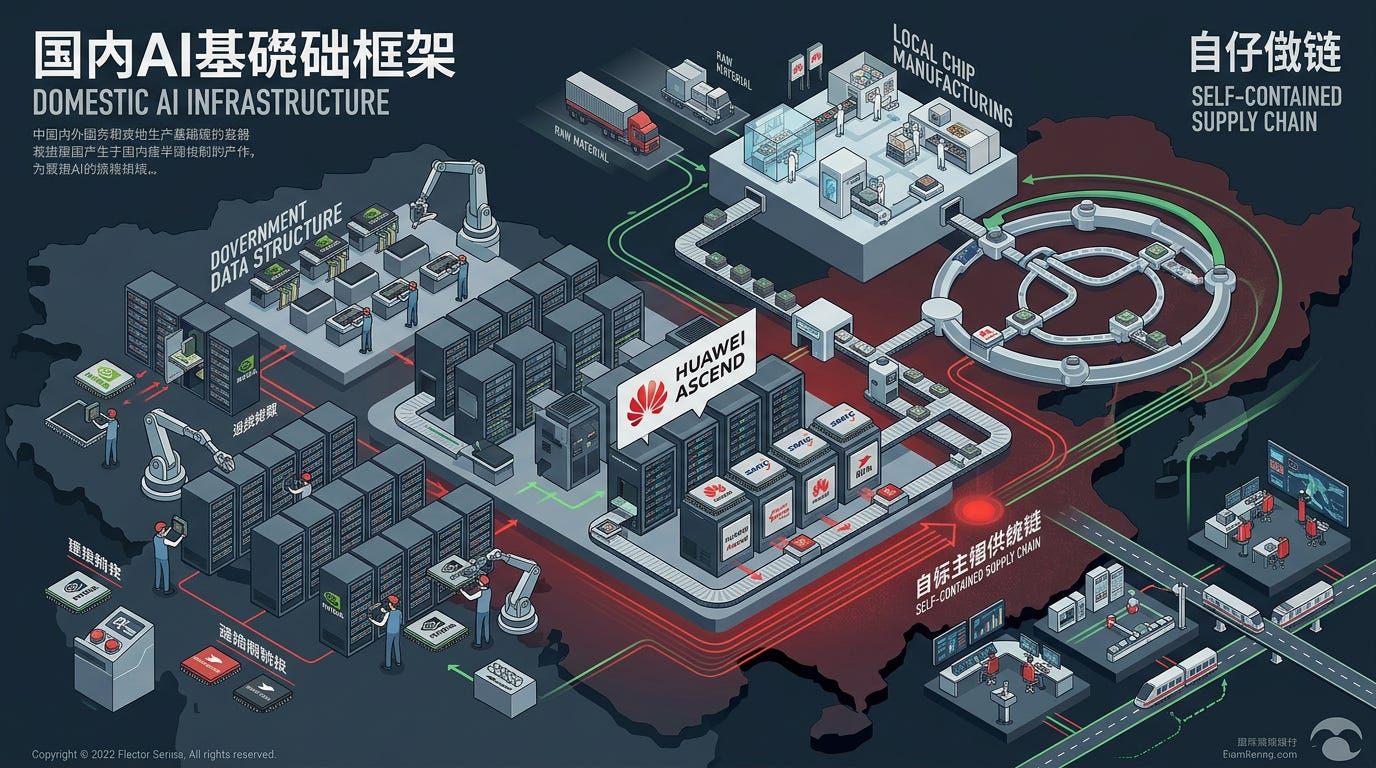
China added AI chips to its state-backed security assessment list this week, formalising a directive that government systems and critical infrastructure must evaluate and ultimately replace foreign AI hardware with domestic alternatives.
The move was framed as a security measure. The practical target is Nvidia hardware, which remains the dominant GPU in Chinese data centres despite successive rounds of US export controls.
The domestic ecosystem. Huawei’s Ascend 910C and 910D have been deployed at scale. DeepSeek’s V4 model, covered two issues ago, was trained and deployed entirely on domestic silicon.
The performance gap between Huawei’s best chips and Nvidia’s current generation remains significant on raw benchmarks. But for government workloads, which tend to be inference-heavy rather than training-heavy, the gap is narrower and running entirely on domestic hardware is feasible.
The signal. Adding AI chips to a security assessment list is not an immediate ban. It is the beginning of a structured replacement process that typically runs three to five years in Chinese government procurement.
Huawei, Cambricon, and Biren Technology now have a mandated market that will grow over that timeline, regardless of how their products perform in open commercial competition.
US export controls designed to slow Chinese AI development have produced a policy response that will accelerate Chinese domestic chip investment through guaranteed government procurement. The intended effect and the actual effect are moving in different directions.
Why it matters
China just created a mandated government market for domestic AI chips. The chips are currently behind. The market is now guaranteed to exist until they catch up.
Claude Opus 4.8 Just Shipped. Anthropic Is Now Running Two Capability Tiers At Once.
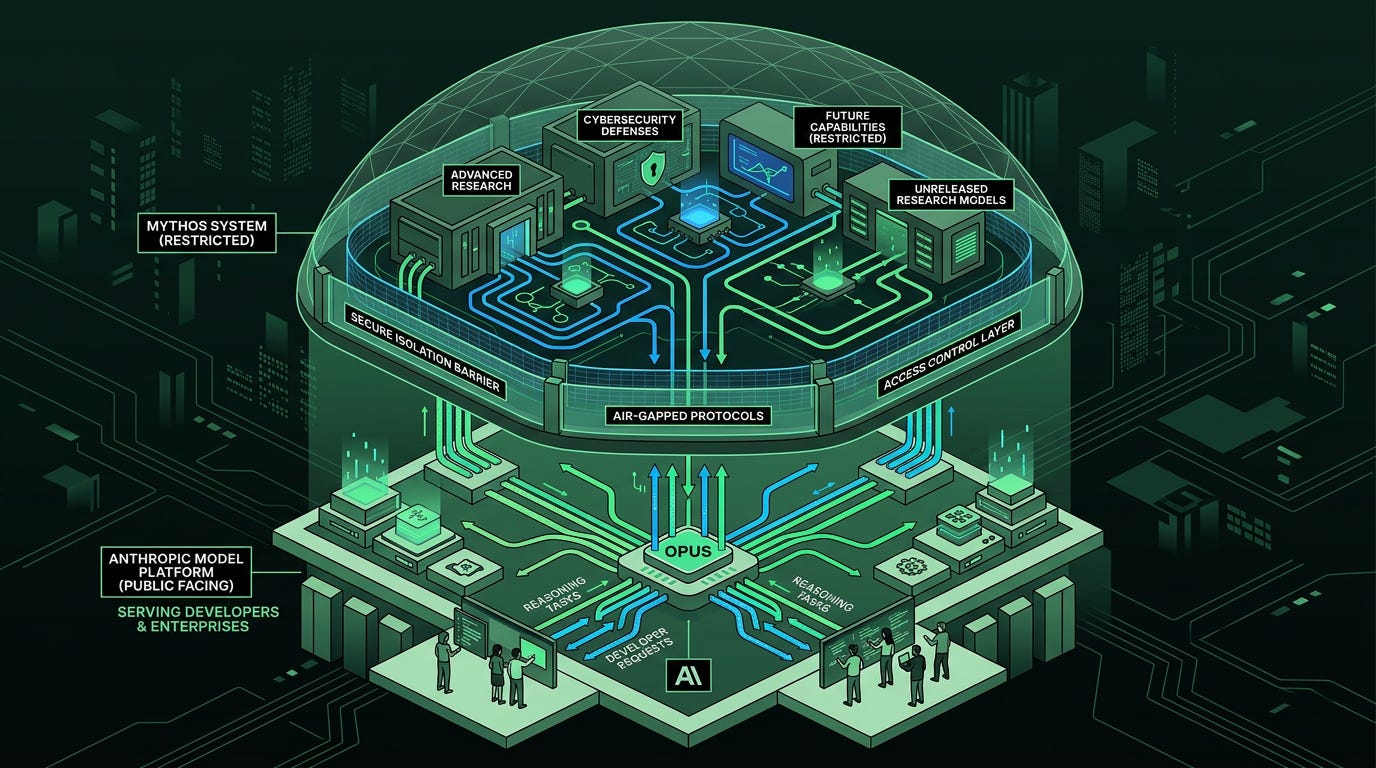
Alongside the funding announcement on May 28, Anthropic released Claude Opus 4.8, updating its flagship model with improvements in extended thinking, multi-step agentic tasks, and coding.
The model incorporates safety lessons from Project Glasswing and Claude Mythos Preview, threading defensive cybersecurity research from the restricted model into the commercial one.
Pricing holds at $5 per million input tokens and $25 per million output. The model is available through Claude.ai, the API, Amazon Bedrock, and Vertex AI.
The benchmark picture. Opus 4.8 leads GPT-5.5 on complex multi-step reasoning, SWE-bench Pro issue resolution, and long-context document analysis.
GPT-5.5 retains its lead on Terminal-Bench 2.0 and agentic computer use tasks. Enterprise teams are increasingly routing tasks by model rather than committing to a single vendor.
The cadence. Opus 4.5, 4.6, and 4.7 shipped within three months of each other. Opus 4.8 arrives roughly six weeks after 4.7.
With Mythos-class capability in restricted access and Opus 4.8 now the public frontier, Anthropic is running two distinct capability tiers at commercial scale, something no other lab is currently doing.
Why it matters
The gap between Opus 4.8 and what Mythos can do is the most consequential unknown in the current AI landscape.
And that wraps up this week. Tune in next Monday, same time, for another deep-dive into the stories shaping the AI world.
The Sentinel lands in your inbox every Monday so you can catch up with the fast-moving AI space while sipping your morning coffee. Every detail that matters, none that doesn’t.