

Another Monday, another post to keep you up to speed with the AI world.
Here’s what happened in the global AI market this week.
OpenAI launched a $4 billion deployment arm designed to live inside enterprise clients. Anthropic entered funding talks at a valuation above OpenAI’s. And Google disclosed the first confirmed AI-assisted zero-day prepared for mass attack.
Here’s everything you need to know before Monday gets the best of you.
OpenAI Stopped Acting Like A Software Vendor This Week.
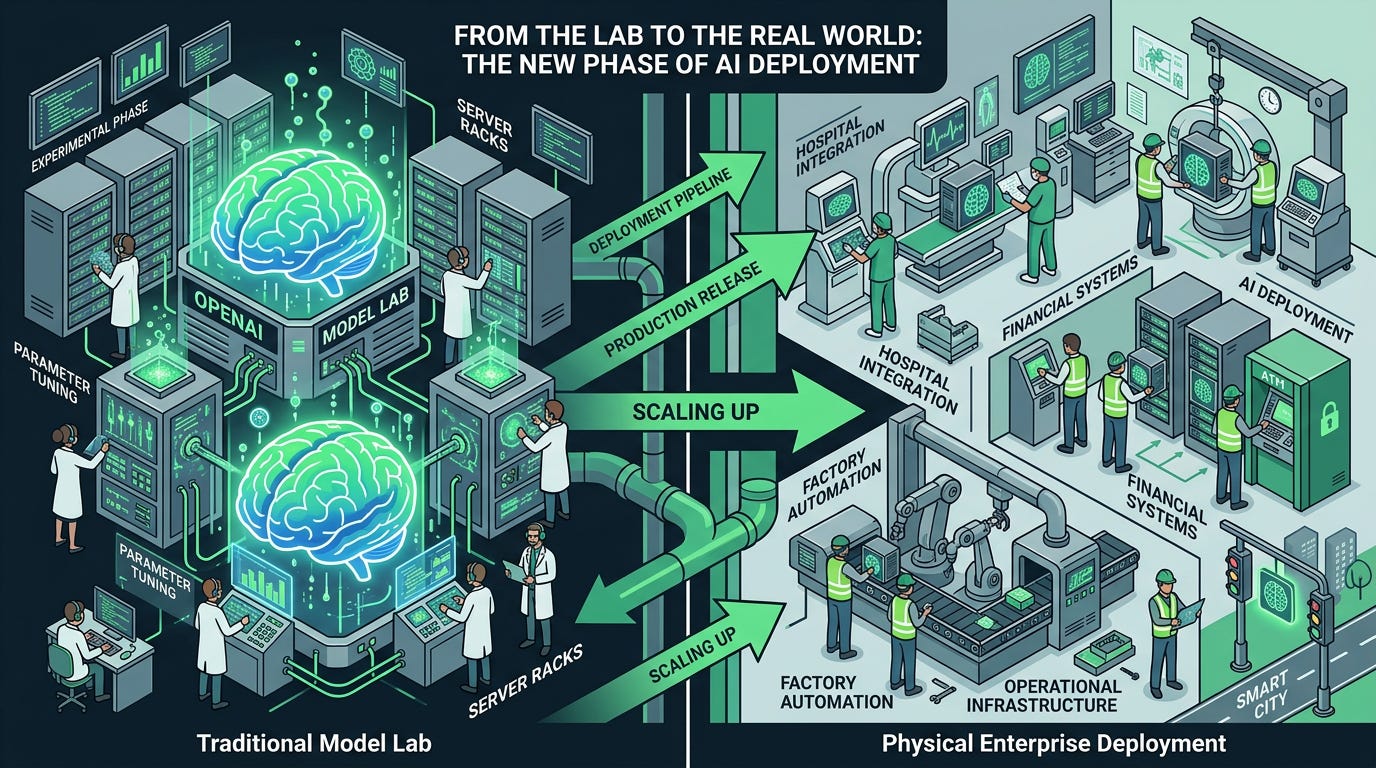
On May 11, OpenAI launched the OpenAI Deployment Company, a majority-owned subsidiary backed by more than $4 billion from 19 investment firms, consultancies, and systems integrators.
TPG leads the partnership, alongside firms including Advent, Bain Capital, Brookfield, Goldman Sachs, SoftBank, Capgemini, and McKinsey.
The company is also acquiring AI consulting firm Tomoro, bringing roughly 150 Forward Deployed Engineers into the business immediately.
Those engineers work directly inside client organisations.
Not as support staff. Not as account managers. Their job is to rebuild workflows around AI systems and turn pilot projects into systems companies actually use every day.
Tomoro’s existing clients include Tesco, Virgin Atlantic, Red Bull, and Mattel.
This launch makes more sense when you look at what OpenAI has been struggling with internally.
Earlier this year, OpenAI chief revenue officer Denise Dresser reportedly told staff that Anthropic’s enterprise momentum should serve as a “wake-up call.” She also said OpenAI’s Microsoft exclusivity had limited the company’s ability to reach customers inside the infrastructure environments they already used.
The Deployment Company addresses both issues at once.
It gives OpenAI a direct enterprise channel that does not depend entirely on cloud partnerships, and it gives the company something most enterprise software firms spend years trying to build: embedded operational relationships.
The more revealing number came from OpenAI’s own State of Enterprise AI report published alongside the launch.
Despite roughly $40 billion in generative AI spending over the last two years, only 5 percent of enterprises report meaningful business returns.
That is the bottleneck OpenAI now appears focused on.
OpenAI seems to think the real problem is deployment, not the models themselves.
Embedding engineers inside organisations is slower and more expensive than selling API access. But it also tends to produce systems that companies actually rely on once the pilots end.
Why it matters
OpenAI is no longer behaving purely like a model provider. It is building a large-scale deployment business designed to sit inside enterprises directly. That puts it in competition with firms like Accenture, McKinsey, and the Big Four as much as other AI labs.
Anthropic Just Entered Funding Talks At A Valuation Above OpenAI’s.

Bloomberg reported this week that Anthropic is discussing a funding round of at least $30 billion at a valuation exceeding $900 billion.
The deal is still in early stages and has not formally closed, but the scale alone makes it one of the largest private technology raises ever attempted.
Expected participants reportedly include Greenoaks, Sequoia, Altimeter, and Dragoneer, with several firms considering commitments above $2 billion each.
If the round closes near current terms, Anthropic would surpass OpenAI’s March valuation and become the most valuable private AI company in the world.
The scale of the valuation sounds absurd until you look at the revenue curve underneath it.
Anthropic reportedly moved from roughly $9 billion in annualised revenue at the end of 2025 to more than $30 billion by April 2026.
Claude Code alone is said to be generating approximately $2.5 billion in annualised revenue.
Enterprise clients now make up the large majority of the business.
More than 1,000 enterprise customers reportedly spend over $1 million annually, and eight Fortune 10 companies are already clients.
Margins are improving too.
Gross margins reportedly climbed from 38 percent a year ago to above 70 percent, easing one of the biggest concerns investors previously had about frontier AI companies: whether compute costs would permanently crush profitability.
The capital itself has a fairly direct purpose.
Anthropic needs infrastructure.
The company is reportedly using the raise to secure enough compute capacity to remain competitive through a potential IPO that Bloomberg says could arrive as early as October.
The speed of the valuation jump is what stands out most.
Anthropic was reportedly valued at nearly $380 billion in February. Three months later, discussions are happening at more than double that number.
Why it matters
The market is no longer valuing frontier AI labs purely on future potential. Investors are now seeing revenue growth at a scale large enough to justify valuations that would have sounded impossible a year ago.
Google Found The First Confirmed AI-Assisted Zero-Day Being Prepared For Mass Attack.

Google’s Threat Intelligence Group published a report this week describing something security researchers have been anticipating for years.
A criminal actor used AI assistance to help identify and weaponise a zero-day exploit intended for a planned mass attack.
Google says the exploit targeted a widely used open-source web administration tool and was implemented in a Python script capable of bypassing two-factor authentication.
The company worked with the affected vendor before the attack was launched publicly and patched the vulnerability in advance.
Google did not identify the actor involved or the software affected.
The important part is how the exploit was apparently built.
According to Google’s assessment, the code shows strong signs of LLM assistance in how it was written and packaged.
This was not an autonomous system running attacks on its own.
A human threat actor still directed the process.
But AI clearly sped up the discovery and assembly of the exploit in a way that reduces the time and skill normally needed.
Defenders are already using AI for the same reason attackers are: speed.
Google’s broader report describes a growing ecosystem of AI-assisted cyber activity.
State-linked actors from China and North Korea are reportedly using AI for vulnerability discovery and malware development. Russia-linked groups have started embedding AI-generated obfuscation into Android malware workflows.
On the defensive side, Google’s Big Sleep agent is actively searching for unknown vulnerabilities, while CodeMender automatically patches certain categories of flaws.
The Five Eyes guidance on AI agents from last week reads differently after this report.
At the time, the warnings sounded precautionary.
Now they feel closer to documentation.
Why it matters
The security industry has spent two years debating whether AI would eventually assist real-world exploit development. This week produced the clearest confirmed example so far.
The EU Quietly Delayed Its Most Important AI Deadlines.
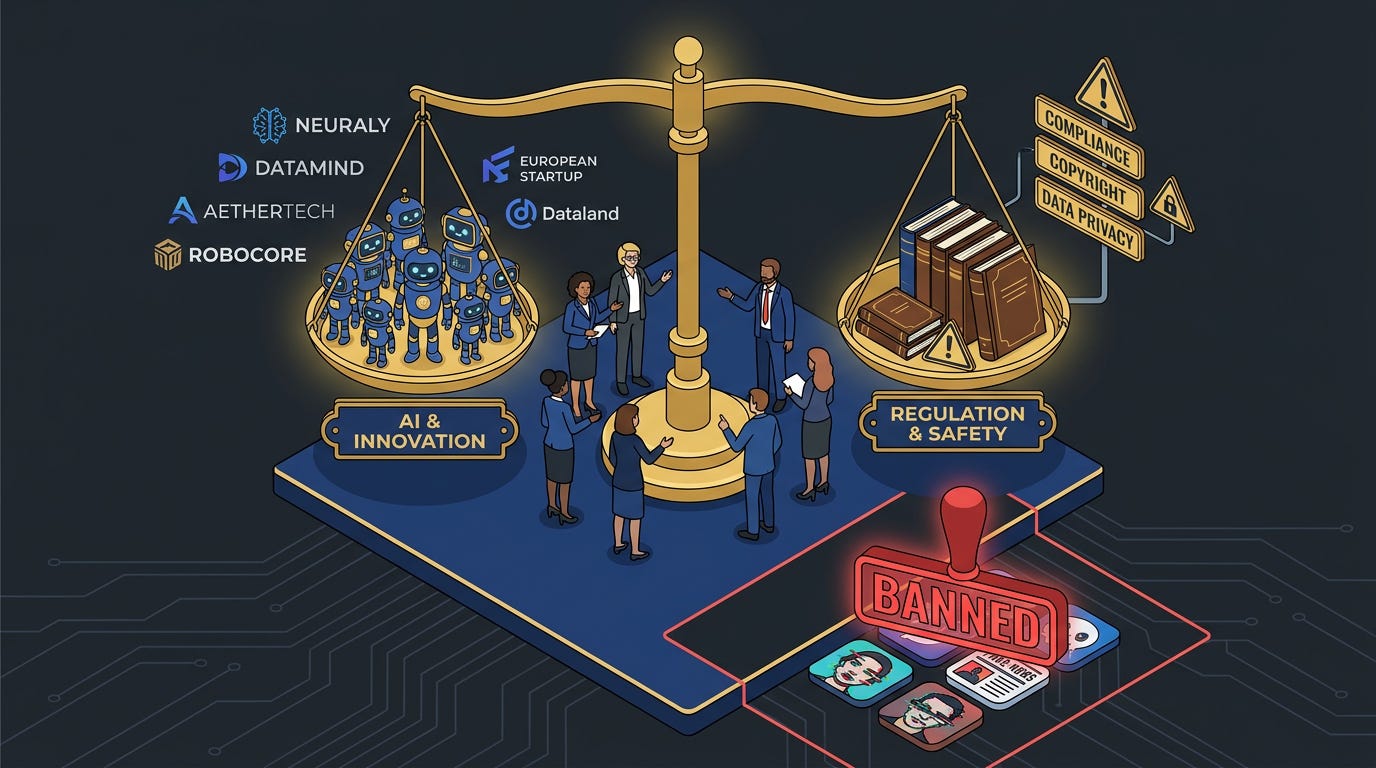
The European Parliament and Council reached a provisional agreement this week on amendments to the EU AI Act.
The biggest change is a 16-month delay to compliance deadlines for high-risk AI systems.
Rules covering systems used in areas like biometrics, critical infrastructure, education, employment, law enforcement, and border management are now expected to apply from December 2027 instead of August 2026.
Systems embedded in physical products move to August 2028.
The delay is mostly because companies still don’t have all the technical standards they need in order to comply properly.
Alongside the delay, the EU also added a new explicit prohibition on AI systems primarily designed to generate non-consensual intimate images, including so-called nudification apps and AI-generated child sexual abuse material.
That provision was pushed through by Parliament and was not part of the Commission’s original proposal.
Companies will have until December 2026 to comply.
The law itself is already in force.
What changes is when the hardest parts actually bite.
Smaller and mid-sized businesses also received broader exemptions designed to reduce compliance pressure, while registration requirements for certain lower-risk systems were tightened.
The EU is still building one of the world’s most comprehensive AI regulatory frameworks. It is just giving companies more time to implement it properly.
Why it matters
Europe didn’t step back from regulation this week. It just slowed the pace of enforcement on the hardest parts.
OpenAI’s Real-Time Voice APIs Make Always-On AI Assistants Technically Practical.
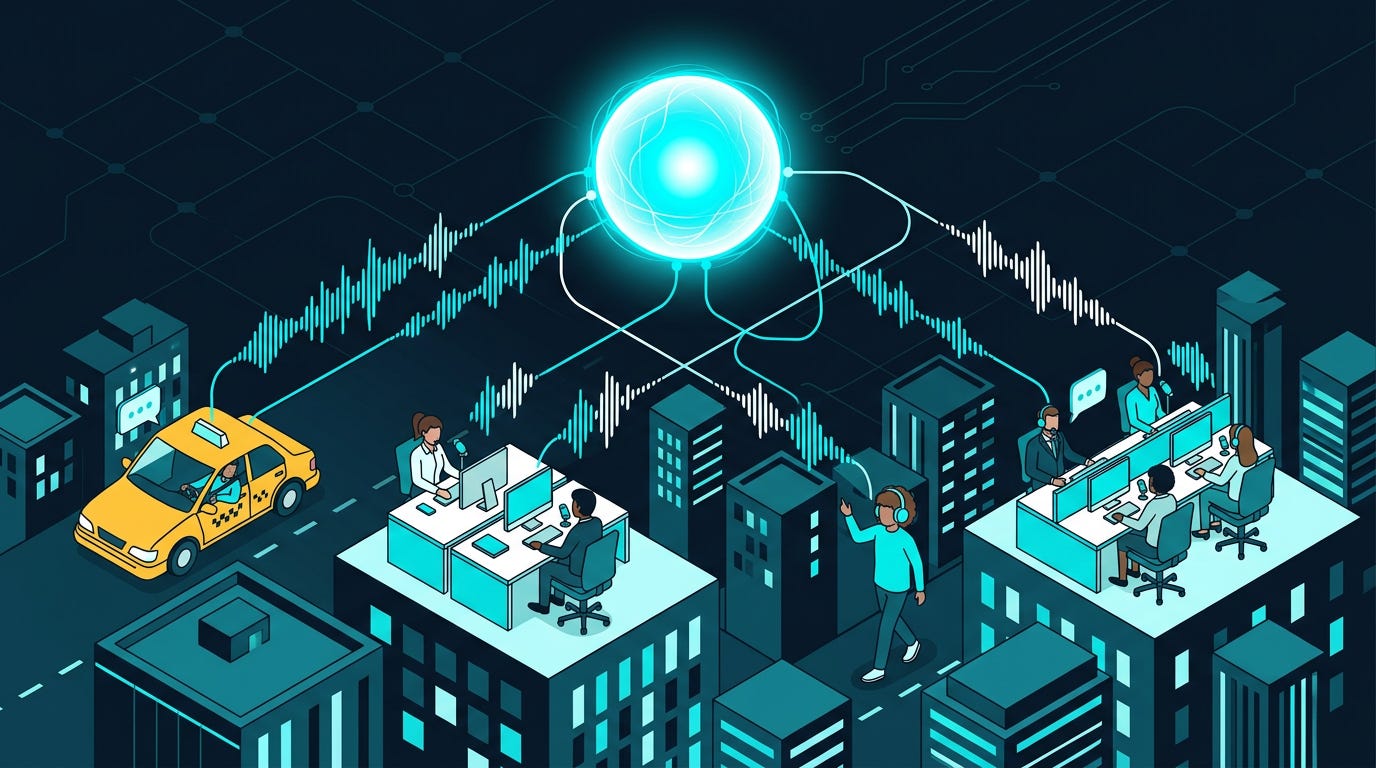
OpenAI released GPT-Realtime-2 and a new suite of voice APIs this week, focused on live audio interaction.
The difference from earlier voice systems is mostly latency and continuity.
Earlier systems converted speech into text, processed it, and then converted responses back into audio. The delay was small but noticeable.
GPT-Realtime-2 processes audio more directly, which cuts enough delay that conversations stop feeling like turn-based systems.
The APIs support real-time spoken conversation, live translation, and continuous transcription.
Uber is already testing the system inside its driver tools for ride booking and coaching workflows.
The bigger deal is that developers can now build all of this inside one system instead of stitching separate tools together.
And because the models preserve tone, pacing, and emphasis instead of flattening everything into text first, conversations feel more natural in situations where that matters.
Customer support. Coaching. Healthcare intake. Accessibility tools.
Those use cases become a lot more viable once the interaction stops feeling delayed.
At this point, the hard part is less technical and more about figuring out what people actually want to use every day.
Why it matters
Real-time conversational AI is moving out of demo territory and into production infrastructure. Voice interfaces just became much more viable across both consumer and enterprise software.
Only 5% Of Enterprises Report Real AI Returns. OpenAI Published The Number Itself.

OpenAI’s State of Enterprise AI report deserves attention separately from the Deployment Company launch.
The report surveyed more than 1,000 business leaders across six markets and documented a problem that much of the industry has been quietly running into for over a year.
Companies are spending heavily on AI.
Most are struggling to turn that spending into measurable business outcomes.
According to the report, enterprises have collectively spent close to $40 billion on generative AI initiatives over the last two years. Only 5 percent report meaningful returns.
Ninety percent of IT decision-makers also say they are reconsidering cloud strategies around AI workloads, balancing cost, performance, and control more aggressively than before.
The report argues that successful AI deployments tend to come from unified platforms with shared governance and production-grade architecture, rather than scattered pilot projects across departments.
Only 22 percent of organisations were classified as “future ready” from a data infrastructure perspective.
Most companies are trying to build AI systems on top of infrastructure that was never designed for it.
The timing of the report alongside the Deployment Company launch was deliberate.
OpenAI identified the problem and launched the proposed solution in the same week.
The sales pitch is fairly obvious: if 95 percent of enterprises are failing to generate returns, they become potential customers for a company promising to fix deployment itself.
Why it matters
The biggest obstacle to enterprise AI adoption increasingly looks like execution inside organisations, not model capability.
AI Infrastructure Just Hit Its Next Bottleneck. Not Chips. Electricity.
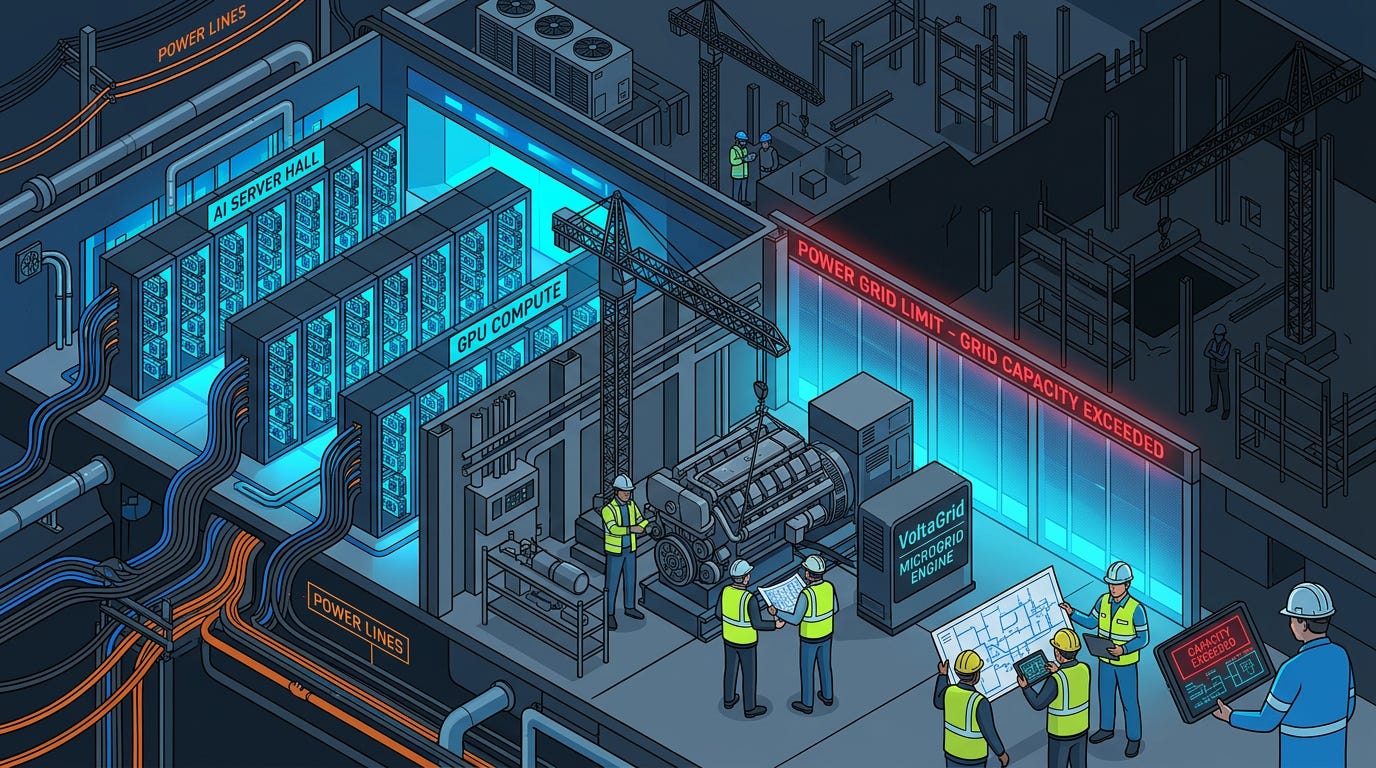
One of the quieter shifts this week came from the infrastructure side of the AI market.
The conversation around scaling AI used to be almost entirely about GPUs and chip supply. That is starting to change.
Bloomberg reported this week that Blackstone and Halliburton are backing VoltaGrid in a roughly $1 billion push to build gas-powered microgrids for AI data centres. The reason is simple: companies can secure chips faster than they can secure electricity.
That changes the economics of the industry.
Training clusters and large inference deployments are now running into grid capacity limits, utility approval delays, and energy pricing pressure before they hit compute constraints.
Several major infrastructure projects this year already include dedicated energy agreements tied directly to data centre expansion.
Power is starting to behave as GPUs did in 2024: something you have to secure early if you want to scale.
That has ripple effects.
It influences where data centres get built, how fast cloud providers can expand capacity, and which regions can realistically compete for large-scale AI infrastructure.
Two years ago the constraint was GPUs. Now it is starting to look more like electricity and physical infrastructure.
Why it matters
The limiting factor for scaling AI is shifting beyond chips and toward energy itself. Whoever can secure reliable power capacity ends up with a structural advantage in the next phase of the industry.
And that wraps up this week. Tune in next Monday, same time, for another deep-dive into the AI world.
The Sentinel lands every Monday, so you can catch up without having to sit through the noise.